
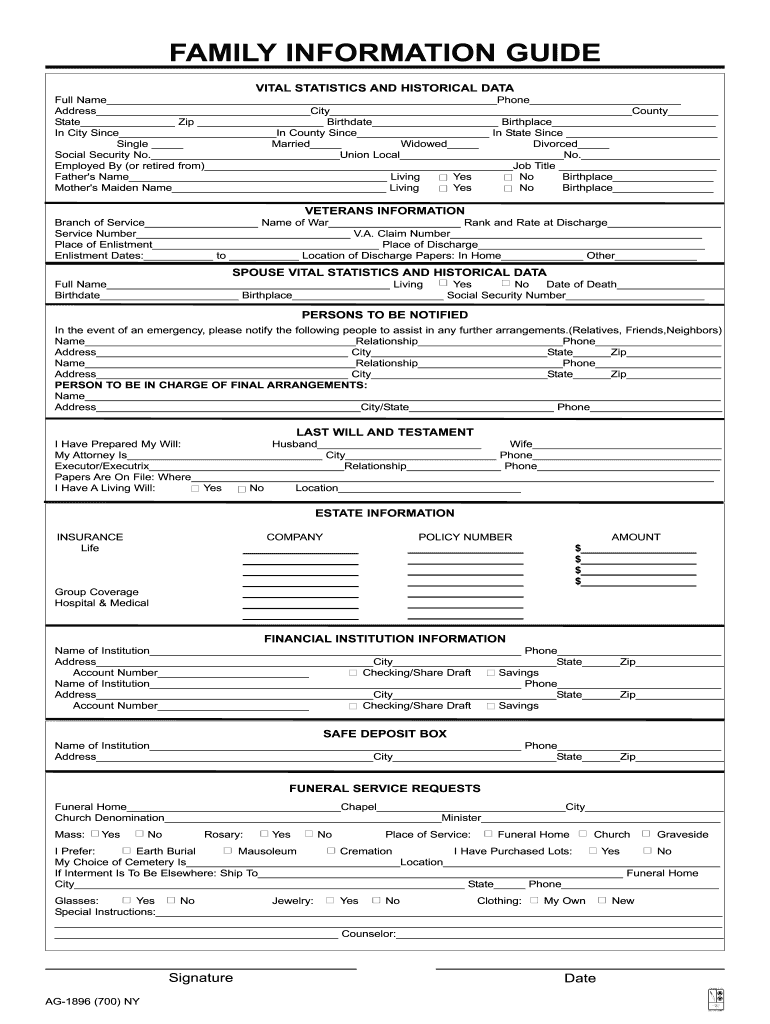







Definition and Purpose of the Family Information Guide
The Family Information Guide is a comprehensive document that serves to collect essential statistics and historical data about an individual and their family. This guide is particularly important for ensuring that vital information is readily accessible during significant life events, such as emergencies or legal procedures.
- Personal Details: The guide typically includes names, addresses, dates of birth, and social security numbers of family members.
- Veteran Information: Sections may detail military service records, including branch of service, service dates, and any associated benefits.
- Spouse Details: Important information about spouses, including their dates of birth, social security numbers, and employment details, is crucial for estate planning and emergency situations.
- Emergency Contacts: The guide often includes designated emergency contacts, enabling quick access to individuals who can assist in medical or legal emergencies.
- Final Arrangements: This includes preferences regarding funeral services and burial arrangements, ensuring that family wishes are respected.
The purpose of the Family Information Guide spans across both practical and emotional considerations, providing peace of mind and clarity in times of need. Keeping this information in a safe but accessible place at home is vital for future reference.
Key Elements of the Family Information Guide
Understanding the structure and content of a Family Information Guide is essential for its effective use. Key elements usually encompass several important areas:
- Vital Statistics: This section captures foundational information about each family member, including full names, dates of birth, and social security numbers.
- Health Information: Documenting medical history, current medications, allergies, and primary care providers helps ensure informed medical care during emergencies.
- Financial Documents: Information on insurance policies, retirement accounts, and other financial assets should be included to provide a holistic view of family resources.
- Legal Documents: A section for wills, power of attorney, and healthcare proxy documents is crucial for ensuring legal compliance and respecting family wishes.
- Important Contacts: Must include legal representatives, financial advisors, and healthcare providers to streamline communication in times of need.
Overall, these elements contribute to a thorough Family Information Guide, ensuring a well-rounded overview of a family’s essential information.
Using the Family Information Guide: Practical Steps
To effectively utilize the Family Information Guide, follow these practical steps:
- Gather Information: Collect vital statistics and details from all family members. This includes personal identifications, health information, and financial data.
- Organize the Data: Use a structured template to document information cleanly and clearly. Organizing the data into sections will facilitate easy retrieval.
- Store Securely: Keep the Family Information Guide in a secure yet accessible location, such as a locked file cabinet or secure digital storage with backup options.
- Review Regularly: Schedule regular reviews of the guide to update any changes, such as new family members, updated health information, or revisions of financial circumstances.
- Share with Key Individuals: Ensure that trusted family members or executors are aware of the guide’s existence and know how to access it when necessary.
By following these steps, families can ensure that their Family Information Guide remains a valuable resource, particularly during emergencies.
Examples of Family Information Guide Templates
Sample templates can assist families in crafting their Family Information Guide effectively. Key components might include:
-
Basic Family Information Example:
- Name: John Doe
- Date of Birth: January 1, 1980
- Social Security Number: 123-45-6789
- Spouse Name: Jane Doe
- Emergency Contact: Mary Smith, Phone:
-
Health Information Sheet Template:
- Family Member: Jane Doe
- Medical History: Asthma, Allergy to penicillin
- Current Medications: Albuterol inhaler, antihistamines
- Primary Care Provider: Dr. John Smith,
By using organized templates, families can easily compile all necessary information in a cohesive manner.
Legal Importance of the Family Information Guide
The Family Information Guide holds significant legal importance for families in the United States. It ensures compliance with various regulations and assists in critical legal processes:
- Estate Planning: A clear record of assets and beneficiaries can streamline estate planning and probate processes. It allows for easier identification and allocation of resources after a family member passes.
- Emergency Medical Decisions: With the guide detailing health information and preferences for medical care, it ensures that representatives can make informed decisions quickly when required.
- Coordination with Legal Representatives: Providing an organized compilation of family information facilitates easy communication with attorneys and financial advisors, aiding in quicker legal consultations and actions.
By understanding the legal context of the Family Information Guide, families can better appreciate its significance and the necessity of maintaining its accuracy.
Common Pitfalls in Compiling a Family Information Guide
While creating a Family Information Guide, certain pitfalls can hinder its effectiveness. Being aware of these issues can help in avoiding them:
- Incompleteness: Omitting important details, such as specific healthcare preferences or emergency contacts, can result in inadequate responses during crises.
- Outdated Information: Failing to review and update the guide regularly might lead to using obsolete information, especially critical medical histories or financial situations.
- Inaccessibility: Keeping the guide in an unknown location or in a format that is not easily accessible can complicate its intended purpose.
- Ignoring Legal Requirements: Not including necessary legal documents, such as wills or powers of attorney, can hamper proper execution of family wishes.
By being mindful of these common challenges, families can create a thorough and functional guide that serves its intended purpose effectively.




