
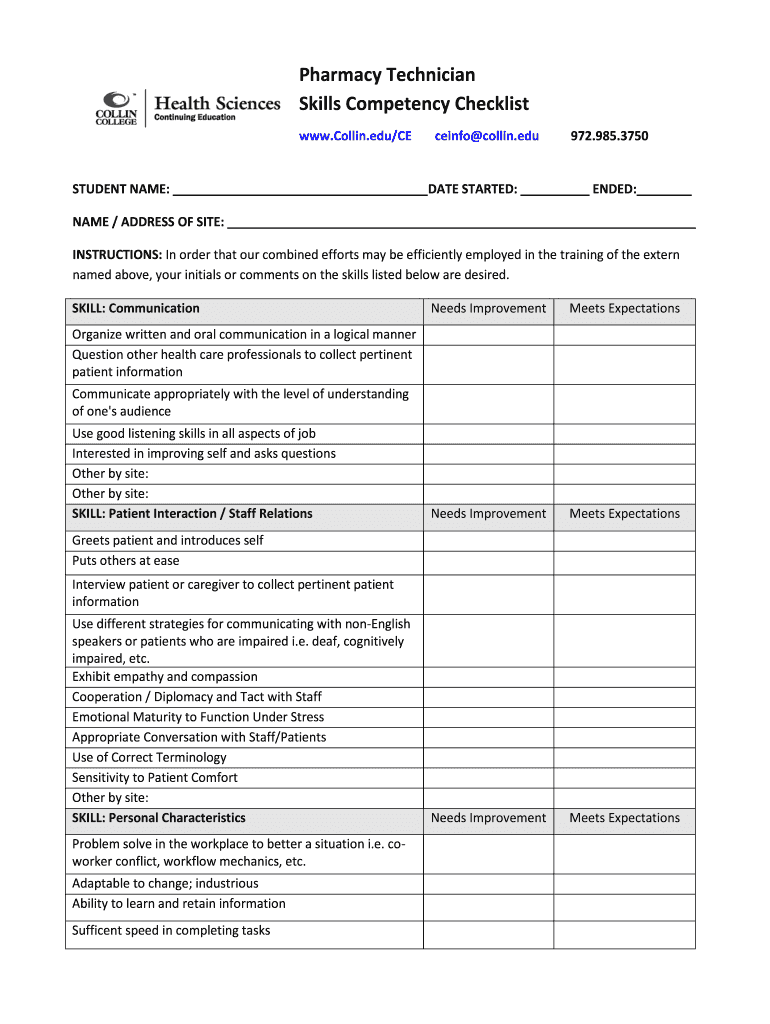







Understanding the Pharmacist Competency Checklist
The pharmacist competency checklist serves as a critical tool to evaluate the skills and knowledge of pharmacy professionals. This checklist encompasses various competencies that pharmacists must demonstrate, ensuring they meet professional standards in practice. By assessing areas such as clinical knowledge, patient care, and operational roles, the checklist aims to identify strengths and areas for improvement, guiding pharmacists in their professional development.
Key Components of the Checklist
- Clinical Knowledge: This section assesses a pharmacist's understanding of medication management, clinical guidelines, and pharmacotherapy. Evaluators might consider how well the pharmacist utilizes evidence-based practices to optimize patient outcomes.
- Patient Care Skills: Competencies related to patient interactions are crucial. Evaluators may assess communication skills, empathy, and the ability to counsel patients on medication adherence and health management.
- Operational Proficiency: This involves assessing the pharmacy technician's ability to handle inventory management, prescription processing, and adherence to safety protocols. Understanding the workflow and supply chain management is essential for effective pharmacy operations.
Utilizing the Checklist Effectively
Using the pharmacist competency checklist involves a structured approach to evaluations. Here are steps to incorporate the checklist effectively:
- Identify Competency Areas: Review the checklist to pinpoint specific competency areas relevant to the pharmacist's role.
- Conduct Self-Evaluation: Encourage pharmacists to perform self-evaluations based on the checklist, fostering a culture of self-assessment and accountability.
- Feedback from Peers: Incorporate peer reviews to provide additional perspectives on strength areas and those needing improvement. This collaboration can enhance learning and professional growth.
- Training and Development: Utilize identified gaps to design targeted training programs that address specific skills, endorsing continuous professional improvement.
Importance of Documentation in Competency Assessment
Documentation is crucial in the competency assessment process. It serves as proof of the evaluation conducted and supports ongoing learning. Key reasons to maintain thorough records include:
- Accountability: Detailed records show compliance with professional standards and regulations.
- Professional Growth Tracking: Documenting competencies over time allows pharmacists to track improvements and changes in their skills.
- Regulatory Compliance: Many pharmacy boards require documented competency assessments for licensure renewals, ensuring pharmacists practice at a minimum standard.
Example Scenarios for Competency Evaluation
In various settings, pharmacists may encounter situations that necessitate competency evaluation. Example scenarios include:
- New Medication Launch: A pharmacist must demonstrate competency in understanding and counseling patients about a new medication. Their ability to communicate essential information and manage patient inquiries is critical.
- Patient-Specific Adjustments: When a pharmacist needs to adjust medication dosages for patients with renal impairment, their knowledge of pharmacokinetics and ability to use clinical judgment is assessed.
- Handling Emergencies: During a medication dispensing error, evaluating how a pharmacist manages the situation reveals their crisis management skills and adherence to protocols.
Regulatory and Legal Framework
Pharmacists are required to follow strict regulatory guidelines which vary by state. The checklist should reflect these legal requirements to ensure that pharmacists remain compliant with local laws and regulations. Key considerations include:
- State-Specific Regulations: Different states may have unique competencies that pharmacists must demonstrate. It's crucial to integrate these requirements into the checklist.
- Documentation of Compliance: Maintaining up-to-date records that align with state regulations is vital for practice legitimacy and legal protection.
Conclusion
The pharmacist competency checklist is an essential component of ongoing professional development. By regularly assessing competencies across various domains, pharmacists can ensure they provide high-quality care while adhering to regulatory standards. Through systematic evaluations, documentation, and targeted training initiatives, pharmacists can enhance their skills and contribute positively to patient health outcomes.




