






Definition & Meaning
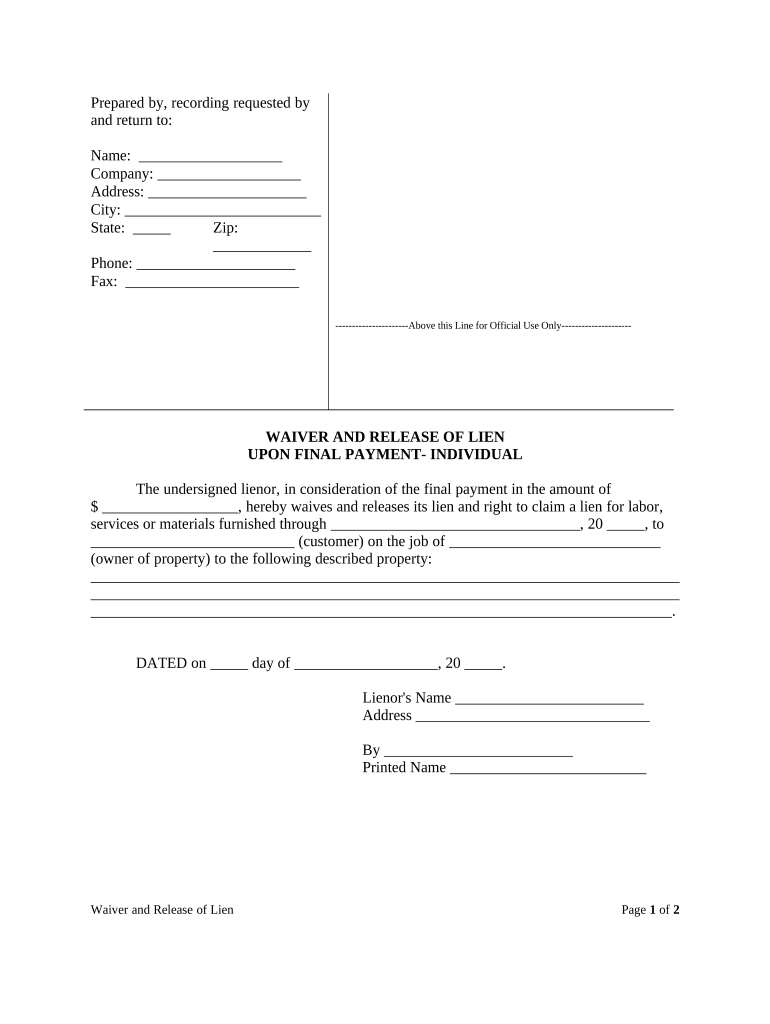
A "Florida Waiver Form" is a legal document used in the state of Florida, primarily to waive specific rights related to claims of liens. It is most often used by individuals and entities involved in construction or real estate projects, where the waiver states that the signing party relinquishes their right to file a lien against the property upon receiving payment for labor, services, or materials provided. This form plays a crucial role in ensuring smooth financial transactions and preventing disputes over unpaid claims. It includes details such as the lienor's information, project description, and requires signatures from relevant parties.
How to Use the Florida Waiver Form
To effectively use the Florida Waiver Form, one must follow a clear sequence of steps. First, ensure you understand the type of waiver required—such as conditional or unconditional, based on whether payment has been received. Second, fill in accurate details of the lienor, property owner, and specific project information to avoid legal issues. Third, it's important to verify the form is completed before a notary public as notarization might be required to enforce the waiver legally. This process provides security to all parties by officially recognizing the agreement to waive lien rights in exchange for payment.
How to Obtain the Florida Waiver Form
Obtaining a Florida Waiver Form can be done through several avenues. You can procure it from a legal stationery store, download it from legal websites, or request it from attorneys specializing in real estate or construction law. Ensure you are accessing the most current version of the form, as legal requirements can change. Additionally, professional advice may be sought to tailor the form to specific circumstances, ensuring adherence to Florida's legal standards.
Key Elements of the Florida Waiver Form
The Florida Waiver Form contains several critical components to be valid and enforceable. These include:
- Lienor's Information: Full name, address, and contact details.
- Property Owner's Details: Information about the property owner, including name and address.
- Project Description: Clear description of the property and nature of work or services provided.
- Payment Details: Amount received or to be received and payment terms correlated with the waiver execution.
- Signature Lines: For both the lienor and owner, together with the necessity for notary signatures to validate the form legally.
Steps to Complete the Florida Waiver Form
Completing the Florida Waiver Form involves a methodical approach:
- Gather Necessary Information: Collect all relevant project and payment details.
- Fill Out the Form: Input all required data accurately in the designated sections, ensuring no details are omitted.
- Review for Accuracy: Recheck the form to certify correctness of all information entered.
- Notarization: Arrange for notarization, if legally required, to provide authenticity and binding effect.
- Submit Copies: Distribute copies to all involved parties, maintaining one for personal records.
Who Typically Uses the Florida Waiver Form
The Florida Waiver Form is typically used by contractors, subcontractors, suppliers, and property owners engaged in construction projects. These stakeholders utilize the document to ensure payment agreements are honored without the risk of legal recourse through liens. Additionally, real estate attorneys and construction managers often handle these forms to facilitate smoother transaction processes between involved parties.


State-Specific Rules for the Florida Waiver Form
Florida enforces unique rules governing the use of waiver forms that differ from other states. Key rules include:
- Specific language requirements that must be adhered to, failing which the waiver could be deemed invalid.
- Distinct classifications such as partial waivers (for progress payments) and final waivers (for full payment).
- The necessity for waivers to explicitly state the conditions under which rights are waived, such as corresponding payment schedules.
Legal Use of the Florida Waiver Form
The legal use of the Florida Waiver Form is centered on the relinquishment of lien rights by the lienor in relation to services or materials furnished. This document is legally binding once completed and notarized, provided it meets all statutory language and format requirements. It serves not just as a preventive measure but as a mutual assurance between parties that financial commitments are fulfilled and disputes minimized. Due diligence in properly executing this form is critical, as failure to comply can lead to unresolved claims and potential legal action.