




01. Edit your i 9 form 2016 pdf online
Type text, add images, blackout confidential details, add comments, highlights and more.

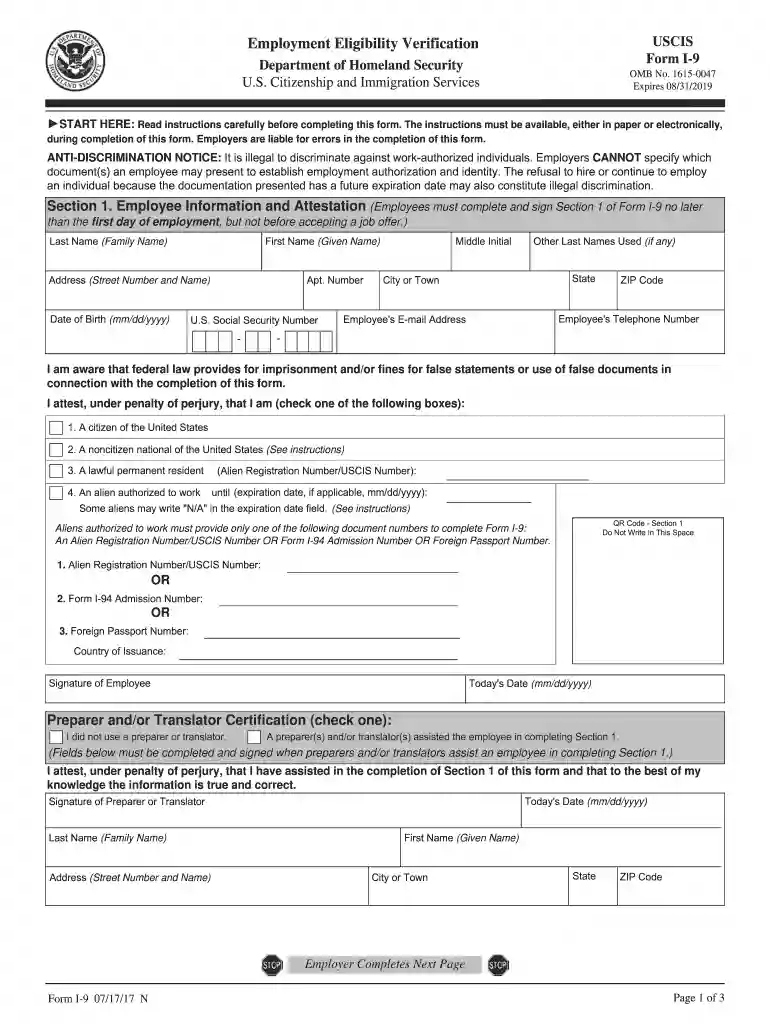
Type text, add images, blackout confidential details, add comments, highlights and more.

Draw your signature, type it, upload its image, or use your mobile device as a signature pad.

Send i 9 form 2015 pdf via email, link, or fax. You can also download it, export it or print it out.
The USCIS Form I-9 is a critical document used in the United States for Employment Eligibility Verification. This form is mandatory for all employers and employees to ensure compliance with federal laws regarding work authorization.
The form serves several important purposes:
The I-9 form is divided into several sections:
To complete the I-9 form, both employees and employers must understand the acceptable documents that can be used:
Employers must retain these documents for verification purposes, ensuring they remain in compliance with federal regulations.
It's crucial to understand the filing timelines associated with the I-9 form:
Failure to comply with I-9 requirements can lead to significant consequences for employers:
The digital format of the I-9 form has made it easier for both employers and employees. The fillable PDF provides several advantages:
Certain groups may have unique requirements concerning the I-9 form:
For those needing additional assistance or clarification on completing the I-9 form, resources are available:
Understanding and properly completing the USCIS Form I-9 is essential for both employees and employers, ensuring a smooth verification process and adherence to immigration laws within the United States.
At DocHub, your data security is our priority. We follow HIPAA, SOC2, GDPR, and other standards, so you can work on your documents with confidence.
START HERE: Employers must ensure the form instructions are available to employees when completing this form. Employers are liable for.Read more
Apr 29, 2015 In its current form, the fiscal year 2016. Military Construction and Veterans Affairs. Appropriations Bill makes across-the-board cuts to allRead more
Jan 23, 2017 Beginning Jan. 22, 2017, employers must use the 11/14/2016 N version of Form I-9, Employment Eligibility Verification, to verify the identity and workRead more


