
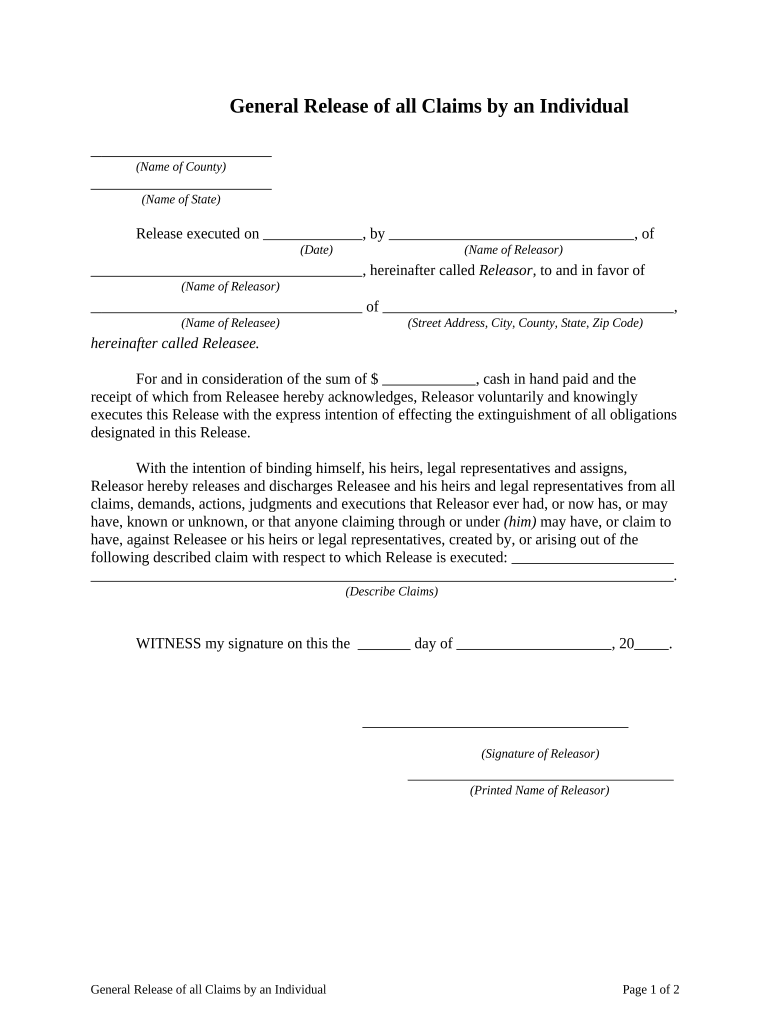







Definition and Importance of a Release of All Claims
A release of all claims form is a legal document used to relinquish any and all future claims against a specific party. Often referred to as a general release, this document serves as a final agreement between two parties—usually a Releasor and a Releasee—where the Releasor agrees to forgo any potential legal claims in exchange for a specified benefit, typically financial compensation.
- Key Functions:
- Legal Protection: The release shields the Releasee from future claims arising out of past actions or agreements.
- Clarity in Transactions: Establishes clear terms and conditions, ensuring both parties understand the stakes involved.
How to Use the Release of All Claims Form
Using the release of all claims form effectively involves understanding its purpose and the context in which it is applied. This form is crucial in various scenarios, particularly where compensation is involved, such as in settlement agreements or business transactions.
- Identify the Parties:
- Clearly list the Releasor and Releasee details, including names and addresses.
- Detail the Agreement:
- Specify the nature of the claims being released and any conditions of the agreement.
- Signature & Notarization:
- Ensure both parties sign the document, preferably in the presence of a notary to add authenticity.
Steps to Complete the Release of All Claims Form
Completing a release of all claims form involves several straightforward steps to ensure that all necessary information is documented correctly.
- Obtain the Form:
- Access a template from a trusted legal resources website or create a document tailored to your needs.
- Fill in the Necessary Information:
- Include the Releasor's details, the Releasee's information, and the specific claims being released.
- Add Payment Details:
- If applicable, specify the compensation amount being exchanged for the release.
- Include Signatures:
- Both parties need to sign, and notarization is recommended for added security.
- Distribute Copies:
- Provide copies to both the Releasor and Releasee to ensure both parties have a record.
Legal Use of the Release of All Claims
From a legal perspective, the release of all claims form holds significant importance in various situations, including personal injury claims, employment contracts, and business transactions.
- Enforceability:
- The release must be carefully drafted to ensure it is enforceable. Factors such as mutual consent, clarity of terms, and the absence of coercion are pivotal.
- Use in Settlements:
- Frequently employed in settlement agreements post-lawsuits, allowing parties to resolve disputes without further legal confrontation.
Important Terms Related to Release of All Claims
Understanding legal terminology associated with the release of all claims is essential for effectively navigating the document's use.
- Releasor: The person or entity relinquishing their claims.
- Releasee: The person or entity to whom the claims are being released.
- Consideration: The compensation or benefit exchanged to make the release valid.
- Liability: The legal responsibility that the Releasee is released from upon signing.
Who Typically Uses the Release of All Claims?
Various individuals and organizations utilize the release of all claims in different contexts.
- Individuals: Often used by individuals settling personal injury claims or resolving disputes with contractors or employers.
- Businesses: Commonly employed by corporations during mergers, acquisitions, and settlements with clients or vendors, providing a safeguard against future lawsuits.
- Legal Professionals: Attorneys frequently draft these forms for clients to ensure all bases are covered in legal negotiations.


Examples of Using the Release of All Claims
Real-world scenarios highlight the practical application of the release of all claims form in everyday contexts.
- Personal Injury Settlements:
- An injured party may sign a release of all claims against an insurance company after receiving a settlement, indicating they will not pursue further claims related to that incident.
- Employer-Employee Agreements:
- An employee may sign a release upon receiving severance pay as part of a layoff package, waiving rights to claim further employment-related grievances.
- Business Transactions:
- Before finalizing a merger, a company may require executives of the acquired firm to sign a release, preventing future litigation over previous actions or decisions.
State-Specific Rules for the Release of All Claims
It is essential to consider that different states may have varying regulations regarding the use of release forms.
- California:
- In California, a release of all claims must meet specific statutory requirements to be enforceable, including clear language, consideration, and knowledge of rights being waived.
- New York:
- In New York, a general release may require additional approval or legal oversight, especially involving workplace-related claims.
Understanding these nuances can ensure compliance with state laws, preventing potential legal complications in the future.




