Ma lease 2026

Get Form
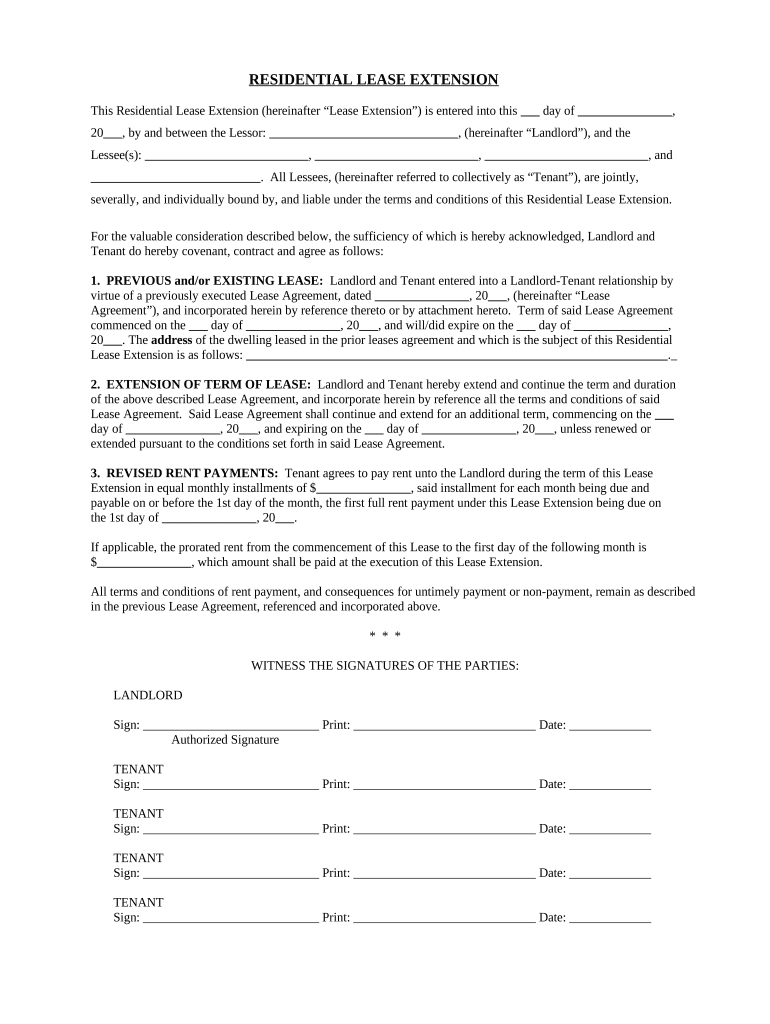
lease extension agreement template Preview on Page 1

Here's how it works

01. Edit your lease extension agreement template online
Type text, add images, blackout confidential details, add comments, highlights and more.
02. Sign it in a few clicks
Draw your signature, type it, upload its image, or use your mobile device as a signature pad.
03. Share your form with others
Send rental lease extension via email, link, or fax. You can also download it, export it or print it out.

How to use or fill out ma lease with our platform

Form edit decoration
9.5
Ease of Setup
DocHub User Ratings on G2
9.0
Ease of Use
DocHub User Ratings on G2
  1. Click ‘Get Form’ to open the Residential Lease Extension in the editor.
  2. Begin by entering the date of the agreement at the top of the form. This is crucial for establishing the timeline of your lease extension.
  3. Fill in the names of all parties involved, including both the Landlord and all Tenants. Ensure that each Tenant's name is clearly listed to avoid any confusion.
  4. In the 'Previous and/or Existing Lease' section, provide details about the original Lease Agreement, including its start and end dates, as well as the address of the leased property.
  5. Next, specify the new term for this Lease Extension by filling in the commencement and expiration dates. This will clarify how long this extension will last.
  6. Indicate the revised rent payments in equal monthly installments. Be sure to include both the amount due each month and any prorated rent if applicable.
  7. Finally, ensure all parties sign and date where indicated at the bottom of the form to finalize your agreement.

Start using our platform today to easily complete your Residential Lease Extension for free!

be ready to get more

Complete this form in 5 minutes or less

Get form

Got questions?

We have answers to the most popular questions from our customers. If you can't find an answer to your question, please contact us.
Contact us
A Massachusetts standard residential lease agreement is a binding contract between a landlord and a tenant that specifies rental terms for a residential tenancy. The agreement defines the lease duration, rent amount, utility fees, and both parties rights and responsibilities.
Every rental agreement must have certain terms, and is prohibited from containing certain other terms. The lease must include the name, address, and phone number of the owner, the person responsible for maintenance, and the person to whom the tenant can give copies of formal notices, complaints, or court papers.
A fixed-term lease is the most widely used lease in residential rentals because it provides consistent rental income and long-term tenant occupancy. Landlords prefer this lease type as it reduces frequent turnover and vacancy risks, ensuring a steady cash flow.
A memorandum of lease is a brief, summary document that outlines the key terms and conditions of a lease agreement. It serves as a public record to provide notice of the leases existence, without including all the detailed provisions of the full lease.
Assured shorthold tenancy agreement The most common form of tenancy and most new tenancies are automatically this type. Also known as an AST or contract. Landlords can only ask you to leave or evict you with a court order.

Security and compliance

At DocHub, your data security is our priority. We follow HIPAA, SOC2, GDPR, and other standards, so you can work on your documents with confidence.

Learn more

People also ask

It is a legally binding contract detailing the responsibilities both the landlord and the tenant promise to uphold. In addition to specifics like amenities, renovations and other apartment features, the lease includes legal details like: Grounds for lease termination and eviction. The rent rate and payment schedule.
Traditional master leasing is a third-party leasing strategy in which an agency becomes the primary leaseholder and leases individual units, a subset of units in a single building, or all units in an entire building. The agency then subleases to the secondary tenant.

Related links