
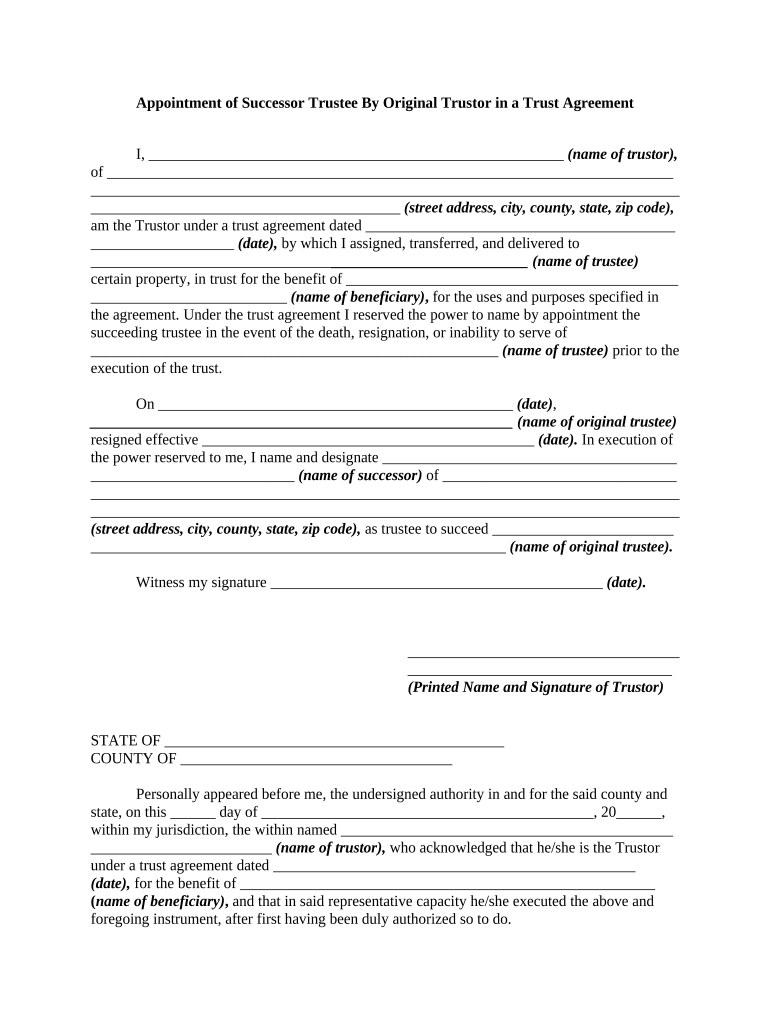







Definition and Meaning of the Appointment Successor Trustee Document
The appointment successor trustee document is a crucial legal instrument used within trust agreements. It designates a new trustee to manage the trust's assets and uphold the trustor's intentions when the original trustee resigns, becomes incapacitated, or passes away. Trusts are often set up to ensure that assets are administered according to the grantor’s wishes posthumously or during incapacity, making clarity in trustee appointments essential.
This document typically includes sections for identifying the original trustee, the successor trustee, and the circumstances under which this transition occurs. It also encompasses provisions stipulating the powers and duties of the newly appointed trustee, ensuring that they have the legal authority to act on behalf of the trust.
The critical components of the appointment successor trustee document include:
- Original Trustee Information: Specifies the existing trustee’s full name, address, and any relevant identification details.
- Successor Trustee Information: Details the individual or entity that will assume the trustee role.
- Effective Date: Indicates when the successor trustee’s authority begins.
- Trustee Powers: Outlines the responsibilities and powers granted to the successor, which may include managing investments or distributing assets.
Steps to Complete the Appointment Successor Trustee Document
Completing the appointment successor trustee document involves a series of steps to ensure its validity and compliance with legal requirements. Below is a guided process for filling out this document effectively.
- Identify the Original Trustee: Gather accurate information about the original trustee, including full name and address.
- Select the Successor Trustee: Choose an appropriate successor trustee; this can be an individual or an institution that will carry out the trust's directives.
- Specify Effective Date: Clearly state when the appointment of the successor takes effect.
- Outline Successor’s Powers: Define the scope of authority granted to the successor trustee, tailored to the needs and nuances of the trust agreement.
- Notarization Requirement: Include a section for notarization to verify the signatures, which adds a layer of authenticity to the document.
- Signatures: Ensure that the original trustee and the successor trustee sign the document in the appropriate sections.
After completing these steps, it is essential to store the document securely with the trust's records and provide copies to the successor trustee and involved parties.
Legal Use of the Appointment Successor Trustee Document
The appointment successor trustee document serves as a legal instrument within the framework of trust law. When executed properly, it guarantees that the successor trustee has the authority to manage the trust in accordance with the trustor's wishes. This legal backing is vital because it protects the interests of the trust and its beneficiaries.
The document must abide by state laws governing trusts, including specific requirements for execution, such as notarization, witness signatures, and adherence to statutory forms when necessary. Different states may have varying legal stipulations concerning the successor trustee's authority, necessitating careful attention to local regulations.
Additionally, in some jurisdictions, it may be beneficial to include the appointment of a co-trustee within the same document to ensure continuity and support in trust management, especially in complex situations.
Important Terms Related to the Appointment Successor Trustee Document
Understanding key terms associated with the appointment successor trustee document can enhance comprehension and facilitate smoother transactions within trust management. Some significant terms include:
- Trustor: The individual who creates the trust and designates the trustee.
- Trustee: The party responsible for managing the trust assets according to the terms prescribed in the trust document.
- Beneficiaries: Individuals or entities entitled to benefit from the assets held in the trust.
- Fiduciary Duty: The legal obligation of the trustee to act in the best interests of the beneficiaries, prioritizing their welfare over personal gain.
- Revocation Clause: A provision allowing the trustor to alter or revoke the appointment of the trustee if circumstances change.
Being familiar with these terms can improve clarity when preparing and executing the appointment successor trustee document.
Examples of Using the Appointment Successor Trustee Document
Several scenarios illustrate the necessity and application of the appointment successor trustee document, demonstrating its practical implications in real-life situations.
- Scenario One: An individual establishes a living trust to manage their estate. They designate their best friend as the original trustee. Due to unforeseen circumstances, the friend can no longer serve in this role. The trustor completes the appointment successor trustee document, naming her daughter as the successor, ensuring a smooth transition.
- Scenario Two: A corporate trust requires a successor trustee due to the retirement of the existing trustee. The board uses the appointment successor trustee document to formally designate a financial institution as the new trustee. This process safeguards the trust's integrity and facilitates ongoing management.
- Scenario Three: A trustor becomes incapacitated, and the designated trustee is unable to fulfill their duties. The appointment successor trustee document is executed to ensure the trust is governed effectively, thereby protecting the interests of the beneficiaries and maintaining compliance with the trust agreement.
Each example emphasizes the document's role in facilitating trust management continuity and ensuring legal compliance throughout transitions.




