




Definition & Meaning of Notice Trespass Form
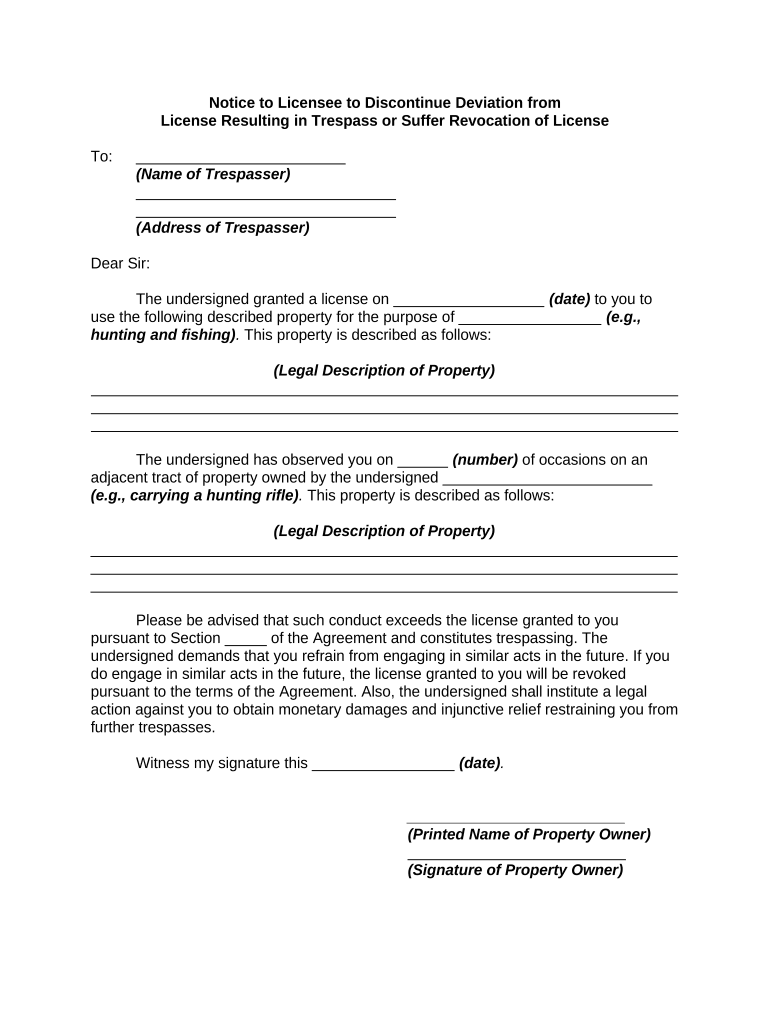
A notice trespass form is a formal document used by a property owner to inform individuals that they are trespassing on their property. It serves as a notification regarding the encroachment upon the landowner's rights and property boundaries. The notice typically demands that the trespassing party cease their unauthorized activities and may outline the consequences of failing to comply, including potential legal actions for damages or revocation of permissions previously granted. This form is often a precursor to more serious legal steps and is fundamental for property owners seeking to protect their rights under property law.
The primary function of the form is to document the trespassing issue in a formalized manner. By delivering a notice, the property owner can establish a record that may be important for future legal proceedings, should they become necessary. Failure to issue such a notice can complicate the enforcement of property rights and defenses against trespassers, as notice often serves as a critical element in demonstrating that the property owner has taken appropriate action.
How to Use the Notice Trespass Form
Utilizing a notice trespass form is a straightforward process, but it requires careful attention to detail to ensure legality and effectiveness. Here are the steps involved:
-
Download or Create the Form: Access a pre-made template or create a notice from scratch. Ensure it includes essential details such as the property address, specific violations, and the trespasser's identity if known.
-
Fill in Relevant Information: Clearly document the trespassing activities, including dates, times, and the nature of the trespass. Specify any previously granted permissions, which may have been violated.
-
Sign and Date the Notice: A signature reinforces the authenticity of the notice and demonstrates the property owner's intent to formally address the situation.
-
Delivery of Notice: Serve the notice to the individual in question. It's advisable to send it via certified mail or another verifiable method to maintain proof of delivery.
-
Document Everything: Keep copies of the form and all correspondence related to the trespass, as these documents may be necessary for legal claims or disputes in the future.
By following these steps, property owners can effectively communicate their concerns regarding unauthorized use of their property, while also laying the groundwork for any potential legal actions should the situation escalate.
Key Elements of the Notice Trespass Form
A well-structured notice trespass form contains several key elements that are vital for its clarity and effectiveness. These components ensure that the message is properly communicated, and they provide necessary information for both parties involved. Essential elements include:
-
Property Owner's Information: Full name and contact details of the individual or entity that owns the property. This establishes the authority behind the notice.
-
Trespasser's Information: If known, include the name and contact information of the person being notified. This personalizes the document and makes it clear who the notice is addressing.
-
Description of the Property: A clear description of the trespassed property, including the address and any identifiable markers that delineate the boundaries.
-
Nature of Trespass: Specify what actions are deemed as trespassing, such as unauthorized entry, property damage, or refusal to leave when requested.
-
Cease and Desist Demand: A direct request for the trespasser to halt the unauthorized activities, definite within a specific timeframe, which reinforces the seriousness of the request.
-
Consequences for Non-Compliance: Outline potential legal actions that could be taken if the trespassing does not stop, providing a deterrent for the trespasser.
-
Signature and Date: The notice should be signed and dated by the property owner to confirm the validity of the document.
Including these key elements ensures that the notice is comprehensive and legally sound, which is essential for protecting property rights effectively.
Who Typically Uses the Notice Trespass Form
The notice trespass form is utilized by various individuals and entities who seek to assert their property rights. Common users of this form include:
-
Residential Property Owners: Homeowners may issue trespass notices to neighbors or strangers who encroach on their private property, emphasizing the need to maintain boundaries.
-
Commercial Property Owners: Businesses and property management firms often need this form to address unauthorized usage or loitering that may hinder their operations or compromise safety.
-
Landlords: Property owners renting land or buildings may use the notice to alert tenants or visitors who violate the property agreement, particularly concerning parking or outdoor areas.
-
Government Agencies: Entities responsible for public lands might issue trespass notices on behalf of municipalities or counties to deter individuals unlawfully using public resources.
-
Legal Representatives: Attorneys may assist clients in formally executing trespass notices to document grievances and initiate proceedings if the problem persists.
Each of these users benefits from the form by establishing a formal path to protect their interests and promote compliance with property laws.


State-Specific Rules for the Notice Trespass Form
The application and enforceability of notice trespass forms may vary substantially between different states, due to local laws regarding trespassing and property rights. Key considerations include:
-
Timeframes for Notice Delivery: Some states require a reasonable amount of time for the trespasser to comply after receiving the notice. Understanding these timeframes is crucial for legal validity.
-
Content Requirements: Certain jurisdictions may necessitate specific language in the notice or demand particular inclusions, such as references to state law that govern property rights.
-
Registration Procedures: A few states may have zoning laws requiring notices to be registered or filed with local authorities, particularly when dealing with public lands or shared spaces.
-
Potential Criminal Penalties: In addition to civil liabilities, some states enforce criminal penalties for continued trespass after notice, altering the approach property owners might take.
-
Variances in Legal Terminology: Be aware of differing definitions and applications of "trespass" in various states, as legal definitions can influence the assertiveness or passivity of the notice.
Researching local statutes is vital for ensuring compliance and maximizing the effectiveness of the notice due to these regional discrepancies.
Important Terms Related to Notice Trespass Form
Understanding specific terminology associated with the notice trespass form enhances clarity and effective communication in property law matters. Some important terms include:
-
Trespass: The act of entering someone's property without permission, which can include physical encroachment as well as unauthorized use of resources.
-
Licensee: An individual granted temporary permission to enter another person's property, often subject to particular terms. This status can complicate trespass claims if the license is exceeded.
-
Cease and Desist: A legal term signifying a demand to stop a specified action or behavior. It is often used within notices to indicate that the behavior is objectionable and must be halted.
-
Liability: The state of being responsible for something, particularly in a legal context. Property owners may seek to establish trespassing liability to enforce their rights and claim damages.
-
Boundary Line: The legally defined limits of a property, crucial for determining whether trespassing has indeed occurred.
-
Notice: The act of formally informing an individual about a specific legal issue, such as trespassing. It is a fundamental step in legal processes, often marking the beginning of disputes.
Familiarizing oneself with these terms provides valuable context for effectively utilizing the notice trespass form and navigating any legal implications associated with it.