






Understanding the Name Affidavit
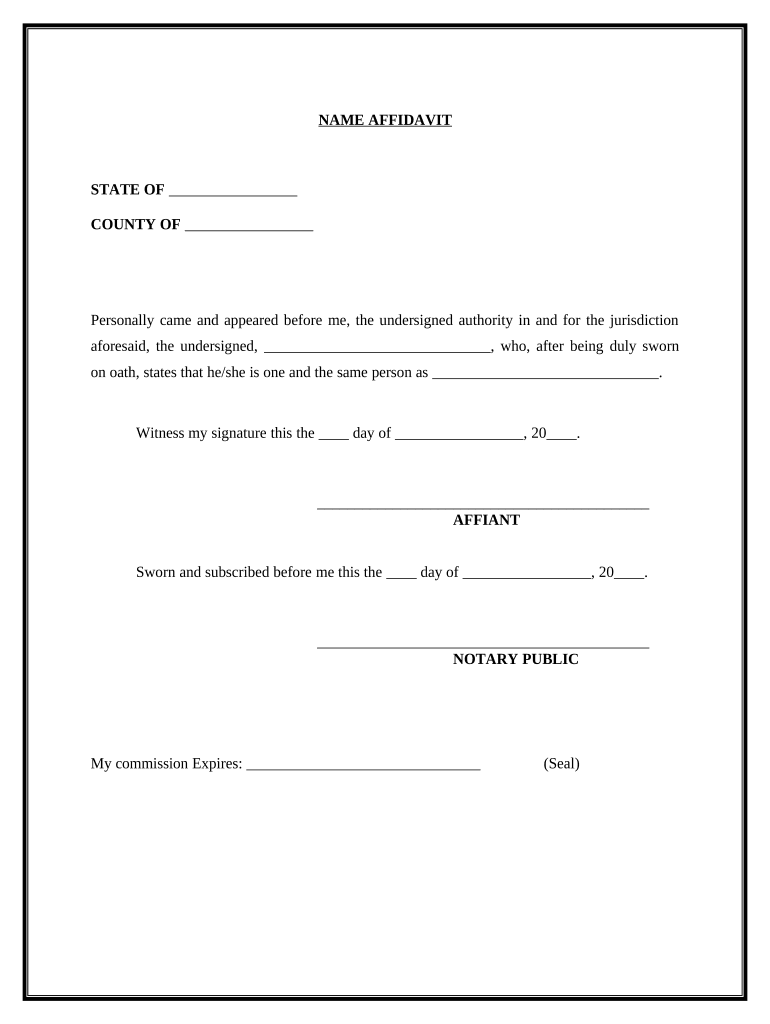
A name affidavit is a legal document that asserts that the individual named in the affidavit is the same person as another individual referenced elsewhere, often used in cases of name changes, discrepancies in identity documents, or personal identification verification. The affidavit typically includes fields for the names of the individuals involved, the state and county of execution, pertinent dates, and spaces for the signatures of the affiant and a notary public.
Key Components of a Name Affidavit
The name affidavit generally encompasses several vital sections:
- Affiant Information: The affiant is the person making the declaration. This section requires their full name, address, and any identification details that validate their identity.
- Declaration Statement: This part includes a clear statement affirming that the affiant and the other individual mentioned (such as a name discrepancy) are indeed the same person. This is crucial for legal clarity.
- Signature and Notarization: A date and space for the signatures of both the affiant and a notary public follow the declaration. The notarization confirms the authenticity of the signature and that the affiant signed voluntarily.
- State and County Designation: Since legal documents vary by jurisdiction, specifying the state and county is essential to ensure local enforcement.
Examples of When a Name Affidavit is Used
Several scenarios necessitate the use of a name affidavit:
- Name Change Notifications: Individuals who have legally changed their names may need to provide a name affidavit to banks or governmental agencies to update their records.
- Resolving Identification Conflicts: If documents such as birth certificates and identification cards display different names, a name affidavit can help clarify an individual's identity.
- Estate and Inheritance Issues: In matters of inheritance, a name affidavit can affirm relationships and identities, particularly when someone uses a maiden name versus a married name.
Reasons for Creating a Name Affidavit
There are numerous motivations for creating a name affidavit, including:
- Legal Recognition: To ensure that an individual's identity is recognized across various platforms and institutions.
- Facilitating Transactions: Many financial and legal institutions require proof of identity; having a name affidavit streamlines this process.
- Enhancing Clarity: It reduces confusion and potential legal disputes regarding identity and name assumptions.
How to Fill Out a Name Affidavit Form
Filling out a name affidavit form involves specific steps:
- Select a Template: Choose a name affidavit template that meets legal requirements. Templates can be found in PDF format online or through legal document services.
- Complete Personal Information: Fill out the personal details of the affiant accurately. This includes full legal name, address, and relation (if any) to the other party named.
- Insert the Declaration Statement: Clearly state the purpose of the affidavit. For example, "I, [Affiant’s Name], affirm that I am also known as [Other Name(s) in question]."
- Sign and Date: After filling in all necessary information, the affiant signs and dates the document in the designated area.
- Notarization: Seek a notary public to witness the signing of the affidavit. The notary will then stamp the document to certify that it is legitimate.
Legal Considerations for Name Affidavits
A name affidavit is subject to legal scrutiny, so it’s essential to adhere to these considerations:
- Jurisdiction Requirements: Different states may have specific requirements regarding contents and notarization processes.
- Accurate Information: All information provided must be truthful and verifiable, as false statements can lead to legal penalties.
- Retention of Records: Copies of the sworn affidavit should be securely retained for future use or in reference to any legal matters involving identity confirmation.
Common Mistakes to Avoid
When preparing a name affidavit, ensure that you avoid these common mistakes:
- Incomplete Information: Omitting details can render the affidavit invalid. Ensure every section is filled out completely.
- Inaccurate Names: Misstating names or failing to include common aliases can lead to complications.
- Failure to Notarize: Without proper notarization, many institutions may not accept the affidavit, negating its intended purpose.
Variants of the Name Affidavit
There are various types of name affidavits that you might encounter:
- Affidavit of One and the Same Person: This variant serves the same purpose but may have different wording or formatting.
- Affidavit for Name Changes: Specifically tailored for instances where an individual is changing their name legally.
- Affidavit of Same Persons Sample: A sample version that provides formatting guidance for creating an affidavit.
A name affidavit is often a straightforward yet essential document in legal and personal identification contexts. Understanding its function, components, and the process of creation ensures that individuals can accurately and effectively address name-related issues.