






Understanding the Month to Month Commercial Rental Agreement
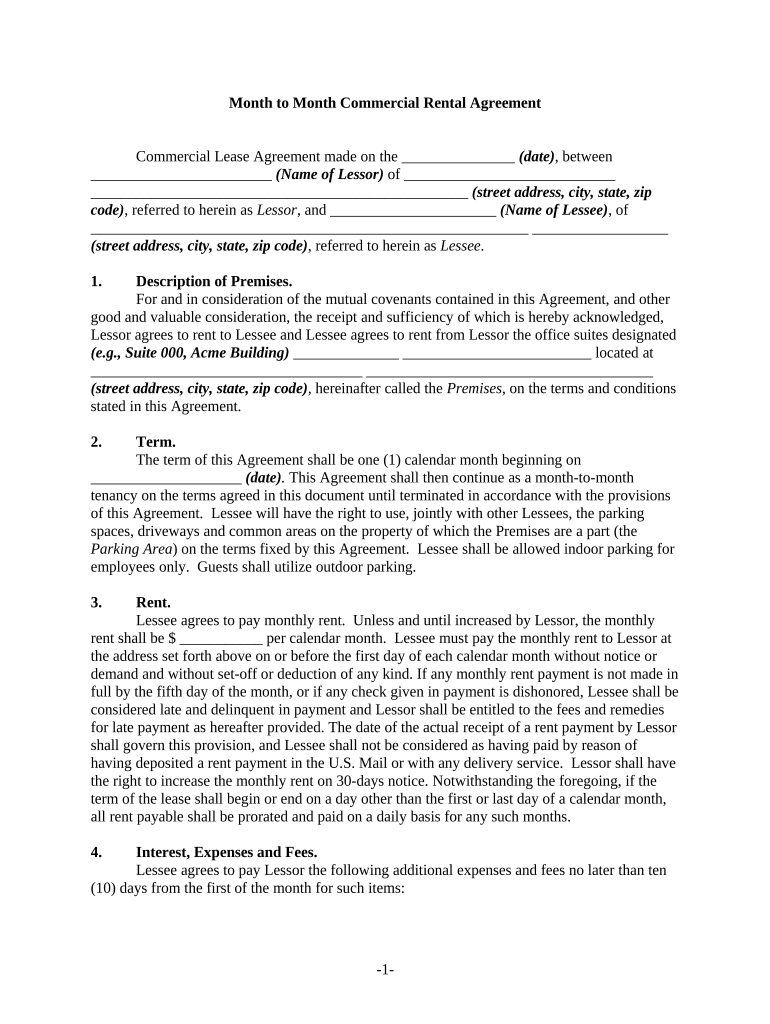
A Month to Month Commercial Rental Agreement is a flexible contract between a lessor and a lessee that allows for the leasing of commercial properties on a monthly basis. This type of agreement can be advantageous for businesses needing short-term or adaptable space solutions.
Key Elements of a Month to Month Commercial Rental Agreement
A comprehensive Month to Month Commercial Rental Agreement typically includes the following key elements:
- Parties Involved: Identification of both the lessor (property owner) and the lessee (tenant).
- Description of the Premises: Detailed information regarding the commercial space being rented, including its address and specifications.
- Term of Rent: Stipulations that clarify the rental period, typically renewing automatically each month unless either party provides notice to terminate.
- Rental Payment Terms: Clear articulation of the rent amount, payment due dates, and acceptable payment methods.
- Security Deposit: Guidelines for the security deposit amount, usage, and conditions for its return.
- Maintenance and Repairs: Which party is responsible for maintenance and repair duties, ensuring responsibilities are well-defined.
- Insurance Requirements: Specifications regarding insurance coverage the lessee must obtain to protect against damages.
- Termination Notice: Guidelines on how and when either party can terminate the agreement, typically requiring a written notice following a specified notice period.
Important Terms Related to Commercial Rental Agreements
Understanding specific terms associated with a Month to Month Commercial Rental Agreement is crucial:
- Default: This occurs when either party fails to meet the terms specified in the agreement. The lease should define repercussions for defaulting.
- Late Fees: Policies regarding additional fees for late rental payment and its implications for both parties.
- Compliance with Laws: Ensuring that the use of the rental property adheres to local zoning and safety regulations.
- Use of Premises: Restrictions or permissions relating to how the lessee can utilize the rented space.
Steps to Complete the Month to Month Commercial Rental Agreement
Completing a Month to Month Commercial Rental Agreement involves several detailed steps:
- Identify the Parties: Clearly state the names and addresses of both the lessor and lessee.
- Describe the Property: Include an accurate and thorough description of the commercial property.
- Specify Terms: Detail rental payment amounts, due dates, and any additional operating expenses.
- Negotiate Terms: Before finalization, parties should discuss and agree on maintenance, insurance, and use of the property.
- Signatures: Both parties must sign the agreement to make it legally binding.
Legal Uses and Compliance for the Month to Month Commercial Rental Agreement
When utilizing a Month to Month Commercial Rental Agreement, compliance with local laws is mandatory. Important considerations include:
- Local Laws: Each state may have specific regulations regarding commercial leases, including minimum notice periods for termination.
- Zoning Restrictions: Ensure the intended use of the property conforms to local zoning laws.
- Safety Codes: All agreements must align with building and occupancy codes to avoid penalties and ensure tenant safety.
Examples of Using a Month to Month Commercial Rental Agreement
Real-world applications of a Month to Month Commercial Rental Agreement include:
- Startups: A new company testing market viability may opt for a flexible leasing option while determining long-term needs.
- Seasonal Businesses: Retailers selling goods during peak seasons often require short-term leases to reduce overhead beyond peak demand periods.
- Companies with Variable Staffing Needs: Organizations experiencing fluctuations in workforce size might prefer flexible rental agreements to accommodate changing office space requirements.
State-Specific Rules for the Month to Month Commercial Rental Agreement
Variations in state laws significantly impact Month to Month Commercial Rental Agreements:
- Notice Requirements: Some states mandate a specific duration for termination notice (e.g., 30 days) before the lease can end.
- Security Deposit Regulations: Different states may impose limits on the amount of security deposit and dictate how it is held and returned.
Digital vs. Paper Version of the Month to Month Commercial Rental Agreement
Both digital and paper versions of the Month to Month Commercial Rental Agreement have their benefits:
- Digital Version: Allows for easier editing, storage, and sharing. Many platforms also offer automated workflows for signing and tracking.
- Paper Version: May be preferred in traditional sectors where physical signatures and hard copies serve legal purposes.
Final Thoughts on the Month to Month Commercial Rental Agreement
Understanding the complexities of a Month to Month Commercial Rental Agreement is crucial for both lessors and lessees. This type of agreement provides flexibility while also requiring careful attention to legal obligations and terms, ensuring that both parties are protected and informed throughout the rental term.