
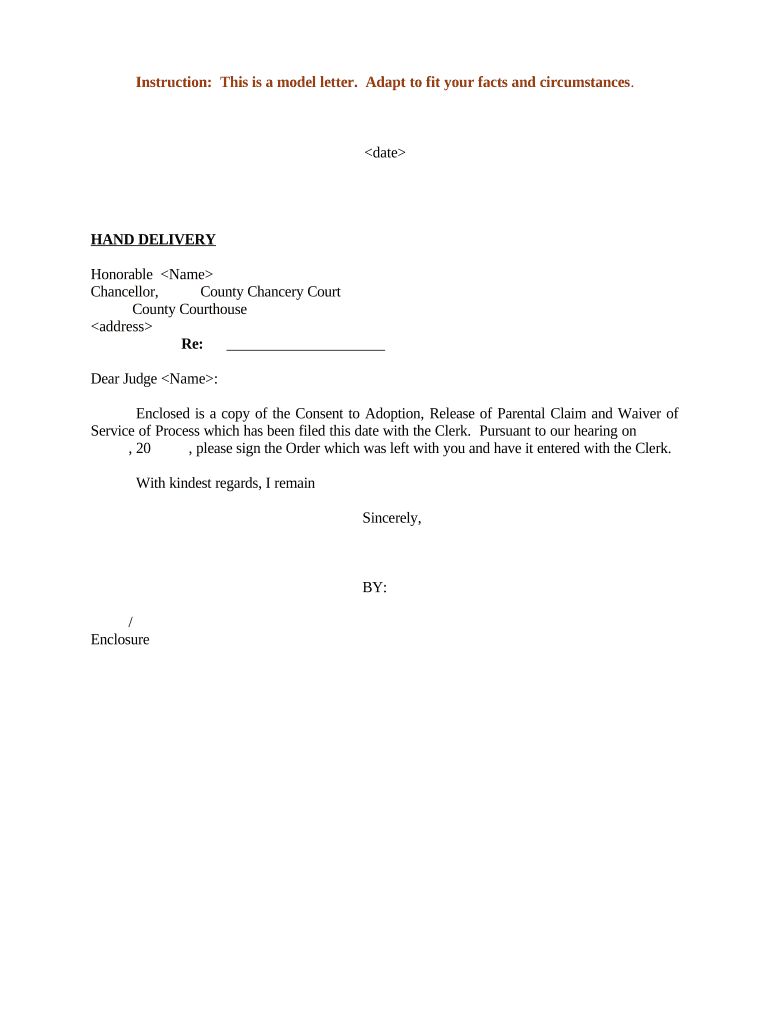







Definition & Meaning of Consent Adoption Form
A consent adoption form is a legal document that provides permission for an individual or couple to adopt a child, granting them full parental rights and responsibilities. This form signifies that the biological parents or guardians understand the implications of adoption and willingly relinquish their parental rights. The consent is crucial in the adoption process as it ensures that all parties are in agreement about the adoption, safeguarding the child's welfare and ensuring that the legal transitions are recognized by the court.
Key Components of the Consent Adoption Form
- Identification of Parties: The names and identification details of the biological parents, adoptive parents, and the child being adopted.
- Statement of Understanding: A detailed declaration acknowledging the nature of the consent being provided, including an understanding of losing parental rights and responsibilities.
- Signatures and Dates: Essential elements, as the signatures of biological parents must be dated and witnessed to validate the consent.
- Jurisdiction and Venue: Information about where the adoption is taking place, which can influence the legal requirements and proceedings.
Steps to Complete the Consent Adoption Form
Completing a consent adoption form involves various steps to ensure accuracy and legal compliance. The following outlines the procedure typically followed in the adoption process.
- Obtain the Form: Access the form from a trusted source, such as an adoption agency, attorney, or court's official website.
- Fill in Identifying Information: Includes the full names, addresses, and contact information for all parties involved (biological parents, adoptive parents, and the child).
- Understand Legal Terminology: Ensure comprehension of terms such as 'relinquishment' and 'adoption decree' to navigate the form accurately.
- Provide Detailed Background Information: Outline any relevant details about the child, including their birthdate, place of birth, and any necessary health information.
- Signatures and Witnesses: All biological parents must sign the form in front of a notary public or authorized witnesses, as required by state law.
- Submit the Form: File the completed consent adoption form with the appropriate court or agency, abiding by all specific regulations.
Common Issues in Completing the Form
- Incomplete Information: Failing to provide all required details can delay proceedings.
- Signature Irregularities: Not signing in the presence of a witness can render the document invalid.
Why Should You Use a Consent Adoption Form?
Utilizing a consent adoption form is vital for several reasons that protect the interests of the child and the individuals involved in the adoption.
- Legal Validation: The form provides a legally binding agreement that relinquishes parental rights, preventing future disputes regarding custody.
- Child's Welfare: Ensures that the child's best interests are prioritized by legally formalizing their relationship with adoptive parents.
- Clear Record Keeping: Establishes a documented trail of consent, which is essential for legal proceedings and future reference.
- Facilitates Court Proceedings: Courts often require documented consent as part of the adoption process, expediting the hearing and finalization.
Important Terms Related to Consent Adoption Form
Understanding the terminology associated with the consent adoption form is essential for effective communication and compliance during the adoption process.
- Relinquishment: The act of a biological parent formally giving up their parental rights.
- Adoption Decree: The court order that finalizes the adoption and establishes the legal relationship between the adoptive parents and the child.
- Termination of Parental Rights (TPR): A legal action that ends the rights of the biological parents, effectively allowing the adoption to proceed without contest.
- Home Study: An evaluation of the prospective adoptive family to ensure they are suitable to care for a child.
- Intercountry Adoption: An adoption involving children from different countries, adding complexity to consent and legal compliance.
Legal Use of the Consent Adoption Form
Utilizing a consent adoption form legally permits the adoption to proceed while safeguarding the rights of all parties involved.
- State-Specific Regulations: Different states have varying laws regarding the adoption process, including specifics about consent forms. Familiarity with local regulations is crucial.
- Judicial Review: Courts will assess the consent adoption form to confirm that it meets jurisdictional requirements and that all parties understand their rights.
- Potential for Revocation: Certain states allow for a limited timeframe in which a biological parent can revoke consent, underscoring the form's significance in ensuring informed agreement.
Consequences of Misuse
- Legal Challenges: A poorly executed consent form may lead to court disputes, impacting the adoption process and the child's welfare.
- Penalties for Non-Compliance: Failing to comply with state regulations regarding consent can result in fines or criminal charges against the neglectful party.
Examples of Using the Consent Adoption Form
The consent adoption form can be applied in various scenarios, highlighting its versatility and importance in the adoption process.
- Stepparent Adoption: In cases where a stepparent is adopting their spouse’s child, a consent adoption form is necessary to formalize the relationship and establish legal rights.
- Interfamily Adoption: When a grandparent or relative adopts a child, the biological parents must provide consent to ensure a smooth legal transition.
- Foster Care Adoption: Biological parents may be required to use a consent adoption form to allow their child to be adopted by foster parents, ensuring that the process aligns with child welfare laws.
Real-World Scenario
Consider a single mother who has decided to place her child for adoption. After meeting with a potential adoptive couple, she completes the form to legally allow the couple to adopt her child. Both parties understand the legal implications and proceed with the required filings at their local court.




