Commercial Sublease - Texas 2026

Get Form
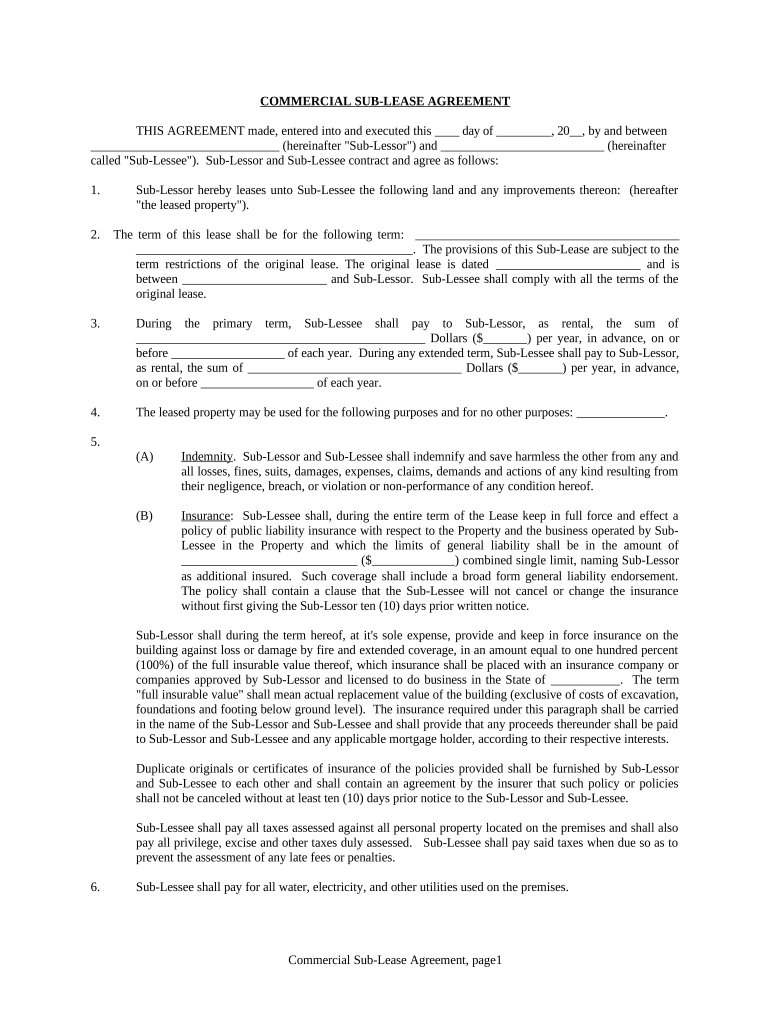
texas sublease agreement Preview on Page 1

Here's how it works

01. Edit your texas sublease agreement online
Type text, add images, blackout confidential details, add comments, highlights and more.
02. Sign it in a few clicks
Draw your signature, type it, upload its image, or use your mobile device as a signature pad.
03. Share your form with others
Send commercial sublease agreement texas via email, link, or fax. You can also download it, export it or print it out.

How to use or fill out Commercial Sublease - Texas with our platform

Form edit decoration
9.5
Ease of Setup
DocHub User Ratings on G2
9.0
Ease of Use
DocHub User Ratings on G2
  1. Click ‘Get Form’ to open the Commercial Sublease - Texas in the editor.
  2. Begin by filling in the date of the agreement at the top of the form. This is crucial for establishing the timeline of your lease.
  3. In the first section, enter the names of both parties: Sub-Lessor and Sub-Lessee. Ensure accuracy as this identifies who is involved in the agreement.
  4. Specify the leased property details, including any improvements. This clarifies what is being subleased.
  5. Indicate the lease term and rental amounts in their respective fields. Be precise with dates and figures to avoid future disputes.
  6. Complete sections regarding indemnity and insurance requirements, ensuring you understand your obligations under these clauses.
  7. Review all terms related to repairs, utilities, and compliance with local regulations to ensure clarity on responsibilities.
  8. Finally, sign and date at the bottom of the document. Make sure both parties have copies for their records.

Start using our platform today to easily complete your Commercial Sublease - Texas for free!

be ready to get more

Complete this form in 5 minutes or less

Get form

Got questions?

We have answers to the most popular questions from our customers. If you can't find an answer to your question, please contact us.
Contact us
In most commercial leases, tenants are required to obtain the landlords consent before subletting or underletting part or all of the premises. The lease typically stipulates that consent cannot be unreasonably withheld, meaning the landlord must have a valid reason for refusing the request.
INTERRUPTION OF UTILITIES, REMOVAL OF PROPERTY, AND EXCLUSION OF COMMERCIAL TENANT.
Subletting happens when an existing contract holder lets all or part of their home to someone else who is known as the sub-holder. The sub-holder usually has a contract for all or part of the property. Its unlawful to sublet your home without your landlords permission.
Subletting isnt illegal in Texas, but you cant sublet without getting consent from the landlord. Check your original lease to determine if theres a right to sublease. If thats not included, you may ask the landlord specifically, though they have the right to say no.
What is Unauthorized Subletting? Unauthorized subletting occurs when a tenant rents all or part of the leased premises to another person (the subtenant) without the landlords consent. Many lease agreements explicitly prohibit subletting without prior written approval from the landlord.

Security and compliance

At DocHub, your data security is our priority. We follow HIPAA, SOC2, GDPR, and other standards, so you can work on your documents with confidence.

Learn more
ccpa2
pci-dss
gdpr-compliance
hipaa
soc-compliance

People also ask

Subletting. In Texas, you are not allowed to rent your place to someone else without your landlords permission. This law is in Section 91.005 of Texas Property Code. Some leases may allow it under certain conditions.
A sublease, or sublet, occurs when a tenant assigns part or all of their lease to a new tenant. In general, most commercial leases permit subletting, but not all do.
Legal Requirements for Subletting First, always get your landlords written consent. Even if the lease doesnt explicitly require permission, subletting without consent can still be grounds for eviction in many places. Keep in mind that the landlords refusal must generally be reasonable.

Related links