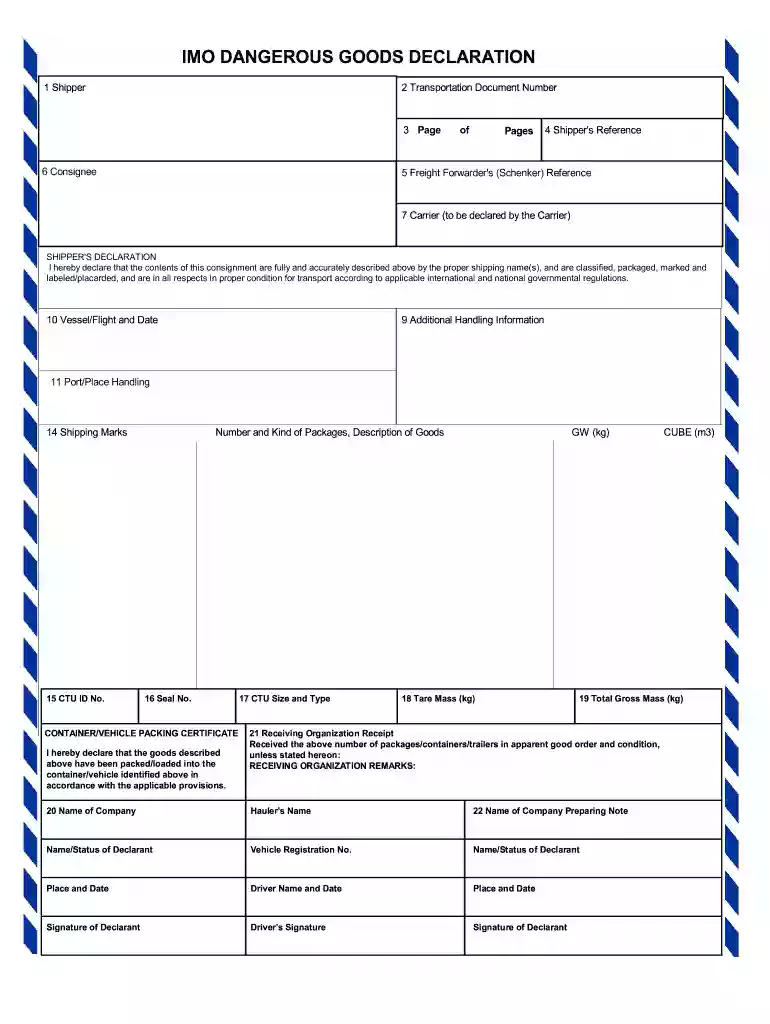
Definition and Purpose of the IMO Dangerous Declaration Form PDF
The IMO Dangerous Declaration Form, often referred to as the IMO DGD, serves a critical role in the safe transport of hazardous goods. This document is a formal statement provided by the shipper, declaring that the materials being shipped conform to established safety and handling regulations.
Key Functions of the IMO Dangerous Declaration Form
- Shipper's Responsibility: The form ensures that the shipper assumes responsibility for the safe transport of dangerous goods, affirming compliance with international standards set by the International Maritime Organization (IMO).
- Transport Compliance: It details essential information, such as the proper classification, packaging, and labeling of the goods, thereby reducing risks during transit.
- Regulatory Requirement: Use of this form is often mandatory for shipping hazardous materials, linking transportation practices to legal frameworks.
This declaration is crucial not only for the shipper and the transportation company but also for authorities overseeing safety and compliance in maritime operations.
How to Complete the IMO Dangerous Declaration Form PDF
Completing the IMO Dangerous Declaration Form requires careful attention to detail to ensure all information is accurate and complies with relevant regulations.
Step-by-Step Process
- Gather Required Information: Collect details about the shipper and consignee, including names, addresses, and contact information.
- Identify the Goods: Clearly describe the hazardous materials being shipped, including UN numbers, proper shipping names, and any classification codes.
- Packaging Details: Specify the type of packaging used for the hazardous materials, ensuring it meets required standards.
- Sign and Date the Form: The shipper must sign and date the declaration to affirm the accuracy of the information and their responsibility for compliance.
- Submit as Required: Provide the completed form to the relevant authorities or shipping company, adhering to submission guidelines.
Each section of the form is essential for ensuring that all parties involved in the logistics chain are informed and compliant with international safety standards.
Who Uses the IMO Dangerous Declaration Form PDF
Various stakeholders in the logistics and transportation sectors regularly utilize the IMO Dangerous Declaration Form to facilitate the safe shipment of hazardous materials.
Typical Users Include:
- Shippers: Companies or individuals shipping hazardous materials are primarily responsible for completing the form.
- Freight Forwarders: These entities assist shippers in managing the logistics of transporting goods, necessitating accurate declarations.
- Shipping Companies: They require the form to comply with safety regulations and ensure proper handling during transit.
- Regulatory Authorities: Agencies overseeing transportation safety may request this form for compliance checks and audits.
The universal application of the IMO DGD ensures that all parties remain accountable for safety and adherence to regulations during the transportation of hazardous goods.
Important Terms Related to the IMO Dangerous Declaration Form PDF
Understanding the terminology associated with the IMO Dangerous Declaration Form is crucial for effective and accurate completion.
Key Terms Include:
- UN Number: A four-digit number assigned to hazardous materials to provide a standardized identification method.
- Proper Shipping Name: The official name required to be used on the shipping documents, reflecting the nature of the hazardous goods.
- Classifications: Hazard classes categorize dangerous goods based on their specific hazards, such as flammable, toxic, or corrosive materials.
- Packaging Group: This signifies the degree of danger posed by the goods and influences packaging requirements.
Familiarity with these terms enhances comprehension and assists in properly filling out the declaration form.
Legal Considerations for Using the IMO Dangerous Declaration Form PDF
The IMO Dangerous Declaration Form is not only a guideline for shipping hazardous materials but also a legal document that implicates the shipper in the transport process.
Legal Requirements
- Compliance with International Regulations: The form must adhere to standards set by the International Maritime Dangerous Goods (IMDG) Code to avoid legal repercussions.
- Liability: Inaccuracies or omissions can lead to legal issues, including fines, penalties, or liability for damages caused by improper handling of hazardous materials.
- Record-Keeping: Shippers are often required to maintain copies of the declaration for a specified duration, complying with local regulations.
Understanding the legal implications of the form ensures that shippers and associated parties manage risks effectively.
Key Elements of the IMO Dangerous Declaration Form PDF
The structure and content of the IMO Dangerous Declaration Form are designed to convey crucial information about dangerous goods.
Essential Components
- Shipper Information: Includes name, address, and contact details.
- Goods Description: A detailed account of the goods, including UN numbers and proper shipping names.
- Packaging Information: Details about the packaging types and any relevant safety markings.
- Signature and Date: The shipper's affirmation of accuracy and compliance with legal requirements.
Each of these components plays a vital role in ensuring the safe and legal transport of hazardous materials.
Examples of Using the IMO Dangerous Declaration Form PDF
Practical application of the IMO Dangerous Declaration Form can be illustrated through several industry scenarios.
Real-World Scenarios
- Chemical Manufacturing: A chemical company preparing a shipment of solvents completes the form to declare the hazardous nature of the materials and ensures compliance with IMDG regulations.
- Pharmaceuticals Shipment: When shipping pharmaceuticals that include potentially hazardous ingredients, proper use of the form helps to safeguard public health and comply with legal requirements during transit.
- Industrial Equipment Transport: A manufacturer shipping machinery that contains flammable components completes the declaration, ensuring that the logistics provider adheres to safety protocols.
These examples underscore the importance of accurate declaration in different contexts and industries.