Notice 30 6 b sample 2026

Get Form
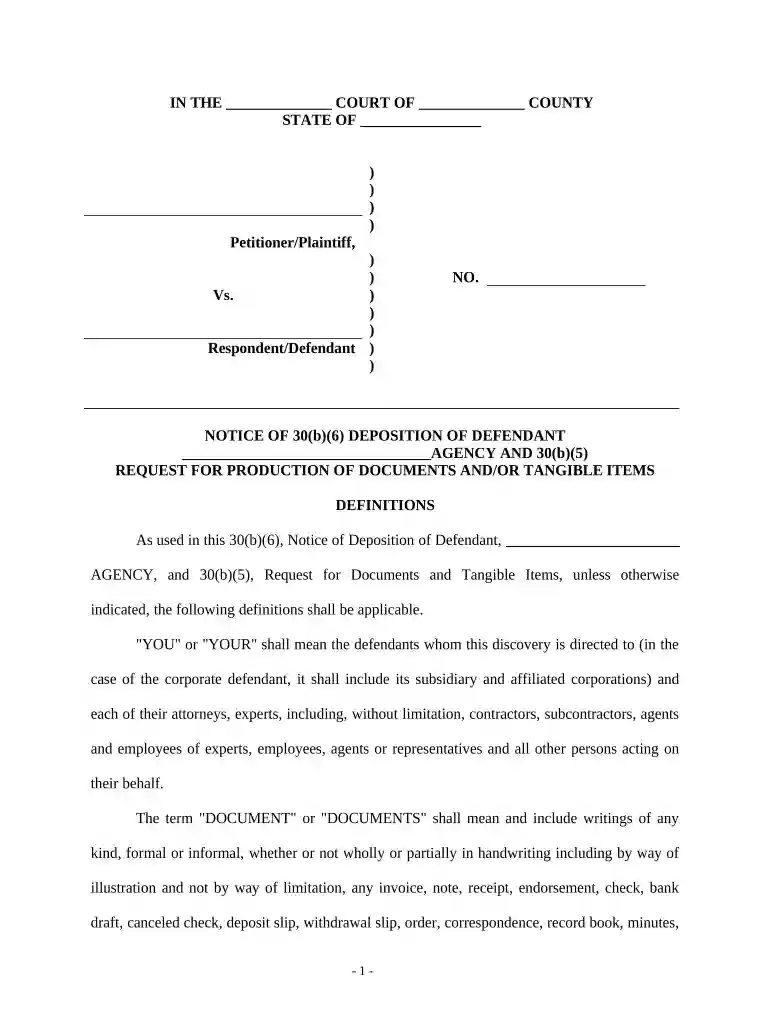
30 b 6 deposition Preview on Page 1

Here's how it works

01. Edit your 30 b 6 deposition online
Type text, add images, blackout confidential details, add comments, highlights and more.

02. Sign it in a few clicks
Draw your signature, type it, upload its image, or use your mobile device as a signature pad.

03. Share your form with others
Send sample rule 30 b 6 deposition notice via email, link, or fax. You can also download it, export it or print it out.

Definition and Meaning of Notice 30 6 b Sample

The "notice 30 6 b sample" is a legal instrument stipulated under Federal Rules of Civil Procedure Rule 30(b)(6). This rule provides the framework for deposition notices aimed at organizations and corporations. The core function of the notice is to require the organization to designate one or more representatives to testify on its behalf. These representatives must be able to speak knowledgeably about designated topics of inquiry, which are outlined in the notice.

Key points to understand include:

  • Legal Foundation: It operates under the U.S. legal system, thus adhering to federal law guidelines.
  • Purpose: The aim is to gather detailed and comprehensive information pertinent to cases where organizations are involved, facilitating a structured method of obtaining insights from corporate entities.
  • Scope: The items sought in discovery can cover various areas, including company protocols, business history, and specific allegations related to ongoing litigation.

This structure is instrumental for attorneys seeking evidence from corporate entities, ensuring that the information gathered is directly relevant to the issues at hand in legal proceedings.

How to Use the Notice 30 6 b Sample

To effectively utilize the notice 30 6 b sample, it is essential to follow a structured approach. The notice should be drafted with clarity, detailing the topics to be covered during the deposition. Here are steps to consider:

  1. Drafting the Notice:

    • Clearly state the intention to take a deposition under Rule 30(b)(6).
    • Provide detailed descriptions of the topics for which testimony is sought. It is important that these topics are not overly broad, as vague requests may lead to objections.
  2. Serving the Notice:

    • Serve the notice to the opposing party, ensuring compliance with local rules regarding service methods and timelines.
    • It’s advisable to send the notice well in advance of the deposition date to allow sufficient time for preparation.
  3. Preparing for the Deposition:

    • Work with the designated corporate representative to ensure they understand the topics and prepare adequately. This may involve reviewing relevant documents and previous testimonies.
    • Conduct mock depositions to better prepare the representative for the questioning process.
  4. Conducting the Deposition:

    • Use the notice as a guideline to direct questioning during the deposition. Ensure questions align with the specified topics to maintain relevance and admissibility.

This methodical approach helps ensure that the goal of acquiring pertinent information is met effectively and efficiently.

Important Terms Related to Notice 30 6 b Sample

Understanding critical terminology related to the notice 30 6 b sample enhances comprehension and effectiveness in its application. Here are some essential terms:

  • Deposition: A sworn out-of-court testimony collected during the discovery process. It can be used to gather information and as evidence in court.
  • Corporate Representative: An individual designated by a corporation to speak on its behalf during depositions. This person should have sufficient knowledge regarding the topics identified in the notice.
  • Discovery: A pre-trial procedure where each party can obtain evidence from the opposing party. The 30 6 b sample notice is a mechanism within this process.
  • Objection: A formal protest made during a deposition, typically aimed at challenging the appropriateness of a question or the scope of the notice.

Familiarity with these terms aids legal practitioners and their clients in navigating the deposition process with greater clarity.

Steps to Complete the Notice 30 6 b Sample

Completing a notice 30 6 b sample requires careful attention to detail and adherence to legal standards. Below are the specific steps to ensure proper completion:

  1. Identify the Purpose:

    • Determine the specific information required and how it relates to the case at hand.
  2. Outline Required Topics:

    • List the categories of information needed from the corporate designee. These topics should be specific and relevant to the ongoing litigation to avoid objections.
  3. Draft:

    • Write the notice, beginning with identifying the case title and civil action number.
    • Include the necessary information such as date, time, and location of the deposition, as well as the identity of the corporate designee.
  4. Review for Completeness:

    • Ensure that all aspects of the notice meet legal requirements. A thorough review helps prevent potential legal challenges regarding its appropriateness.
  5. Serve the Notice:

    • Following legal protocols, serve the notice to the opposing counsel, confirming receipt as necessary to prevent disputes.

This stepwise procedure is pivotal in ensuring that the notice is comprehensive, compliant, and conducive to achieving the desired outcomes during the deposition.

Who Typically Uses the Notice 30 6 b Sample

The notice 30 6 b sample is commonly used by various professionals in the legal field. The following groups typically engage with this form:

  • Attorneys: Primarily, lawyers involved in litigation leverage this notice to gather information from corporations that are parties in civil suits.
  • Corporate Counsel: In-house legal teams use their knowledge of the rule to prepare for depositions and ensure compliance with demands made by opposing parties.
  • Entities in Litigation: Organizations faced with legal disputes are directly engaged with this form either in preparing for depositions themselves or in responding to notices served upon them.
  • Litigation Support Professionals: Paralegals and junior attorneys assist in the drafting and execution of these notices, ensuring all procedural rules are followed.

Understanding who engages with the notice reveals the breadth of its application within the legal framework and highlights its importance across various roles in the legal profession.


decoration image ratings of Dochub
be ready to get more

Complete this form in 5 minutes or less

Get form

Got questions?

We have answers to the most popular questions from our customers. If you can't find an answer to your question, please contact us.
Contact us
A Rule 30(b)(6) notice must (1) provide the date, time, and place for taking the deposition; (2) specify the name and address of the entity being deposed; (3) set forth with reasonable particularity the matters for examination; (4) indicate the method by which the testimony will be recorded and whether documents are
Objections to the deposition notice ( 2025.410(a).) The objection must be served on both the party noticing the deposition and all other parties on the proof of service at least 3 calendar days before the date of the deposition. ( 2025.410(a) and (b).)
Rule 30(b)(6). This provision gives a party the option of designating the subject matter upon which he seeks discovery in the notice of deposition of an organizational party.
(a) An oral deposition shall be scheduled for a date at least 10 days after service of the deposition notice.
A Rule 30(b)(6) notice must describe with reasonable particularity the matters for examination and educate the designee to testify about information known or reasonably available to the organization.

Security and compliance

At DocHub, your data security is our priority. We follow HIPAA, SOC2, GDPR, and other standards, so you can work on your documents with confidence.

Learn more
ccpa2
pci-dss
gdpr-compliance
hipaa
soc-compliance

People also ask

The Rule 30(b)(6) deposition is the process by which a litigant may depose a corporation or other business entity. While it is impossible for a corporation to be deposed in the literal sense, the corporation must designate one or more representatives who will testify on its behalf.
Within 7 days of being served with the notice, the responding party must serve written objections. The parties then have seven days to confer regarding the objections served. If the parties are unable to resolve the objections, either party may seek judicial intervention.

30 b 6 deposition notice sample