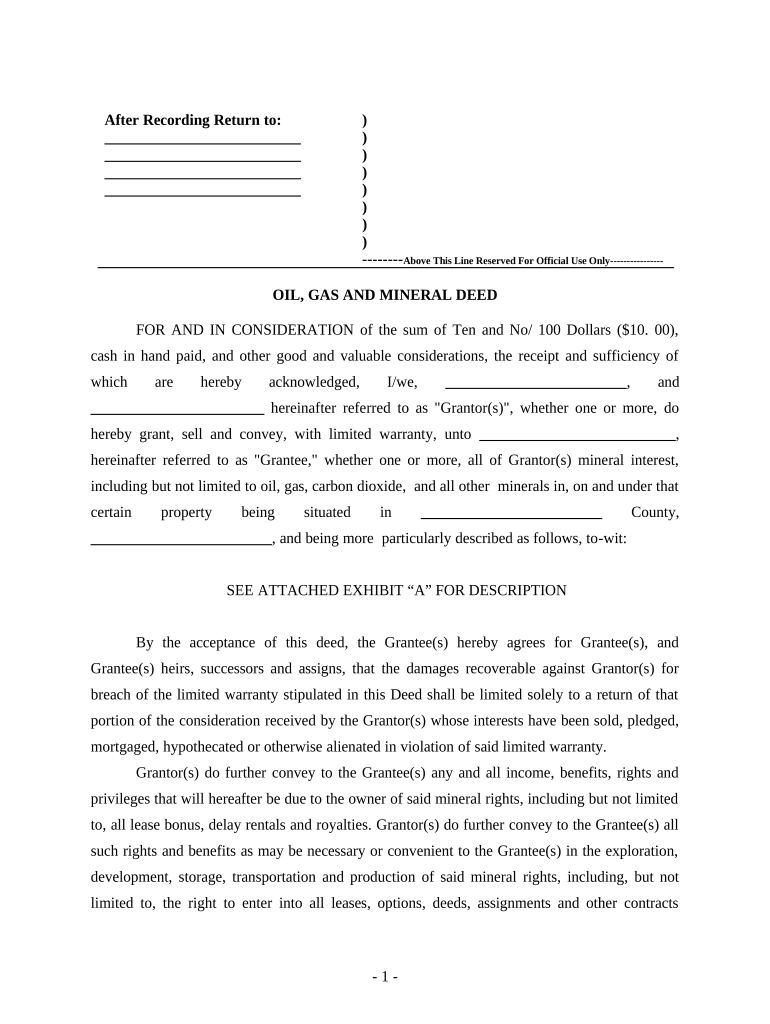


Oil, Gas and Mineral Deed - Individual or Two Individuals to an Individual 2025

Get Form
inherited oil and gas royalties Preview on Page 1

Here's how it works

01. Edit your inherited oil and gas royalties online
Type text, add images, blackout confidential details, add comments, highlights and more.
02. Sign it in a few clicks
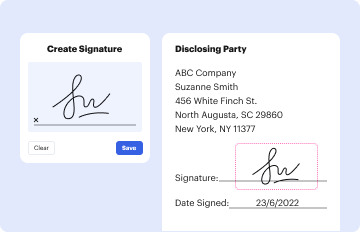
Draw your signature, type it, upload its image, or use your mobile device as a signature pad.
03. Share your form with others
Send how to transfer inherited mineral rights via email, link, or fax. You can also download it, export it or print it out.

How to use or fill out Oil, Gas and Mineral Deed - Individual or Two Individuals to an Individual with our platform

Form edit decoration
9.5
Ease of Setup
DocHub User Ratings on G2
9.0
Ease of Use
DocHub User Ratings on G2
  1. Click ‘Get Form’ to open it in the editor.
  2. Begin by filling in the names of the Grantor(s) in the designated fields. If there are two individuals, ensure both names are clearly stated.
  3. Next, specify the Grantee's name who will receive the mineral rights. This is crucial for legal clarity.
  4. In the section regarding consideration, confirm the amount being exchanged (e.g., Ten Dollars) and ensure it is accurately reflected.
  5. Provide a detailed description of the property involved, including county and any specific identifiers as outlined in Exhibit 'A'.
  6. Indicate the number of net mineral acres being conveyed to avoid any future disputes.
  7. Finally, both Grantor(s) must sign and date the document. Ensure that all signatures are witnessed by a Notary Public for validation.

Start using our platform today to streamline your document editing and signing process for free!

be ready to get more

Complete this form in 5 minutes or less

Get form

Got questions?

We have answers to the most popular questions from our customers. If you can't find an answer to your question, please contact us.
Contact us
A mineral deed is a document that transfers ownership of the right to harvest minerals, or the right to receive payments from the mining of minerals. However, a mineral deed only controls the subsurface rights and cannot control legal access to the surface of the land.
As a general rule, mineral rights attach to land and are transferred automatically with the conveyance of property, unless the property deed excludes them or indicates otherwise.
To determine if you own the mineral rights on a parcel, you will first need to check the deed. The mineral rights may have been severed from the surface at some point in time. If your deed does not list this information, you will need to contact the County Clerk in the county where your minerals are located.
Unless you also own the minerals under your land, that someone might have every right to start drilling. In the United States, mineral rights can be sold or conveyed separately from property rights. As a result, owning a piece of land does not necessarily mean you also own the rights to the minerals beneath it.
Conduct a title deed search at the county records office to find the owner history in the title deed. Follow the history of the property through the chain of owners. This can tell you whether the property or land was ever owned by an oil and gas company.

People also ask

If you want to sell the mineral rights to a family member or friend, one (or both) of you will need to hire an attorney to draft the deed. Once the deed has been docHubd, the original must be recorded in the county where the minerals are located.
You need to consult a California oil and gas title attorney as that is a specialized question requiring knowledge of California law. That attorney can help you file documents required to transfer title from your grandfather through all the owners to you.

what happens to mineral rights when someone dies