Type text, add images, blackout confidential details, add comments, highlights and more.
02. Sign it in a few clicks
Draw your signature, type it, upload its image, or use your mobile device as a signature pad.
03. Share your form with others
Send it via email, link, or fax. You can also download it, export it or print it out.
How to use or fill out injunction pdf with our platform
Ease of Setup
DocHub User Ratings on G2
Ease of Use
DocHub User Ratings on G2
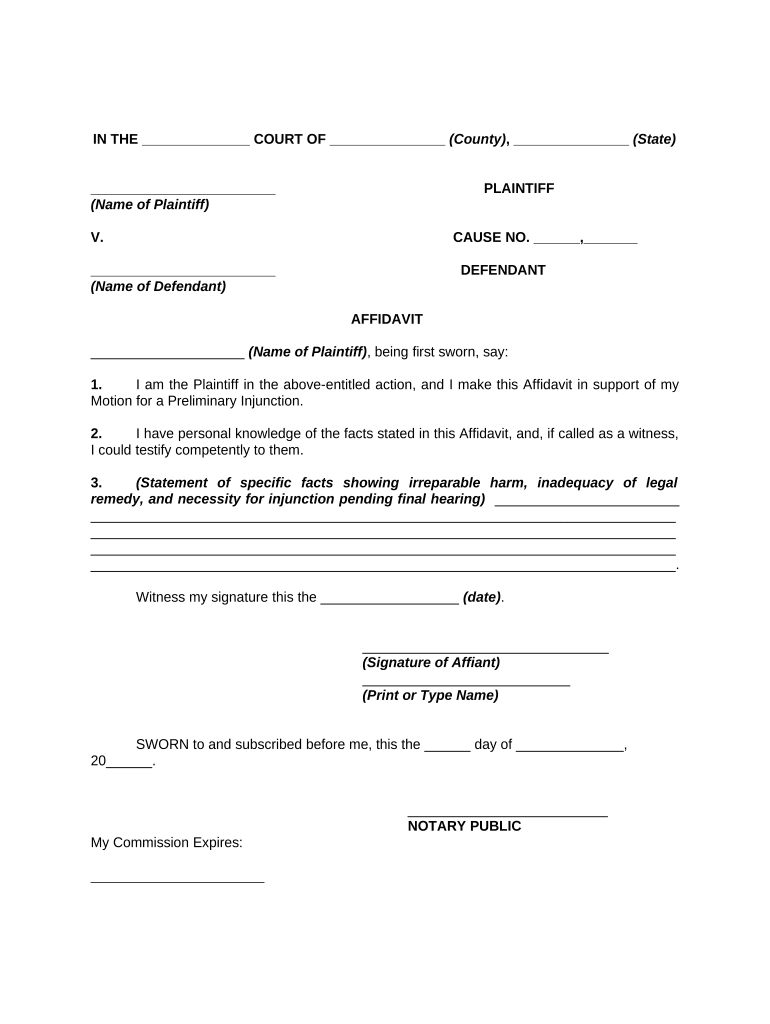
Click ‘Get Form’ to open the injunction PDF in the editor.
Begin by filling in the court name, county, and state at the top of the document. This information is crucial for identifying the jurisdiction of your case.
Next, enter the names of both the plaintiff and defendant in their respective sections. Ensure that these names are accurate as they will be referenced throughout the document.
In the affidavit section, provide a clear statement of facts supporting your motion for a preliminary injunction. Be specific about any irreparable harm and why legal remedies are inadequate.
After completing your statements, sign and date where indicated. Make sure to print or type your name below your signature for clarity.
Finally, ensure that a notary public witnesses your signature and fills in their details, including commission expiration date.
Start using our platform today to easily complete your injunction PDF online for free!
Prohibitory Injunctions: These are the most common type and essentially tell the respondent what they cannot do. This could include anything from contacting a specific person (the petitioner) to coming near their home, workplace, or even a certain distance from their childrens school.
What are the three essentials of injunction?
To seek a permanent injunction, the plaintiff must pass the four-step test: (1) that the plaintiff has suffered an irreparable injury; (2) that remedies available at law, such as monetary damages, are inadequate to compensate for the injury; (3) that the remedy in equity is warranted upon consideration of the balance
What are the 4 elements of injunction?
In determining whether to grant or deny a preliminary injunctive relief, the courts generally look to several of the factors including: (1) the plaintiffs likelihood of prevailing on the merits;(2) a showing of irreparable injury to plaintiff if relief is not granted; (3) the threatened injury to the movant is
What are the three types of injunctions?
An injunction is a legal ruling by a judge that mandates an individual or other entity to either stop or start some action. The three main instances of an injunction are restraining orders, preliminary (temporary) injunctions, and permanent injunctions.
What is the difference between a preliminary and a permanent injunction?
A preliminary injunction would be granted before the final resolution of the case on the merits, while a permanent injunction is part of the final relief granted by the court after trial or other resolution of the merits (such as summary judgment or the resolution of appeal-style Administrative Procedure Act challenges
Related Searches
How to file an injunction without a lawyerFile an injunction meaningGrounds for injunctionInjunction templatePetition for injunction for ProtectionHow much does it cost to file an injunctionMotion for preliminary injunction exampleFile an injunction online Duval County
Security and compliance
At DocHub, your data security is our priority. We follow HIPAA, SOC2, GDPR, and other standards, so you can work on your documents with confidence.
Write a short and plain statement of the claim. Do not make legal arguments. State as briefly as possible the facts showing that each plaintiff is entitled to the injunction or other relief sought.
Related links
Remedies for Real Property Disputes in Florida
A temporary injunction is an extraordinary remedy. The movant must prove all essential elements for a temporary injunction with competent, admissible evidence.Read more
Write a short and plain statement of the claim. Do not make legal arguments. State as briefly as possible the facts showing that each plaintiff is entitled toRead more
Cookie consent notice
This site uses cookies to enhance site navigation and personalize your experience.
By using this site you agree to our use of cookies as described in our Privacy Notice.
You can modify your selections by visiting our Cookie and Advertising Notice.