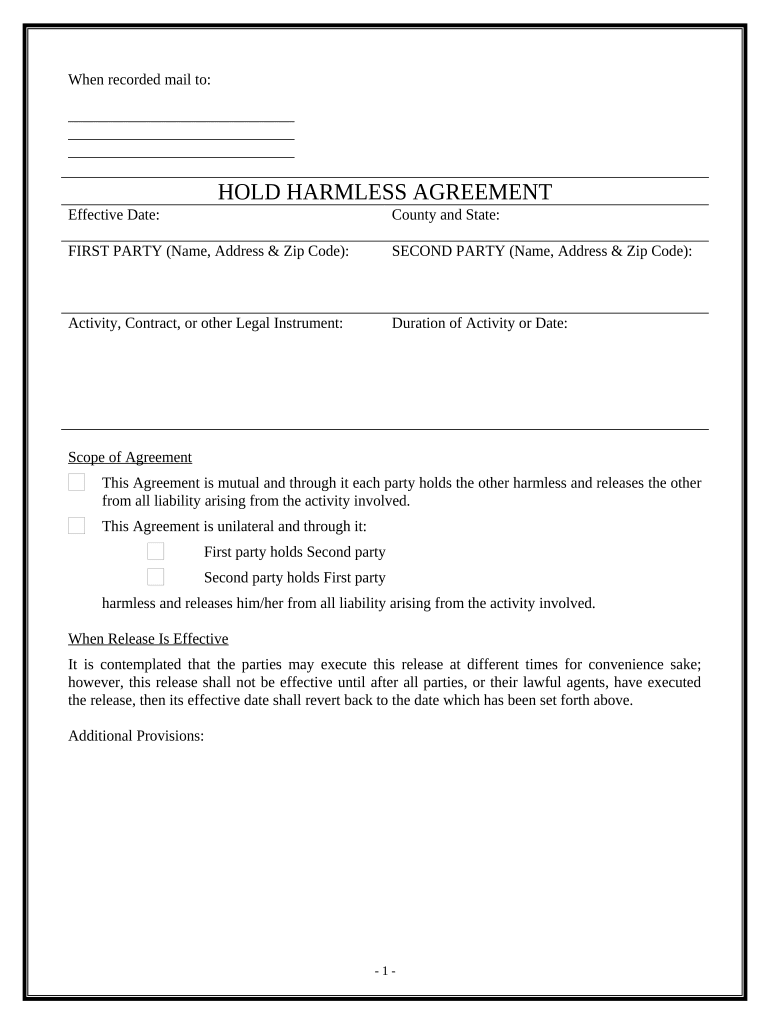







Definition and Meaning of the Hold Harmless Agreement
A hold harmless agreement is a legal document designed to protect one party from any claims or liabilities that may arise from a specified activity or contract. This form is particularly prevalent in scenarios where risk is involved, such as construction projects, events, and professional services. The essence of the agreement is mutual consent, where one party agrees to indemnify the other against potential legal repercussions stemming from their actions or the tasks they perform.
Key components of a hold harmless agreement include:
- Parties Involved: Clearly identifies the individuals or entities entering into the agreement.
- Scope of Activities: Outlines the specific activities or services that are covered by the agreement.
- Effective Date: States the date when the agreement comes into force.
- Signatures and Notarization: Requires signatures from both parties, often accompanied by a notary acknowledgment to enhance legal validity.
This agreement is critical when parties seek to mitigate risks associated with their activities, ensuring that they are not financially or legally burdened should issues arise.
Steps to Complete the Hold Harmless Agreement PDF
Completing a hold harmless agreement involves several straightforward steps. Adhering to these guides ensures that the document is filled out correctly and serves its intended purpose effectively.
- Identify the Parties: Begin by clearly naming the parties involved in the agreement. Ensure that all names are spelled correctly and reflect the legal names of the individuals or entities.
- Define the Scope of Liability: Specify the activity, service, or situation that the hold harmless agreement covers. This description should be detailed enough to avoid ambiguity in the future.
- Set the Effective Date: Indicate the official date when the agreement takes effect. This date is crucial for determining the timeframe within which any potential claims would be applicable.
- Signatures and Notarization: Have both parties sign the agreement. Depending on state laws, notarization may be required to validate the document legally. Check local regulations to ensure compliance.
- Distribute Copies: Once completed, distribute copies of the signed agreement to all parties involved. Retain a copy for your records, as this will serve as proof of the agreement in case of future disputes.
This structured method of completing the hold harmless agreement PDF assists in minimizing misunderstandings between the parties.
Why Should You Use a Hold Harmless Agreement PDF?
Using a hold harmless agreement is essential for various reasons, particularly when activities involve risks or liability potential. Here are several benefits:
- Liability Protection: The primary function of a hold harmless agreement is to provide legal protection against claims. By formalizing the agreement, parties can avoid unexpected expenses and legal battles stemming from accidents or damages.
- Clarity of Responsibilities: The agreement delineates the responsibilities of each party, reducing the potential for disputes regarding liability.
- Peace of Mind: Parties can engage in activities or services with greater confidence, understanding that they have safeguards in place against unforeseen issues.
- Legal Compliance: Many businesses and activities require such agreements to comply with legal obligations or insurance requirements. Utilizing a hold harmless agreement helps ensure adherence to these needs.
By implementing a hold harmless agreement PDF, parties involved can operate within a defined framework, reducing risks and contributing to smoother transactions or service engagements.
Key Elements of the Hold Harmless Agreement PDF
A well-structured hold harmless agreement typically includes several essential elements that delineate the responsibilities and liabilities of the parties involved.
- Identification of Parties: Clearly stating who the parties to the agreement are, including any relevant business names or identification numbers.
- Description of Activities: A precise description of the activities that the agreement covers is critical. Vague language can lead to disputes about what is included or excluded.
- Indemnification Clause: This section outlines the agreement of one party to indemnify the other against specific losses or claims. It must be clear and comprehensible.
- Limitation of Liability: Some agreements may feature a limitation of liability clause, which caps the amount that one party may be required to pay in damages.
- Jurisdiction and Governing Law: Specifying which state's laws govern the agreement helps mitigate confusion over legal interpretations and enforceability.
Incorporating these key elements into a hold harmless agreement PDF not only enhances its clarity but also strengthens its legal enforceability.
Who Typically Uses the Hold Harmless Agreement PDF?
Hold harmless agreements are utilized across various fields and industries, reflecting their versatile nature in different contexts. Typical users include:
- Contractors and Subcontractors: In construction projects, these agreements protect contractors from claims related to injuries or accidents on the job site.
- Event Organizers: Those managing events often require participants and vendors to sign hold harmless agreements before engaging in activities that involve inherent risks.
- Service Providers: Professionals offering services, such as fitness instructors or recreational guides, use hold harmless agreements to protect against claims resulting from their activities.
- Landlords and Tenants: Agreements can also be relevant in rental situations, where landlords may require tenants to assume certain liabilities while using rental properties.
These parties are typically focused on risk management and liability limitation, making the hold harmless agreement an essential component of their operations or engagements.