
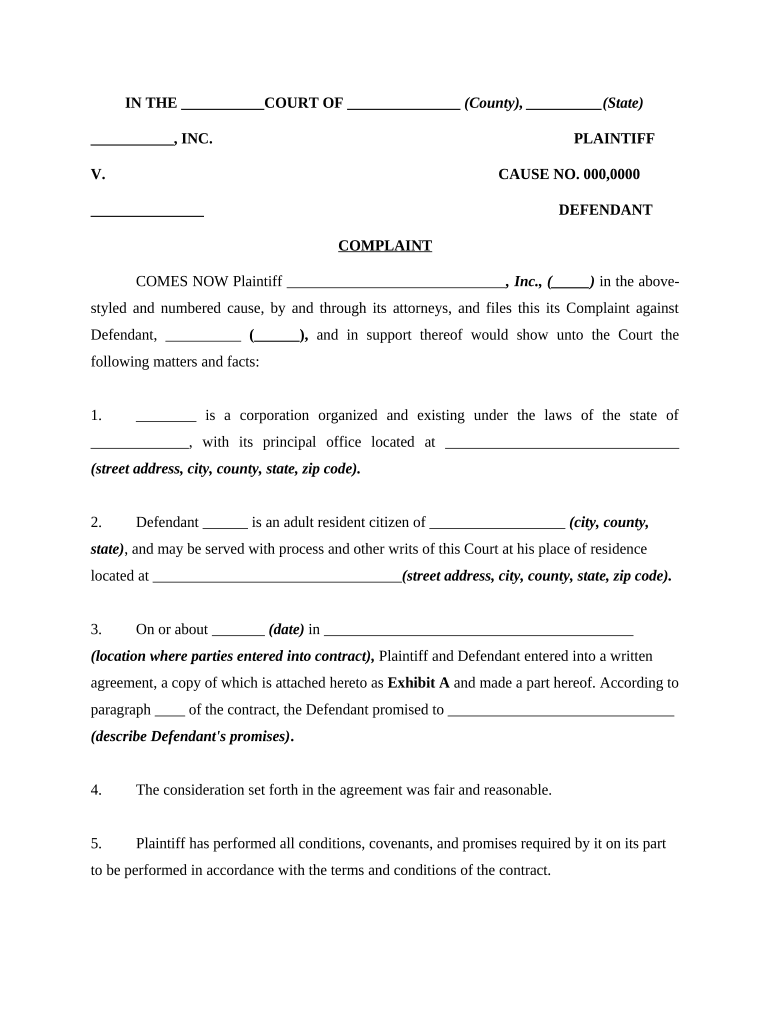







Definition and Meaning of a Breach of Contract Complaint
A breach of contract complaint is a formal legal document filed by a plaintiff against a defendant, asserting that the defendant failed to fulfill their obligations under a contract. This document details the nature of the agreement, which is often a legally binding arrangement between parties for goods, services, or property. Key components of this type of complaint include the identification of the parties involved, the specific terms of the contract that were violated, and the damages incurred as a result of the breach. The plaintiff seeks remedies, which can include compensatory damages, interest, attorney fees, and other legal relief.
The essence of a breach of contract complaint lies in establishing that:
- Existence of a Valid Contract: The complaint must confirm that there was a legally binding contract in place, including details of the agreement.
- Breach of Contract: The plaintiff must specify how the defendant failed to meet their contractual obligations, which can range from non-performance to substandard performance.
- Damages: It must be demonstrated that the plaintiff suffered quantifiable damages due to the breach. This can include financial losses, lost opportunities, or other impacts stemming from the defendant's failure.
Understanding these elements is crucial for effectively navigating the legal landscape surrounding contract law.
Important Elements of a Breach of Contract Complaint
Every breach of contract complaint must contain certain essential elements to be considered valid and actionable. Failing to include any of these components may result in dismissal or denial of the claim.
- Parties Involved: Clearly define the plaintiff(s) and defendant(s) with full names and contact information.
- Contract Details: Specify the nature of the contract, including the date it was executed, the parties’ obligations, and any relevant clauses.
- Breach Description: Describe the specific actions or inactions that constitute the breach. This includes details on how the defendant's conduct diverged from the agreed-upon terms.
- Damages Incurred: Provide a detailed account of the damages suffered by the plaintiff as a result of the breach. This can include direct financial losses, consequential damages, and sometimes emotional distress in certain contracts.
Using precise language and structuring these elements clearly will enhance the effectiveness of the complaint.
Steps to Complete a Breach of Contract Complaint
Filing a breach of contract complaint involves several detailed steps. Each step must be executed with attention to legal requirements and procedural correctness.
- Gather Relevant Documentation: Collect all documents related to the contract, including the original contract, any communications (emails, letters), and evidence of the breach (invoices, agreements).
- Identify Jurisdiction: Determine which court has jurisdiction over the matter, usually based on where the contract was executed or where the parties reside.
- Draft the Complaint: Write the complaint, ensuring it includes all essential elements such as parties involved, contract details, description of the breach, and damages.
- File with the Court: Submit the complaint to the appropriate court, along with any required filing fees. Ensure that you comply with local court rules regarding formatting and submission.
- Serve the Defendant: After filing, officially deliver a copy of the complaint to the defendant. This is known as service of process and is crucial for the court to have jurisdiction over the defendant.
- Await Response: The defendant typically has a set period to respond to the complaint, often through a motion to dismiss or an answer. Prepare for potential counterclaims or defenses.
By following these steps meticulously, plaintiffs will ensure their complaint is filed correctly and promptly.
Common Examples of Breach of Contract Scenarios
Breach of contract complaints can arise in various contexts and industries, reflecting the diverse nature of contractual relationships.
- Business Transactions: A supplier fails to deliver goods as stipulated in a purchase agreement, causing the buyer financial losses due to lost sales opportunities.
- Service Agreements: A contractor does not complete a renovation within the agreed timeframe, resulting in additional costs for the homeowner who faces delays.
- Employment Contracts: An employer unjustly terminates an employee without following the procedure outlined in an employment contract, leading to potential claims for lost wages.
- Real Estate Transactions: A buyer is unable to secure financing as promised, and the seller may file a complaint for breach of contract due to the buyer’s failure to complete the sale.
Understanding these examples can help individuals recognize potential breaches and the grounds for forming solid complaints.
State-Specific Rules for Breach of Contract Complaints
Laws governing breach of contract complaints can vary significantly across different states, impacting how complaints are structured and filed.
- Filing Procedures: Each state has its own rules regarding the format and filing of legal complaints. Familiarize yourself with your state's civil procedure rules, including deadlines for filing.
- Statute of Limitations: Many states have specific time limits within which a breach of contract complaint must be filed. This period can range from three to ten years, depending on the nature of the contract.
- Required Documentation: Types of documentation and evidence required may differ by state. Some jurisdictions require particular forms or statements to be filed along with the complaint.
- Defense Options: States vary in recognizing defenses available to defendants in breach of contract cases, such as impossibility of performance or prior material breach by the plaintiff.
Being aware of these state-specific rules can significantly influence the outcome of a breach of contract complaint.
Legal Use of Breach of Contract Complaints
Filing a breach of contract complaint serves various legal purposes, protecting the rights of the aggrieved party.
- Remedy for Damages: The primary legal use is to seek compensatory damages for losses incurred as a result of the breach.
- Enforcement of Contract Terms: Complaints can aim to compel compliance with the contract terms, enforcing specific performance when applicable.
- Evidence of Intent: Filing can serve as evidence of good faith efforts to resolve disputes if the matter progresses to further legal action.
- Precedent in Future Cases: Successfully filed complaints can set legal precedent for similar cases in the future, influencing how contracts are interpreted and enforced.
Understanding these legal implications can guide plaintiffs in effectively using breach of contract complaints to assert their rights.
Sample Breach of Contract Complaint: Florida Context
When drafting a breach of contract complaint in Florida, it is essential to conform to the state’s specific procedural requirements.
- Title and Caption: Begin with the title “Complaint for Breach of Contract” and include the court name, parties’ names, and case number.
- Parties’ Information: Clearly label the plaintiff and defendant, including their addresses and status (individual, corporation, etc.).
- Factual Background: Offer a brief description of the contract, its essential terms, and the breach’s specifics.
- Count of Breach: Each allegation may be specified in numbered paragraphs, detailing the breach and the corresponding impacts on the plaintiff.
- Relief Sought: Conclude with a section that outlines the specific relief or damages being sought, making it clear to the court how the plaintiff wishes to resolve the issue.
Utilizing a sample breach of contract complaint ensures compliance with local laws and standards, thereby increasing the likelihood of successfully asserting a claim.


