Type text, add images, blackout confidential details, add comments, highlights and more.
02. Sign it in a few clicks
Draw your signature, type it, upload its image, or use your mobile device as a signature pad.
03. Share your form with others
Send it via email, link, or fax. You can also download it, export it or print it out.
How to use or fill out waiver counsel form with our platform
Ease of Setup
DocHub User Ratings on G2
Ease of Use
DocHub User Ratings on G2
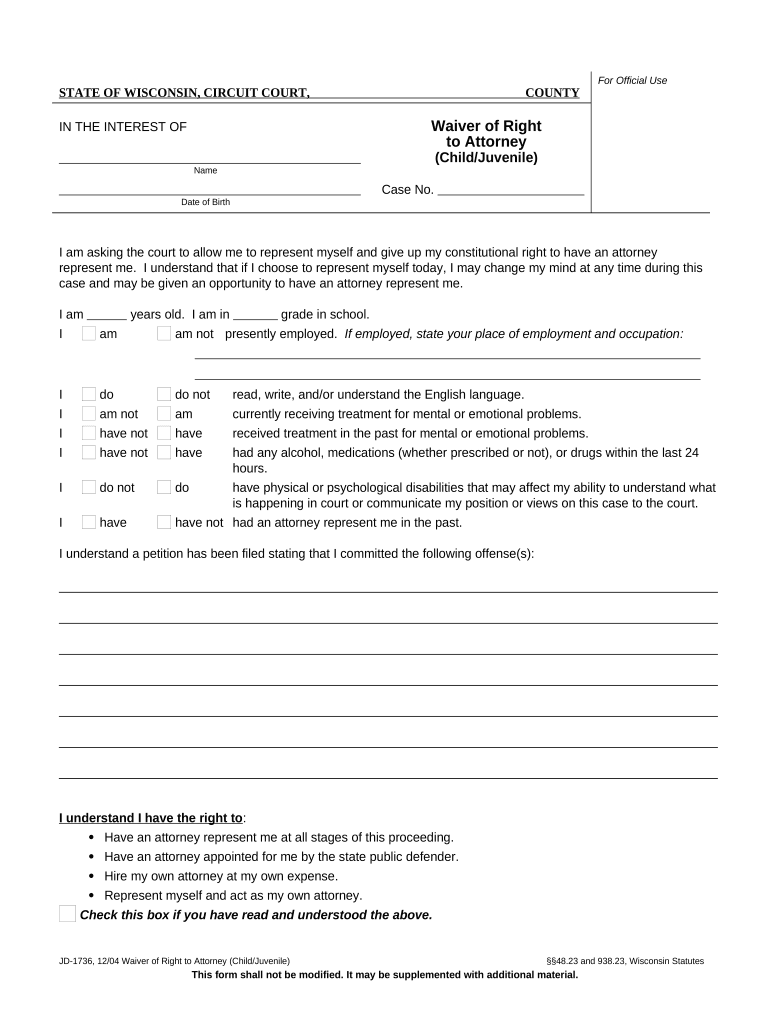
Click ‘Get Form’ to open the Waiver of Right to Attorney form in the editor.
Begin by entering the child's name and case number at the top of the form. Ensure that you accurately input the date of birth as this is crucial for identification.
In the section where it asks about your age and grade, fill in your current age and school grade. If you are employed, provide your place of employment and occupation.
Indicate whether you can read, write, and understand English by checking the appropriate box. This helps establish your ability to comprehend court proceedings.
Answer questions regarding any mental health treatment or substance use within the last 24 hours. This information is important for assessing your capacity to represent yourself.
Review your rights carefully listed in the form. Check the box confirming that you have read and understood these rights before proceeding.
Finally, sign and date the document at the bottom, affirming that you wish to waive your right to an attorney and represent yourself.
Start filling out your Waiver of Right to Attorney form online for free today!
Aug 5, 2025 Secure a written waiver of counsel before calling any witness. Additionally, before arraigning a non-represented defendant in a misdemeanor caseRead more
1 Introduction 2 Meeting the Statutory Requirement 3 1. The Public Interest Requirement. 3.1 Concerns the operations or activities of the government 4 2.Read more
Cookie consent notice
This site uses cookies to enhance site navigation and personalize your experience.
By using this site you agree to our use of cookies as described in our Privacy Notice.
You can modify your selections by visiting our Cookie and Advertising Notice.