Type text, add images, blackout confidential details, add comments, highlights and more.
02. Sign it in a few clicks
Draw your signature, type it, upload its image, or use your mobile device as a signature pad.
03. Share your form with others
Send it via email, link, or fax. You can also download it, export it or print it out.
How to use or fill out e form with our platform
Ease of Setup
DocHub User Ratings on G2
Ease of Use
DocHub User Ratings on G2
Click ‘Get Form’ to open it in the editor.
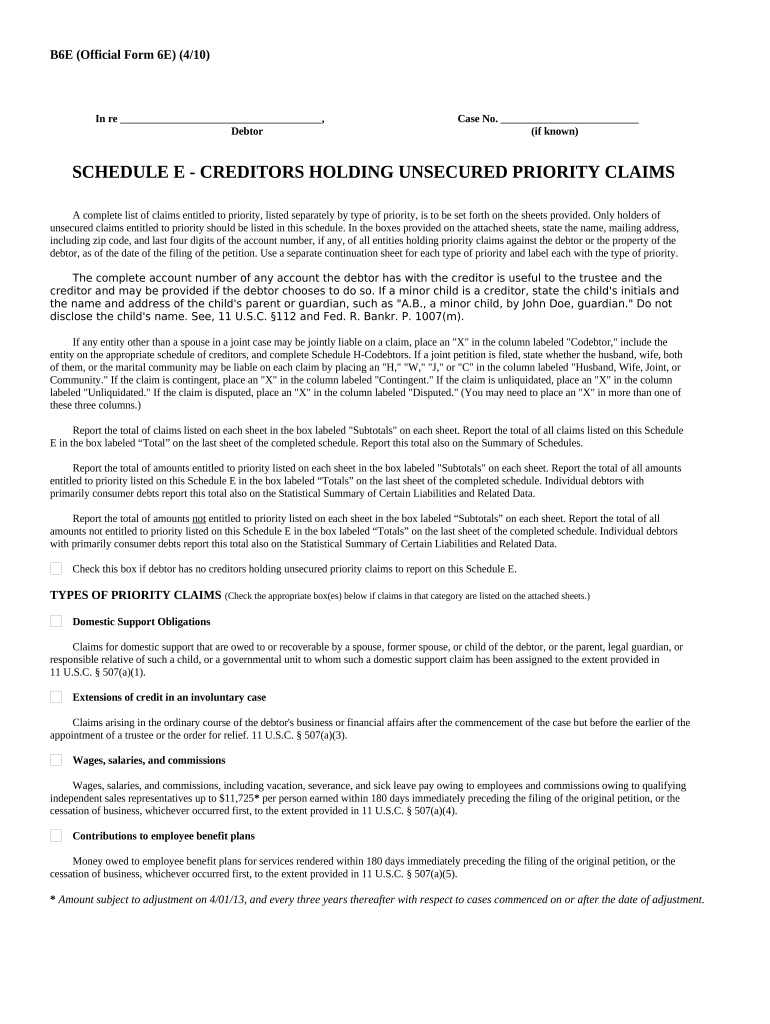
Begin by entering the debtor's name and case number at the top of the form. Ensure accuracy as this information is crucial for processing.
In the first section, list all creditors holding unsecured priority claims. Use the provided boxes to enter each creditor's name, mailing address, and account number if applicable.
For each claim, indicate whether it is contingent, unliquidated, or disputed by placing an 'X' in the appropriate columns. This helps clarify the status of each claim.
If there are multiple types of priority claims, utilize separate continuation sheets for each type and label them accordingly.
At the end of each sheet, report subtotals for claims listed and ensure to total all amounts on the last sheet of Schedule E.
Start filling out your e form today for free using our platform!
Cookie consent notice
This site uses cookies to enhance site navigation and personalize your experience.
By using this site you agree to our use of cookies as described in our Privacy Notice.
You can modify your selections by visiting our Cookie and Advertising Notice.