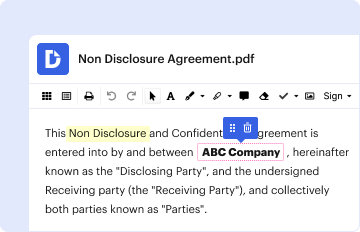
Type text, add images, blackout confidential details, add comments, highlights and more.
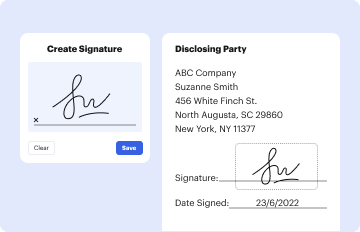
02. Sign it in a few clicks
Draw your signature, type it, upload its image, or use your mobile device as a signature pad.
03. Share your form with others
Send it via email, link, or fax. You can also download it, export it or print it out.
How to use or fill out Minnesota Affidavit by with our platform
Ease of Setup
DocHub User Ratings on G2
Ease of Use
DocHub User Ratings on G2
Click ‘Get Form’ to open the Minnesota Affidavit in the editor.
Begin by filling in your name and details as the initial transferee in the first section. Ensure that all information is accurate and complete.
In the next field, provide the date of the deed and the recording date. This information is crucial for establishing a timeline of the transaction.
Specify the document number or book and page where this deed is recorded. This helps in identifying the official record.
If necessary, describe the real property involved in this affidavit clearly. Use additional space if required, which can be easily managed within our platform.
Complete the acknowledgment section by signing and dating it appropriately. Make sure to have a notary public sign as well, if needed.
Start using our platform today to fill out your Minnesota Affidavit for free!
What is the difference between a declaration and an affidavit in Minnesota?
Affidavits generally carry greater formal weight and are typically preferred for court filings or formal proceedings. Declarations, while signed under penalty of perjury, lack notarization, making them suitable for less formal settings or jurisdictions that permit unsworn statements.
Does an affidavit need to be notarized in Minnesota?
358.116 COURT DOCUMENTS. Unless specifically required by court rule, a pleading, motion, affidavit, or other document filed with a court of the Minnesota judicial branch, or presented to a judge or judicial officer in support of a request for a court order, warrant, or other relief, is not required to be notarized.
What happens after an affidavit of service is filed?
After an affidavit is filed, the legal process enters a new phase. The document undergoes scrutiny by judges, attorneys, and other involved parties. This examination can lead to further actions, including cross-examinations and additional filings.
Related Searches
Affidavit of service mnAffidavit of Service by Mail mnAffidavit of Service guardianship mnMn affidavit of Personal ServiceAffidavit of Service by Mail FormAffidavit formMn Court Fee Waiver FormMN Court Forms
Security and compliance
At DocHub, your data security is our priority. We follow HIPAA, SOC2, GDPR, and other standards, so you can work on your documents with confidence.
Form: SOP102 Affidavit of Personal Service. If you need help accessing the forms due to a disability, please visit the Minnesota Judicial Branch AmericansRead more
Other Forms | ISSS - University of Minnesota Twin Cities
Aug 26, 2025 Other Forms ; I-134, Affidavit of Support, USCIS Website ; Application for IRS Individual Taxpayer Identification Number, IRS Website.Read more
Cookie consent notice
This site uses cookies to enhance site navigation and personalize your experience.
By using this site you agree to our use of cookies as described in our Privacy Notice.
You can modify your selections by visiting our Cookie and Advertising Notice.