
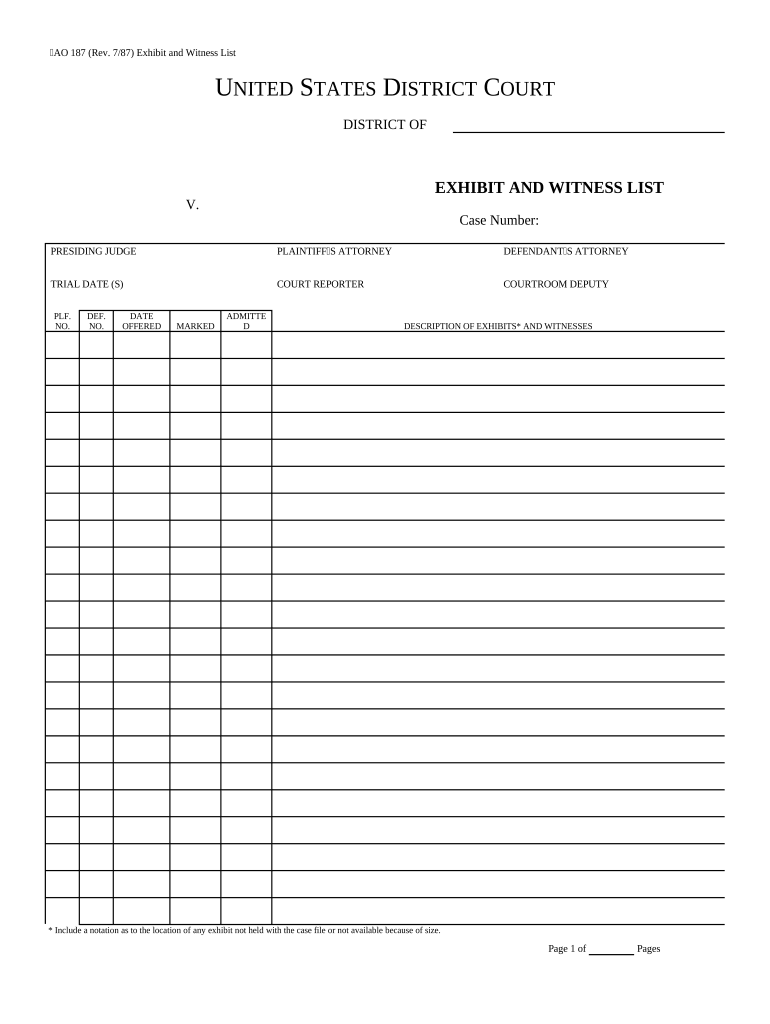







Definition & Meaning
An exhibit list sample is a structured document that outlines the evidence and witnesses intended to be presented at a trial. This formal list serves multiple purposes in litigation, ensuring that all parties are aware of what will be included in arguments or presentations. An effective exhibit list organizes information clearly, categorizing exhibits by type (such as documents, photographs, or physical evidence) and specifying relevant details, like descriptions and identification numbers.
Typically used in legal settings, the exhibit list provides the court and opposing counsel with essential information regarding the materials that will support the presented case. This list is particularly critical during pre-trial procedures, allowing for efficient preparation and minimizing surprises during the trial itself.
Important Terms Related to Exhibit List Sample
- Exhibit: Any document, object, or demonstration that is used as evidence in court.
- Witness List: A list of individuals who will testify regarding the evidence presented.
- Identification Number: A unique numeral assigned to each exhibit for easy reference.
- Admissibility: The legal standard that determines whether evidence can be introduced in court.
How to Use the Exhibit List Sample
The exhibit list sample acts as a template that can be customized based on the needs of the case. To effectively utilize an exhibit list sample:
- Template Customization: Download a comprehensive exhibit list template suited to your case.
- Filling Information: Clearly fill in details such as case name, case number, and trial dates.
- Itemizing Exhibits: Create a thorough list of all exhibits, specifying their identification numbers, descriptions, and types.
- Witness Information: Include a section for witnesses who will testify about each exhibit, detailing their relevance to the case.
Using an organized and detailed exhibit list enhances clarity in court presentations and assists in the smooth organization of evidence display.
Steps to Complete the Exhibit List Sample
Completing an exhibit list sample involves a systematic approach to ensure all necessary information is captured. Here are the key steps:
- Gather Evidence: Collect all documents, photographs, and physical items you intend to present as evidence.
- Create a Draft: Use the sample exhibit list as a framework to start drafting your own.
- Detail Each Exhibit: For each piece of evidence:
- Assign an identification number.
- Provide a brief description.
- Note the type of exhibit (document, image, etc.).
- Incorporate Witnesses: Specify which witnesses will support each exhibit.
- Review and Edit: Ensure all information is accurate and all necessary details are included. Collaborate with legal counsel if necessary.
Completing the exhibit list correctly is vital for effective legal processes, reinforcing the credibility and organization of the presented case.
Legal Use of the Exhibit List Sample
The exhibit list sample must adhere to specific legal standards to ensure it is functional in court proceedings. In general, its legal use includes:
- Pre-Trial Evidence Disclosure: The exhibit list informs all parties, including the court, about the evidence intended for use.
- Facilitating Discovery: A well-prepared exhibit list aids the discovery process by presenting what will be introduced, allowing opposing counsel to prepare their arguments.
- Admissibility Assurance: The exhibited items must meet legal standards for admissibility. The list helps verify that evidence is relevant and necessary for the case.
Familiarizing yourself with legal protocols surrounding the exhibit list sample ensures adherence and enhances the effectiveness of your legal strategy.
Examples of Using the Exhibit List Sample
The use cases for an exhibit list sample can vary widely based on the nature of legal proceedings:
- Civil Litigation: In a personal injury case, an attorney may use an exhibit list to include medical records, accident reports, and expert testimonies, identifying how each piece supports the claim for damages.
- Criminal Defense: In criminal cases, an exhibit list may detail evidence such as surveillance footage, witness statements, and forensic reports, demonstrating how they may refute allegations against the defendant.
- Contract Disputes: For contract disputes, a party may list agreements, emails, and other communication records as exhibits to substantiate claims regarding the contract terms.
Such examples highlight the exhibit list's essential role in effectively managing evidence throughout various trial types, ensuring thorough and transparent presentation of arguments.
Key Elements of the Exhibit List Sample
For an exhibit list sample to be effective and comply with legal standards, certain key elements must be included:
- Case Information: Include case title, number, and relevant dates.
- Exhibit Numbering: Implement a clear numbering system for easy reference.
- Descriptions: Provide concise descriptions of each exhibit.
- Type Classification: Specify whether the exhibit is a document, physical item, or digital file.
- Witness Association: Identify any witnesses associated with each exhibit and summarize their relation to it.
Incorporating these elements promotes organization and enhances the credibility of the submitted evidence, which can positively impact trial outcomes.




