
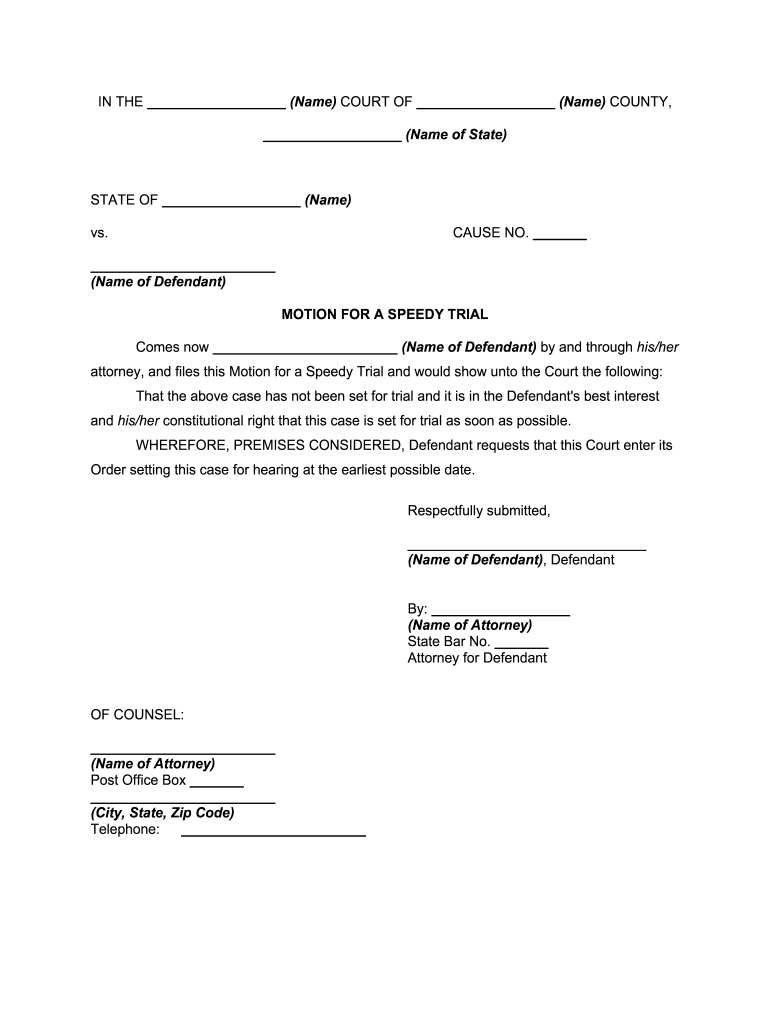







Definition and Meaning of the Motion Speedy Trial Form
The motion for a speedy trial form is a legal document submitted by a defendant within the context of the criminal justice system. This form requests that a court schedule a trial as quickly as possible, emphasizing the defendant's constitutional right to a prompt resolution of their case. In many jurisdictions, including Texas and Georgia, defendants can invoke their rights under the Sixth Amendment to the U.S. Constitution, which guarantees the right to a speedy trial.
The motion typically includes key details about the case, such as the case number, the defendant's name, the alleged offense, and any relevant procedural history. It may also assert specific reasons why a speedy trial is warranted, for instance, to prevent prejudicial delays that could affect the outcome of the trial or the defendant's ability to prepare an adequate defense.
Essential Components of the Motion
- Case Information: Identification of the case number, caption, and parties involved.
- Legal Basis: Reference to constitutional rights and relevant statutes supporting the request for a speedy trial.
- Request Statement: A clear statement requesting the court to schedule the trial.
- Signature and Date: Civil procedure requires that the defendant or their attorney sign and date the form, validating the motion.
How to Use the Motion Speedy Trial Form
Utilizing the motion for a speedy trial form involves several steps that ensure compliance with court procedures. The process may slightly vary by jurisdiction, but the general principles remain consistent.
- Review Your Rights: Understand your legal rights regarding a speedy trial and the implications of filing such a motion.
- Gather Supporting Documentation: Collect all pertinent documents and evidence supporting your request, including any previous court filings related to your case.
- Complete the Form: Accurately fill out the motion for a speedy trial form, ensuring all necessary information is included to prevent delays.
- File the Motion: Submit the motion with the appropriate court. Depending on your jurisdiction, this may require filing in person, through electronic submission, or by mail.
- Notify Related Parties: Serve copies of the filed motion to all relevant parties, including the prosecutor's office and other involved entities, to comply with procedural requirements.
Steps to Complete the Motion Speedy Trial Form
Completing the motion for a speedy trial form involves a systematic approach to ensure it meets all legal criteria.
-
Download the Form: Obtain the correct version of the form from your local court's website or legal resources. State-specific versions may apply in places like Texas or Georgia.
-
Enter the Title and Case Caption: Begin with the official title of the motion (e.g., "Motion for Speedy Trial") and include the case caption with the defendant’s name, case number, and court details.
-
State the Motion: Write a concise statement outlining the request for a speedy trial. Include references to relevant laws or constitutional rights.
-
Provide Justification: Explain why a speedy trial is necessary based on specifics related to your case, such as potential harm from delays or a lack of legal representation time.
-
Add Signature and Seal: After reviewing and ensuring accuracy, sign the document. If represented by an attorney, they should also sign it.
Important Terms Related to Motion Speedy Trial Form
Familiarizing yourself with key terms related to the motion for a speedy trial can clarify its legal context and enhance your understanding:
- Defendant: The person accused of a crime in a legal proceeding who has the right to request a speedy trial.
- Prosecutor: The legal representative of the government responsible for presenting the case against the defendant.
- Prejudice: A disadvantage or harm that may occur due to unnecessary delays in proceeding to trial.
Who Typically Uses the Motion Speedy Trial Form
The motion for speedy trial form is primarily utilized by defendants in criminal cases who seek to have their trial scheduled without unnecessary delays. It is relevant in various situations, including:
- Criminal Defendants: Individuals facing charges who wish to expedite their trial process.
- Legal Representatives: Attorneys on behalf of their clients who file the motion to safeguard their rights.
- Juvenile Defendants: Minors charged with offenses, as they may also invoke this motion to protect their legal rights.


State-Specific Rules for the Motion Speedy Trial Form
Different jurisdictions may have specific rules governing the use and filing of the motion for a speedy trial form. Understanding these rules ensures proper compliance and enhances the likelihood of approval. Here are some examples:
-
Texas: In Texas, defendants are afforded a right to a speedy trial under Article 1, Section 10 of the state constitution. The form may require specific information related to prior court dates and delays.
-
Georgia: Georgia law mandates that the court should conduct a hearing on any motion for a speedy trial, providing the defendant an opportunity to present their case effectively.
State rules may also dictate filing deadlines and procedural nuances, emphasizing the importance of reviewing local laws before submitting the motion.




