Definition and Meaning of Transmittal Form
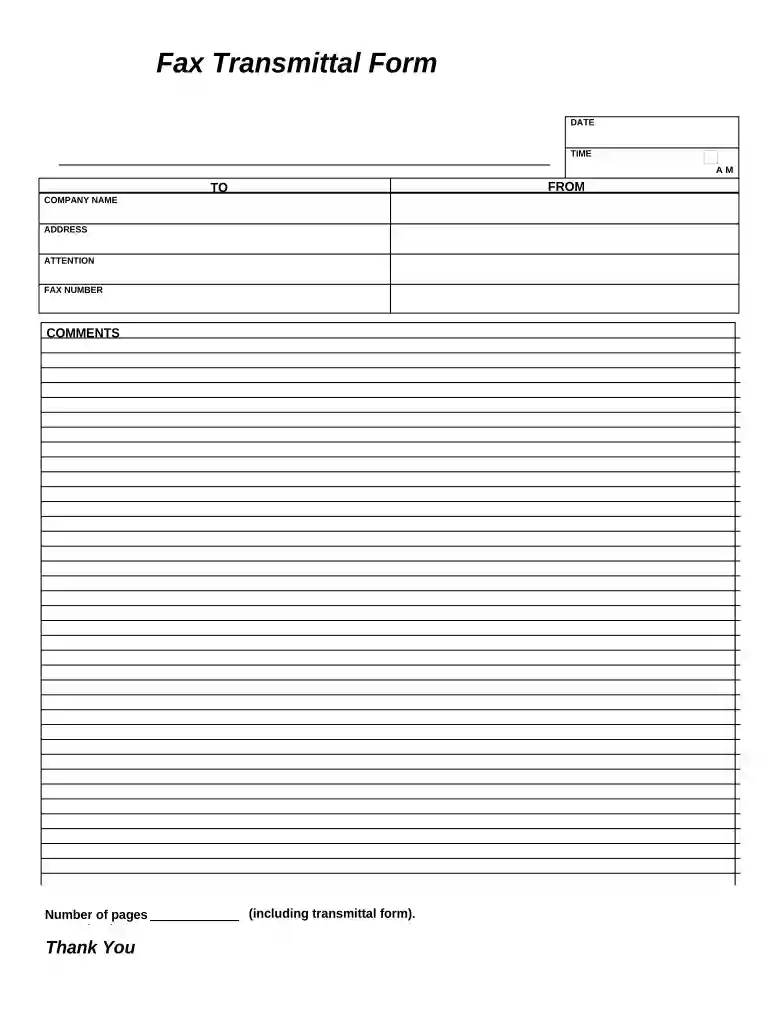
A transmittal form is an essential document used to accompany various types of communication, often in a business or legal context. This form serves as a cover letter providing critical information about the materials being sent, such as the recipient's details, sender's information, and a brief description of the contents. It is widely utilized in scenarios such as sending faxes, transmitting documents electronically, or submitting paperwork for approvals.
- Purpose: The primary objective of a transmittal form is to ensure that the accompanying documents are received, reviewed, and processed accurately. It establishes accountability and provides a clear record for both the sender and the recipient.
- Information Included: Typically, the form will include fields for sender and recipient names, addresses, phone numbers, the date, a subject line summarizing the purpose, and any additional comments. It may also specify the number of pages included, which is particularly critical in a fax transmittal scenario.
Steps to Complete the Transmittal Form
Completing a transmittal form correctly is vital to ensure that all relevant information is clearly communicated. The following steps outline how to effectively fill out a transmittal form:
- Gather Information: Collect all necessary details regarding the sender and recipient, including names, titles, addresses, and contact numbers.
- Fill in Sender Details: Enter your name, company (if applicable), and contact information. This establishes who is sending the documents.
- Enter Recipient Information: Provide the full name and contact details of the recipient. This ensures that the documents are sent to the correct individual or department.
- Date the Form: Clearly indicate the date on which the form is completed, as this is important for tracking purposes.
- Describe the Contents: Include a brief description of the documents being sent, such as “Invoice for Services” or “Contract Agreement.” This helps the recipient understand the context of what they are receiving.
- Specify Page Count: If applicable, indicate the total number of pages being sent to avoid confusion or disputes over missing documents.
- Add Comments: Include any additional notes or instructions relevant to the documents. This can be helpful for clarifying specific requests or priorities.
- Review and Sign: Finally, review the completed form for accuracy and sign where required. This adds a level of authenticity to the transmission.
Key Elements of the Transmittal Form
The effective utilitarian design of a transmittal form includes several key elements that enhance its functionality:
- Sender and Recipient Information: Clear fields for both sender and recipient help establish proper accountability.
- Date of Transmission: Logically, the date allows the tracking of document flow and deadlines.
- Document Description: Providing context ensures that the recipient quickly understands the purpose of the transmittal.
- Page Count: This is crucial to verify that all intended documents are included and prevents misunderstandings over missing materials.
- Signature Line: A space for the sender’s signature can reinforce the form's authenticity and create a point of verification.
These elements work together to facilitate efficient communication and documentation processes, particularly in situations where multiple documents may be transmitted.
Examples of Using the Transmittal Form
Transmittal forms find application in various professional scenarios. Here are some common examples:
- Fax Transmittal: When sending important documents via fax, a fax transmittal may accompany the documents. Fields will indicate the total number of pages, sender, and recipient details.
- Legal Document Submission: In legal contexts, transmittal forms are often used to submit motions, petitions, or evidence to courts or regulatory bodies, ensuring that official records acknowledge the document transmission.
- Project Documentation: During project delivery phases, a transmittal form might be included with design documents or reports to inform all stakeholders of the contents and any specific instructions.
- Invoice Transmission: Businesses frequently use transmittal forms to send invoices to clients, ensuring clarity on what is being billed and providing pertinent contact information for queries.
Legal Use of the Transmittal Form
The legal implications of a transmittal form can be significant, particularly in formal settings where documented proof of communication is required:
- Record Keeping: Transmittal forms serve as a formal record of document submission. They may play a crucial role in legal proceedings to demonstrate that a party fulfilled their obligation to provide information.
- Notarization: In some cases, transmittal forms may require notarization to enhance their legal weight, especially in transactions involving large sums, property transfers, or critical legal documents.
- Liability: Proper use of a transmittal form can help mitigate liability concerns by ensuring that all communications are documented and verifiable, often including a statement of confidentiality or disclaimers where necessary.
Understanding the legal framework surrounding transmittal forms can prevent miscommunication and lay the ground for transparent business practices.
Why You Should Use a Transmittal Form
Utilizing a transmittal form provides multiple advantages that enhance document management and communication clarity:
- Streamlined Communication: By summarizing key details about the transmitted documents, a transmittal form helps recipients quickly orient themselves to what they are receiving, facilitating better understanding.
- Increased Professionalism: Using a formal transmittal form can enhance the professional appearance of your correspondence, demonstrating attention to detail and care in communication.
- Error Reduction: Including page counts and descriptions minimizes errors associated with miscommunication regarding the contents received by a recipient, thus improving overall operational efficiency.
- Accountability: It establishes a clear record of who sent what and when, which can be crucial in resolving disputes or clarifying communication history.
In summary, the transmittal form serves as an integral tool in modern documentation practices, aiding in maintaining professionalism, organizing information, and ensuring that all necessary details are accurately conveyed.