




01. Edit your material return form online
Type text, add images, blackout confidential details, add comments, highlights and more.

Type text, add images, blackout confidential details, add comments, highlights and more.

Draw your signature, type it, upload its image, or use your mobile device as a signature pad.

Send material return note via email, link, or fax. You can also download it, export it or print it out.
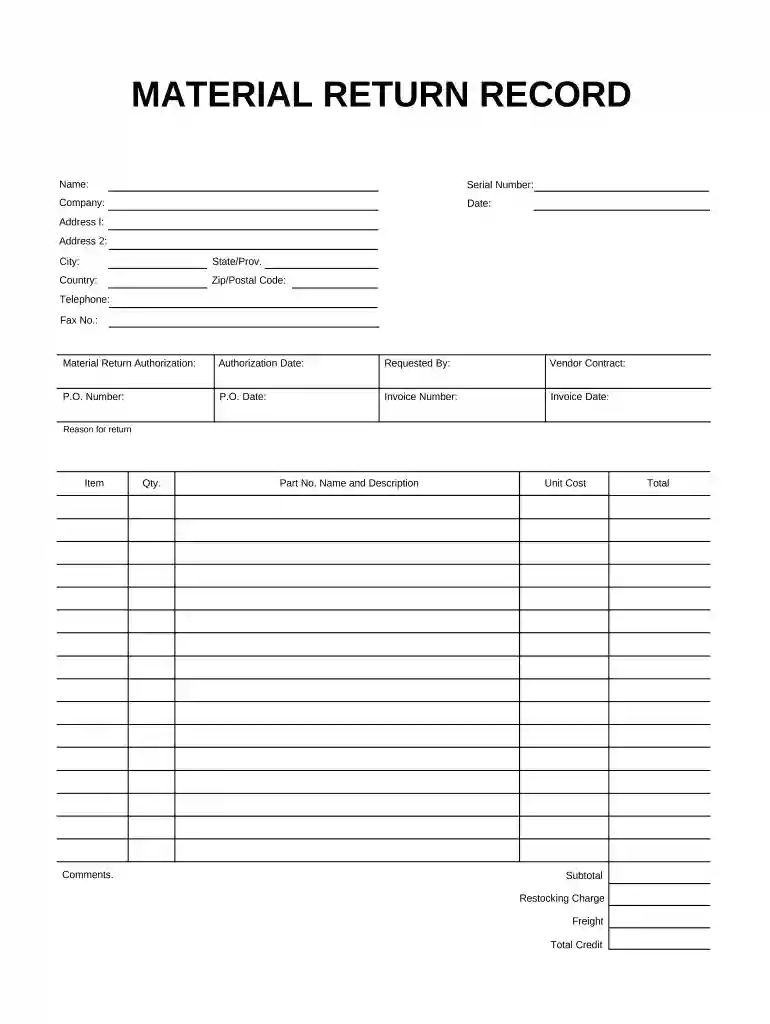
A Material Return Record is a crucial document used to track the return of materials from a recipient back to the supplier or vendor. This form serves multiple purposes: it documents the details of the return, provides a record for inventory management, and supports accounting processes. By ensuring accuracy in the return process, organizations can maintain efficient inventory levels and uphold supplier relationships.
Key components typically included in a Material Return Record are:
Return Authorization Number: This is a unique identifier issued by the supplier that grants permission for the return of materials. It is essential for tracking the return within the supplier's system.
Vendor Information: Details such as the vendor's name, contact information, and vendor contract number are critical for ensuring proper communication and record-keeping.
Item Descriptions: Each item being returned is listed with a description, which may include SKU numbers, product specifications, or other identifying information.
Quantities: Exact numbers of items being returned are documented, which helps in inventory management and reconciliation.
Reason for Return: An explanation for why the materials are being returned, which can include defects, over-ordering, or product incompatibility.
This structured approach ensures that all necessary information is captured, promoting transparency and accountability throughout the return process.
The use of a Material Return Record is essential for effectively managing the return process of goods. Below are steps to facilitate its effective use:
Obtain the Form: Acquire the Material Return Record from your organization’s document management system, or download it from a reliable source, ensuring it aligns with your specific needs.
Fill in Vendor Information: Start by entering the supplier's name, contact information, and relevant contract details. This ensures that the return is accurately linked to the supplier account.
List Return Items: Fill out the section for item descriptions, including any SKU or catalog numbers. Be precise about the quantity of each item you are returning, as this impacts inventory reporting.
Provide a Reason for the Return: Clearly state the reason for the return. This information can be invaluable for both your organization and the supplier in improving quality and service.
Sign and Date: After completing the form, ensure it is signed by an authorized party within your organization. Dated records help maintain an accurate timeline of returns.
By following these steps closely, organizations can streamline their returns process, reducing errors and facilitating better communication with suppliers.
Completing a Material Return Record requires careful attention to detail to ensure accurate documentation and feedback to the supplier. Here’s how to do it effectively:
Gather Required Documents: Collect any supporting documents related to the original purchase, such as invoices, purchase orders, or shipping receipts. This will provide context for the return.
Fill Out Basic Information:
Detail Item Information: For each item returned:
Specify the Return Reason: Select the most appropriate reason from a predefined list or provide a brief description. Avoid vague terms; clarity helps suppliers address issues effectively.
Review for Completeness: Double-check all entries to ensure accuracy. Errors can lead to delays in processing the return or complications in inventory reconciliation.
Sign Off: After verifying all the information, have the designated authority sign the document. This acts as a confirmation of the return's legitimacy and your organization’s intent.
Following these detailed steps can minimize potential misunderstandings with suppliers and improve the efficiency of the return process.
Various sectors utilize the Material Return Record based on their operational needs. Key users include:
Manufacturing Companies: Frequently return materials that do not meet production standards or specifications, making it critical for tracking defective or surplus items.
Retail Businesses: Retailers often manage substantial inventories and need effective documentation for returned merchandise to ensure accurate stock levels and buyer satisfaction.
Schools and Educational Institutions: Often return materials that are either erroneous shipments or unwanted textbooks/materials not used in courses.
Government Agencies: Many government entities must adhere to strict guidelines for item returns, where precise record-keeping is mandated for accountability.
Service Providers: Companies delivering technical services might return equipment or tools related to projects that are either damaged or incorrect, necessitating formal tracking.
Each of these sectors benefits from the structured return process that a Material Return Record provides, helping to streamline operations and enhance accountability.


The effectiveness of a Material Return Record lies in its detailed components. Below are key elements that must be included:
Identification of Parties: Clear identification of both the vendor and the company returning the materials.
Detailed Itemization: A comprehensive list specifying the items being returned with accurate descriptions, including sizes, colors, and model numbers to avoid confusion.
Return Reason Statement: A section dedicated to indicating why materials are being returned, facilitating better vendor relations and insight into product issues.
Approval Signatures: Space for signatures from both the returning entity and the vendor, confirming acceptance of the return and compliance with terms.
Documentation Support: Inclusion of any related paperwork, such as shipping labels or original purchase orders, may be necessary for reference and audit purposes.
Properly filling out these key elements enhances the clarity and functionality of the Material Return Record, thereby improving relationships with suppliers and reducing operational inefficiencies.
At DocHub, your data security is our priority. We follow HIPAA, SOC2, GDPR, and other standards, so you can work on your documents with confidence.
Jan 14, 2025 This IRM is used by all IRS employees and contractors to ensure compliance with paper and electronic records management requirements.Read more
The user creates a Customer Material Return transaction, selects the customer, and records the returned material with item details and quantity. Outcome: ERPRead more


