Type text, add images, blackout confidential details, add comments, highlights and more.
02. Sign it in a few clicks
Draw your signature, type it, upload its image, or use your mobile device as a signature pad.
03. Share your form with others
Send it via email, link, or fax. You can also download it, export it or print it out.
How to use or fill out custody minor children with our platform
Ease of Setup
DocHub User Ratings on G2
Ease of Use
DocHub User Ratings on G2
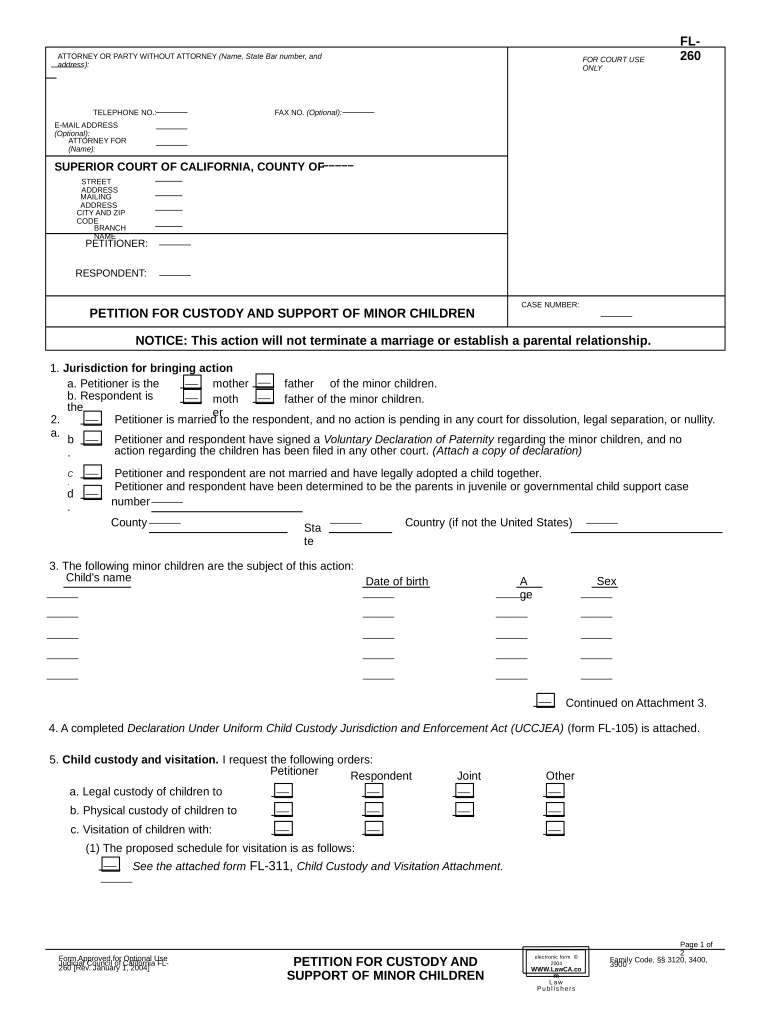
Click ‘Get Form’ to open the custody minor children document in the editor.
Begin by filling in your information as the petitioner, including your name, address, and contact details. Ensure accuracy for effective communication.
Identify the respondent by entering their name and relationship to the minor children. This section is crucial for establishing jurisdiction.
List all minor children involved in this action, providing their names and dates of birth. This ensures clarity on who is affected by the custody petition.
Specify your requests regarding legal and physical custody. Indicate whether you seek joint custody or sole custody, and outline visitation arrangements clearly.
Attach any necessary documents such as the Declaration Under Uniform Child Custody Jurisdiction and Enforcement Act (UCCJEA) to support your petition.
Review all entries for completeness and accuracy before signing at the bottom of the form to finalize your submission.
Start using our platform today to streamline your custody documentation process for free!
Md child custody FormsPetition for custody and support of minor childrenPetition for custody and support of minor children FL-260Child custody in NC for unmarried parentsHow to file for child custody in NC without a lawyerNC child custody forms freeEmergency custody forms MarylandChild custody schedules by age
Security and compliance
At DocHub, your data security is our priority. We follow HIPAA, SOC2, GDPR, and other standards, so you can work on your documents with confidence.
child custody | Wex | US Law | LII / Legal Information Institute
The parent granted custody controls major decisions regarding the childs upbringing, including education, health care, and religious instruction. Courts mayRead more
Until you have a court order, both parents have the same rights. This means that both of you can make decisions about your children. No parent has any moreRead more
Cookie consent notice
This site uses cookies to enhance site navigation and personalize your experience.
By using this site you agree to our use of cookies as described in our Privacy Notice.
You can modify your selections by visiting our Cookie and Advertising Notice.