




01. Edit your motion for continuance online
Type text, add images, blackout confidential details, add comments, highlights and more.

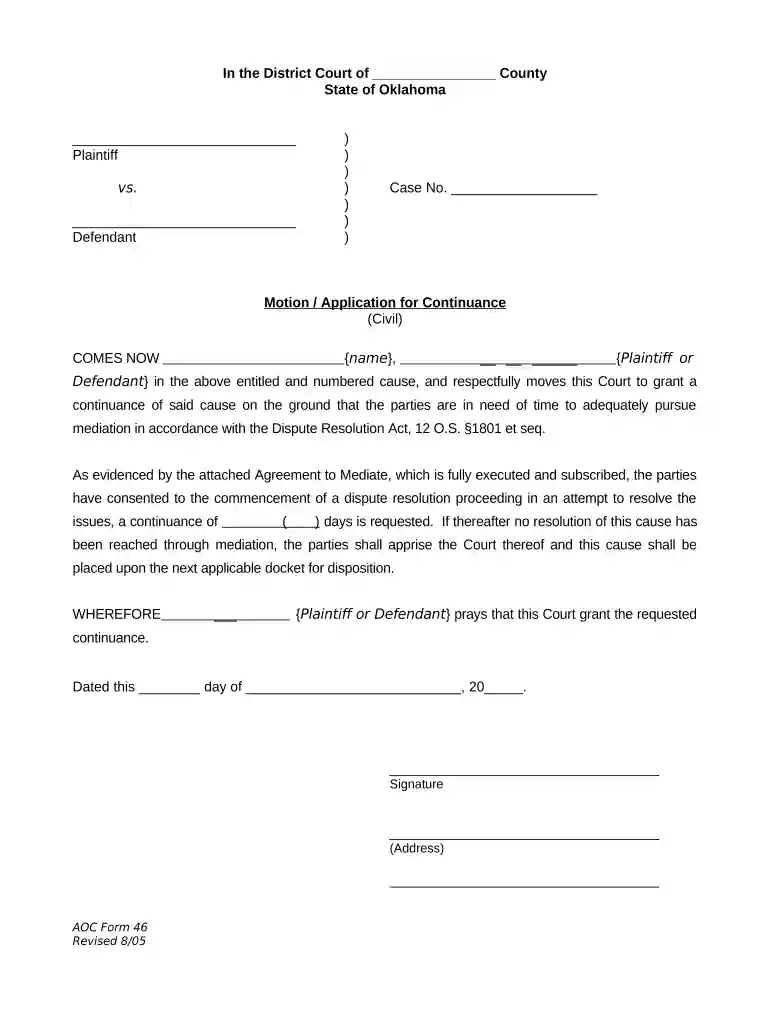
Type text, add images, blackout confidential details, add comments, highlights and more.

Draw your signature, type it, upload its image, or use your mobile device as a signature pad.

Send motion for continuance template via email, link, or fax. You can also download it, export it or print it out.
A generic motion for continuance in Oklahoma is a formal request filed with the court to postpone proceedings for a specified period. This type of motion is often used in civil, criminal, and family law cases when parties require additional time to prepare their case, gather necessary evidence, or attend mediation sessions as per state laws. Investing time in understanding this motion can facilitate a smoother legal process and possibly lead to more favorable outcomes for the involved parties.
The primary purpose of a motion for continuance is to request additional time before a scheduled hearing or trial. Specific situations that may warrant such a motion include:
This document serves to communicate to the court that the requesting party is not seeking to delay proceedings frivolously but rather needs additional time to ensure a fair resolution.
When preparing a generic motion for continuance, certain essential elements must be included to increase the chances of the court granting the request:
This structure helps ensure that the motion is clear and easy for the court to review.
The process of filing a generic motion for continuance in Oklahoma involves several critical steps:
Draft the Motion:
Obtain Necessary Signatures:
File with the Court:
Notify Other Parties:
Court Hearing:
There are various situations where this motion may be deemed appropriate, including:
Understanding the varied contexts where a motion for continuance is applicable can help in portraying the necessity clearly in legal documentation.
Oklahoma has unique rules around the use of a motion for continuance that practitioners must adhere to:
Such awareness will contribute to more informed filings and interactions with the court system, minimizing potential pitfalls that may arise from ignorance of state-specific considerations.
To provide clarity, examples of stated reasons in a motion for continuance may include:
These samples illustrate how to communicate clearly and succinctly the rationale behind the request while maintaining professionalism.
In summation, leveraging a generic motion for continuance in Oklahoma can be a strategic move in the legal sphere, assisting parties in adequately preparing for court proceedings. Understanding its purpose, proper structure, and context of use is essential for effective legal representation and the pursuit of justice. This motion offers a structured avenue to delay legal proceedings, ensuring that all parties have equitable opportunities to present their cases comprehensively.
At DocHub, your data security is our priority. We follow HIPAA, SOC2, GDPR, and other standards, so you can work on your documents with confidence.


Motion to Seal Document/Directing Filing of Redacted Document Motion to Vacate, Set Aside, or Correct a Sentence (under 28 U.S.C. 2255). Petition to EnterRead more
7 days ago This website provides access to a wide variety of Oklahoma forms for a subscription fee. Forms include Dissolution of Marriage and numerous other forms.Read more


