




Definition and Meaning
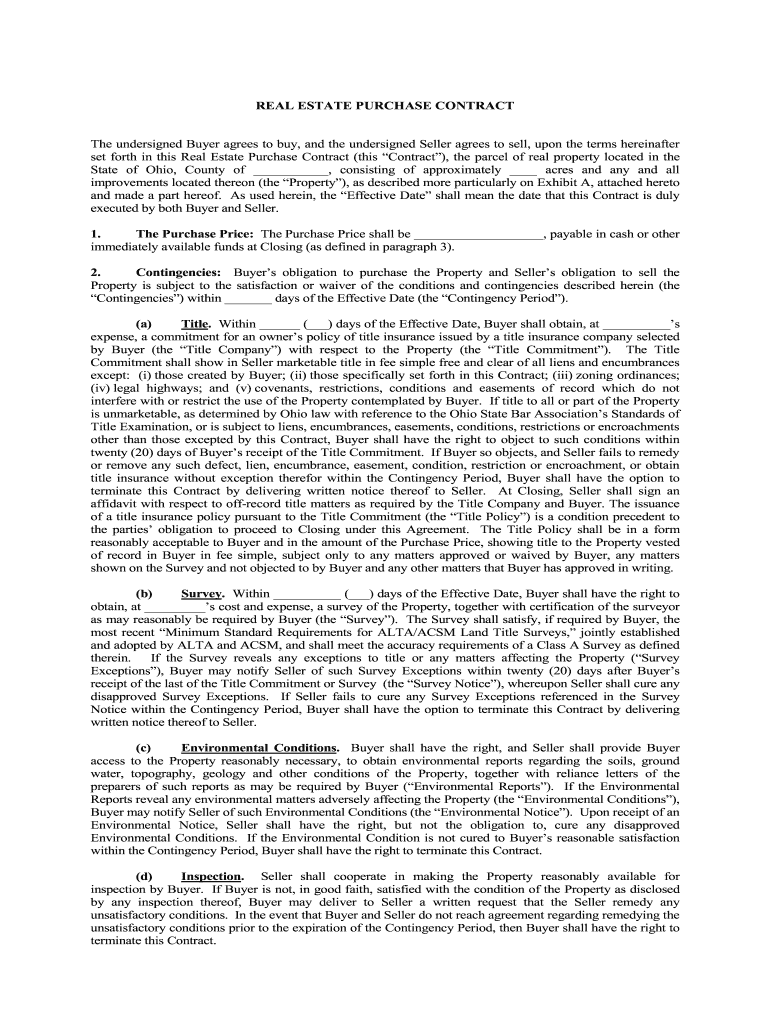
An Ohio real estate contract is a legally binding agreement between a buyer and a seller for the exchange of real property in Ohio. This document is fundamental in outlining the essential terms and conditions of the real estate transaction. Key components include the agreed purchase price, any contingencies related to inspections or title searches, and specific obligations the buyer and seller must fulfill before the transaction is complete. Governed by Ohio law, this contract emphasizes the importance of timely actions by both parties to prevent any potential delays in closing the sale.
Key Elements of the Ohio Real Estate Contract
The contract typically comprises several critical components, each playing a vital role in the transaction:
- Purchase Price and Payment Terms: Clearly defines how much the buyer agrees to pay and how these payments are structured.
- Property Description: Provides a detailed description of the property being sold, including the legal description and any fixtures included in the sale.
- Contingencies: Covers conditions such as passing a property inspection, securing financing, and obtaining necessary appraisals.
- Disclosures and Warranties: Specifies any disclosures the seller must make about the property and any warranties offered regarding its condition.
- Closing Details: Outlines the closing process, including the date, location, and any documents that must be exchanged.
Important Terms Related to the Ohio Real Estate Contract
Understanding the terminology used in an Ohio real estate contract is crucial for all parties involved:
- Earnest Money Deposit: A sum paid by the buyer showing their intent and capability, which applies to the purchase price upon closing.
- Title Insurance: Protects the buyer against issues related to property title, such as disputes or prior liens.
- Inspection Period: A specified timeframe allowing the buyer to conduct property inspections and decide on proceeding with the purchase.
- Contingency Clause: Provisions that allow parties to back out of the deal if certain conditions are not met.
- Closing Costs: Additional expenses beyond the property price, which often include fees for loan processing, title searches, and legal documentation.
Legal Use of the Ohio Real Estate Contract
The legal framework surrounding the Ohio real estate contract ensures compliance with state laws and regulations:
- Ohio Revised Code: Governs the creation and enforcement of real estate contracts within the state, mandating specific disclosures and timelines.
- Contractual Obligations: Both parties must fulfill their responsibilities as outlined to ensure the contract remains enforceable.
- Time is of the Essence: A legal provision mandating punctuality in fulfilling contract terms, as delays can lead to penalties or termination of the deal.
Steps to Complete the Ohio Real Estate Contract
Completing an Ohio real estate contract involves several critical steps to ensure a smooth transaction:
- Preparation: Both parties review and agree on all terms and conditions, ranging from the purchase price to contingency clauses.
- Drafting the Contract: The buyer or seller, often with legal assistance, drafts the contract, ensuring all obligatory disclosures and legal requirements are addressed.
- Negotiation: Both sides may negotiate terms, seeking modifications or additional conditions that benefit their position.
- Signing: Once drafted and agreed upon, both parties sign the contract, often in the presence of a witness or legal representative.
- Execution: The respective parties begin fulfilling their contractual obligations, such as arranging financing or scheduling inspections.
- Closing: On the closing date, all final documents are signed, closing payments are made, and control of the property is officially transferred to the buyer.
Detailed Breakdown of the Closing Process
- Final Walkthrough: Conducted shortly before closing to ensure the property is in agreed-upon condition.
- Funds Transfer: Buyer deposits the agreed purchase price, typically through a wire transfer.
- Deed Transfer: Seller signs the deed transferring property ownership to the buyer, which is then recorded with the relevant county authorities.
State-Specific Rules for the Ohio Real Estate Contract
Ohio has specific regulations that impact real estate transactions:
- Seller Disclosures: Required to provide full disclosure about known defects or zoning issues related to the property.
- Foreclosure Notice: If applicable, a history of foreclosure proceedings must be disclosed.
- Property Taxes: Specific rules regarding prorating property taxes during the sale.
- Market Conditions: The impact of local market factors, such as zoning changes or housing demand, on the terms of the contract.
Examples of Using the Ohio Real Estate Contract
The contract facilitates various types of transactions across Ohio:
- Residential Sales: Often used in home sales, involving individual buyers and sellers engaging in negotiated transactions.
- Investment Properties: Investors frequently use these contracts to purchase properties for rental or resale, often incorporating clauses related to future tenant agreements.
- Commercial Transactions: Tailored versions used for commercial real estate can include extra contingencies like zoning approvals or lease negotiations.
- Rural or Vacant Land Sales: May include specific clauses about mineral rights, water access, or easements that impact how the land can be used or developed.
Who Typically Uses the Ohio Real Estate Contract
The contract sees usage among various stakeholders in the real estate market:
- Individual Home Buyers and Sellers: The most common users involved in residential property transactions.
- Real Estate Agents and Brokers: Facilitate contracts between buyers and sellers, ensuring legal compliance and fair negotiation.
- Investors: Often use contracts as a tool for acquiring multiple properties for portfolio expansion.
- Attorneys and Legal Professionals: Provide guidance on contract terms and assist in resolving disputes or negotiating complex terms.