





Definition and Meaning of the Minnesota Notice of Intent to Lien Form
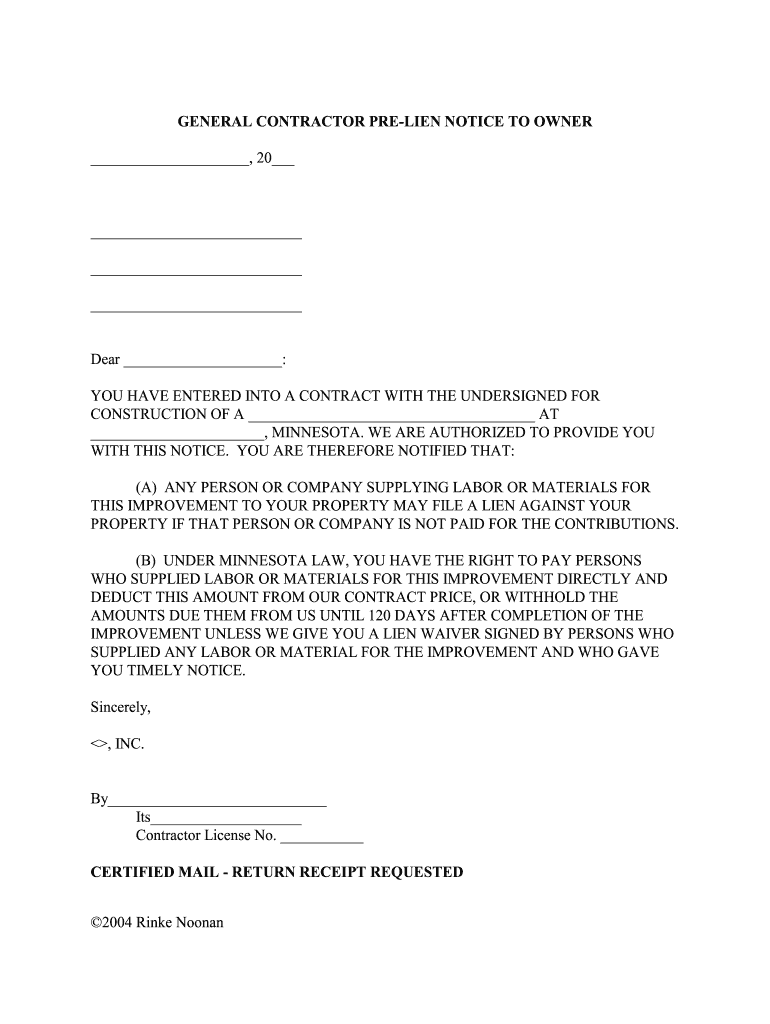
The Minnesota notice of intent to lien form serves as an essential document for contractors, subcontractors, and suppliers who wish to notify property owners of their intention to file a mechanics lien due to non-payment for services or materials rendered. This form acts as a preliminary warning, highlighting the recipient's potential obligations under the law to settle debts associated with construction or improvement projects on their property.
The mechanics lien laws in Minnesota aim to protect the interests of those who contribute to the enhancement of a property, ensuring they receive compensation for their work. A well-filed notice of intent to lien can initiate conversations regarding payment, potentially avoiding the need for more drastic legal actions. Understanding this form's role is vital for anyone involved in the construction industry within Minnesota or those who engage in contracting work in this jurisdiction.
Key Elements of the Minnesota Notice of Intent to Lien Form
The Minnesota notice of intent to lien form must encompass several key elements to be legally effective. These include:
- Identification of Parties: Clearly list the names and contact information of both the claimant (the contractor or supplier) and the property owner.
- Property Description: Include a detailed description of the property where the work has been performed, encompassing the legal address, parcel number, or any identifiable markers.
- Nature of Work: Outline the specific services or materials provided, emphasizing any contractual agreements in place.
- Amount Due: Indicate the total amount owed along with any relevant deadlines for payment.
- Delivery Method: Specify how and when the notice was delivered to the property owner, adhering to state regulations.
Providing a comprehensive and precise notice ensures that the relevant parties are well-informed, reducing the likelihood of disputes arising from misunderstandings.
Steps to Complete the Minnesota Notice of Intent to Lien Form
Completing the Minnesota notice of intent to lien form involves a straightforward process that requires careful attention to detail. The following steps outline how to effectively fill out this important document:
- Gather Information: Collect all necessary details related to the project, including contracts, invoices, and communication with the property owner.
- Download the Form: Obtain the Minnesota notice of intent to lien form from a reliable source or create one using a document management platform.
- Fill Out the Form:
- Begin by entering your name, contact information, and the date of the notice.
- Include the property owner's name and address accurately.
- Provide a detailed description of the work performed and the amount owed.
- Review: Carefully read through the document to ensure that all information is correct and complete. Mistakes can lead to delays or non-compliance.
- Distribute the Notice: Deliver the notice in accordance with Minnesota's legal requirements, which may involve mailing, electronic communication, or personal delivery.
- Document the Process: Keep a copy of the notice for your records, along with any documentation regarding its delivery.
This procedure not only ensures compliance with local laws but also streamlines the process of securing owed payments.
Who Typically Uses the Minnesota Notice of Intent to Lien Form
The Minnesota notice of intent to lien form is primarily used by a variety of parties in the construction industry, including:
- Contractors: Those providing labor, materials, or services in construction projects often utilize this form to secure payment.
- Subcontractors: Individuals or businesses hired under a contract to perform specific tasks may need to inform property owners of outstanding debts.
- Suppliers: Companies supplying materials to contractors can use this notice as a safeguard to ensure they are compensated for their products.
- Homeowners: Property owners who engage contractors for improvements might also use the form if faced with lien claims against their property.
This form serves all parties involved in a construction project, reinforcing the relationships while emphasizing the importance of financial accountability.


Legal Use of the Minnesota Notice of Intent to Lien Form
The legal use of the Minnesota notice of intent to lien form is governed by state law, ensuring that both claimants and property owners adhere to specific requirements. Key considerations include:
- Filing Requirements: It is crucial to file the notice within the timeframe dictated by Minnesota law, typically within a certain number of days after the last date of service or delivery of materials.
- Content Specifications: The form must be comprehensive, including all essential details as previously mentioned, to maintain legal validity.
- Delivery to Property Owner: The method of delivering the notice must comply with legal standards—non-compliance can result in ineffective lien claims.
Understanding these legal parameters is critical for anyone seeking to utilize the Minnesota notice of intent to lien form to ensure their rights are adequately protected.
Examples of Using the Minnesota Notice of Intent to Lien Form
Real-world scenarios illustrate the importance and function of the Minnesota notice of intent to lien form. Here are a few examples:
- Scenario One: A construction contractor completes a large renovation project, but the homeowner fails to pay the final invoice. Upon realizing the overdue payment, the contractor files a notice of intent to lien, alerting the homeowner of the impending lien that could affect the property's sale or refinancing.
- Scenario Two: A subcontractor who performed electrical work for a primary contractor is not compensated for their services. The subcontractor issues a notice of intent to lien to the property owner, encouraging the primary contractor to settle the debt before further legal steps are taken.
- Scenario Three: A supplier of roofing materials does not receive payment for a recent shipment. They utilize the notice of intent to lien to inform the homeowner that if the payment is not made, they could place a lien on the property, highlighting the urgency for resolution.
These examples highlight the preventative nature of the Minnesota notice of intent to lien form in maintaining financial accountability within the construction industry.