




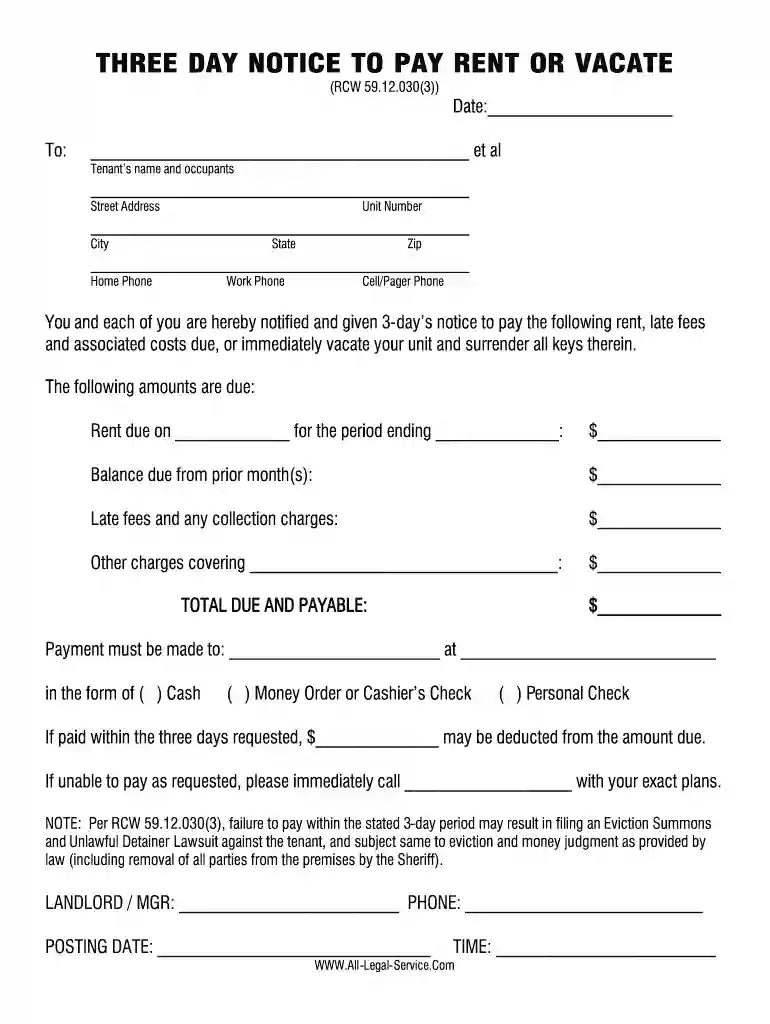
01. Edit your free 3 day eviction notice online
Type text, add images, blackout confidential details, add comments, highlights and more.

Type text, add images, blackout confidential details, add comments, highlights and more.

Draw your signature, type it, upload its image, or use your mobile device as a signature pad.

Send free 3 day eviction notice florida via email, link, or fax. You can also download it, export it or print it out.
A "3 day notice" is a legal document commonly used in landlord-tenant relationships to inform tenants that they have three days to rectify a specific issue, such as paying overdue rent or vacating the premises. It serves as an official communication requesting immediate attention to the lease violation, often due to non-payment of rent. This notice is a crucial step in the eviction process, providing tenants with an opportunity to address the problem before further legal action is taken.
Using a 3 day notice involves several key steps to ensure it is legally effective and compliant with local regulations. Landlords must provide clear information, such as the amount due, to guide the tenant in fulfilling their obligations. Additionally, the notice should be delivered in a manner that is recognized as valid by local laws, such as hand delivery or certified mail. Landlords often include payment methods and contact details for dispute resolution within the notice to facilitate quick resolution of issues.
The 3 day notice must clearly outline several crucial elements to ensure it is effective and complies with legal requirements. These elements include the tenant's name and address, the exact amount of overdue rent, and the period for which the rent is unpaid. The notice should clearly specify the consequence if the issue is not resolved within three days, typically leading to eviction proceedings. Additionally, it must include the landlord's signature and the date the notice was served to establish a formal record of communication.
Completing a 3 day notice involves a series of steps that landlords should follow carefully to avoid legal pitfalls.
State-specific rules can significantly impact the drafting and delivery of a 3 day notice. For example, in California, the notice must include a detailed breakdown of unpaid rent and cannot include fees or utilities. In contrast, Florida may allow additional items to be listed alongside rent. Understanding these differences is critical for landlords to ensure compliance and avoid the delay and expense associated with improper notice.
The legal use of a 3 day notice is primarily to serve as a precursor to eviction in cases of lease violations. Landlords are required to issue this notice to give tenants a fair chance to rectify the situation before legal proceedings. It acts as evidence of the landlord's attempt to resolve the issue amicably and is often a prerequisite for filing an eviction lawsuit. Failing to properly execute this notice can result in the dismissal of eviction cases, highlighting its importance in the legal process.
Examples of using a 3 day notice can range from missed rent payments to unauthorized subletting or property damage. For instance, if a tenant falls behind on rent, the landlord may issue a notice detailing the amount due and specifying the three-day window to pay or vacate. In cases of unauthorized alterations to the property, the notice may demand immediate restoration and compliance with the lease terms.
The 3 day notice is typically used by landlords or property managers in residential rental agreements. It is an essential tool for those managing rental properties, as it helps enforce lease terms while providing tenants with a formal opportunity to remedy breaches. Landlords must understand their legal rights and obligations when issuing this notice, ensuring it is used appropriately and effectively to maintain the integrity of the tenant-landlord relationship. By handling disputes in this structured manner, landlords can protect their investment while upholding the legal standards of rental property management.


At DocHub, your data security is our priority. We follow HIPAA, SOC2, GDPR, and other standards, so you can work on your documents with confidence.




A three-day notice is a notice served to tenants, who are delinquent in rent, demanding for the rent amount or to vacate the premises.Read more
3-day notice to pay rent or quit. Tenant is behind on rent, 3 days (not counting weekend or court holidays) ; Notice of belief of abandonment. Rent is 14+ daysRead more
Board members should be sure that proper notice is given for meetings, that regular meetings are held, and that members are properly appointed or elected. 4.Read more


