
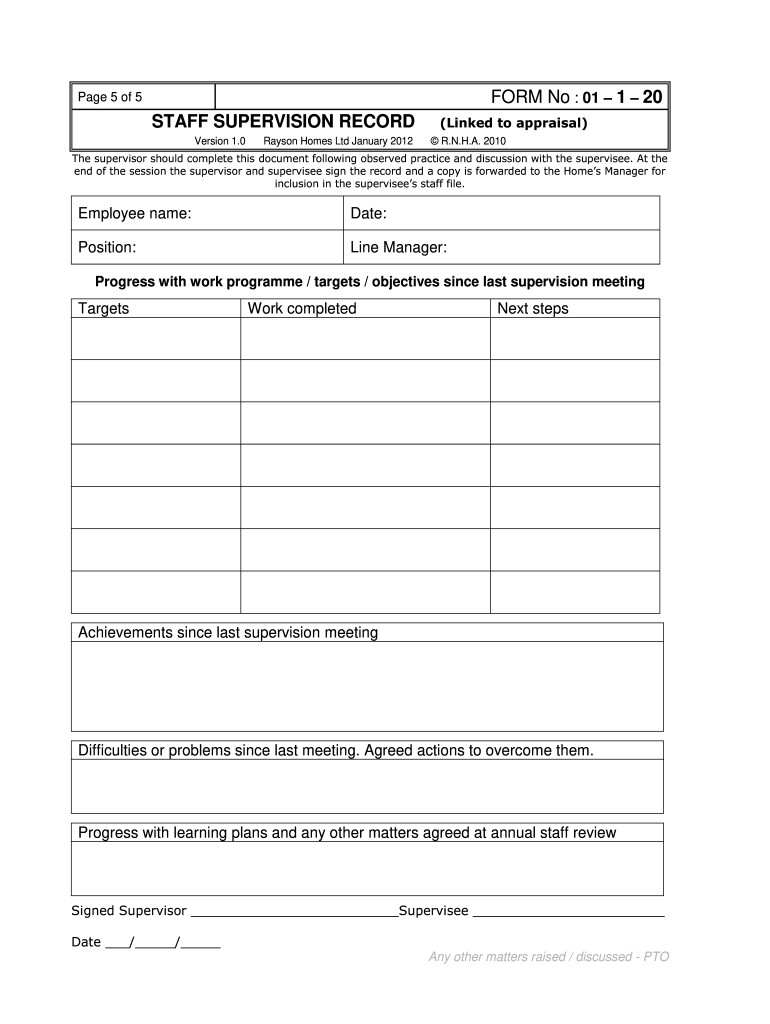







Definition and Importance of Staff Supervision Templates
A staff supervision template word is a structured document designed to assist supervisors in evaluating and documenting the performance of employees. This template typically includes sections for employee details, progress on objectives, achievements, and identified challenges, facilitating a comprehensive overview of the employee's development.
Key Features of Staff Supervision Templates
- Structured Format: Each template offers a well-defined layout that helps guide discussions and evaluations, ensuring important areas are covered.
- Employee Details: Basic information such as the employee's name, role, department, and supervisor's details are included for easy reference.
- Performance Evaluation Sections: These sections allow supervisors to assess employees on various criteria such as work performance, goal achievement, and professional development.
- Sign-off Process: Most templates require signatures from both the supervisor and the supervisee, establishing a formal record of the evaluation.
Understanding these features aids supervisors in effectively utilizing the templates to enhance communication and development within their teams.
How to Use the Staff Supervision Template Word
Using a staff supervision template word involves several straightforward steps. Proper usage ensures all relevant details are captured, maximizing the document's effectiveness.
- Download the Template: Access a trusted source, like DocHub, to obtain a customizable staff supervision template.
- Fill in Employee Information: Begin by inputting the employee’s name, job title, department, and supervisor’s name at the top of the document.
- Evaluate Work Objectives: Go through each objective or goal set for the employee and provide commentary on progress made. Use specific examples to illustrate achievements or areas needing improvement.
- Discuss Challenges: Document any difficulties the employee has faced and discuss potential solutions or resources available for overcoming these challenges.
- Set Learning Plans: Establish goals for future development, outlining actionable steps for the employee to take before the next evaluation.
By following these clear steps, supervisors can ensure that the supervision process is thorough and supportive.
Obtaining the Staff Supervision Template Word
There are various avenues from which supervisors can acquire a staff supervision template word. The following options are widely available:
- Free Downloads: Many websites offer free templates, which can be easily downloaded in Word format. Ensure to select a template that matches your needs and offers the necessary structure.
- Customizable Templates from DocHub: For users looking for features beyond basic templates, DocHub provides customizable options that enhance functionality. You can tailor the template to align with specific supervision strategies.
- Online Resources: Numerous educational and professional organizations provide templates as part of their resource offerings, often accompanied by guidance on their usage.
By exploring these options, you can ensure you have a suitable supervision template tailored to your organization’s needs.
Steps to Complete the Staff Supervision Template Word
Completing a staff supervision template word involves systematic organization and thoughtful entries. Here’s a detailed step-by-step guide to ensure a comprehensive evaluation:
- Prepare for the Meeting: Before filling out the template, schedule a meeting with the employee to discuss their performance. Gather relevant documentation, such as past evaluation forms or project reports.
- Start with Employee Information: Make sure that all personal and job-related details are accurate within the template.
- Evaluate Objectives and Performance:
- Review each objective stated during the previous supervision meetings.
- Provide detailed feedback using specific metrics or examples of the employee's work.
- Address Achievements and Challenges:
- Highlight notable contributions made by the employee.
- Discuss obstacles encountered and support required to surmount these challenges.
- Finalize Development Goals:
- Set clear goals and expectations for the next evaluation period.
- Specify training needs or resources that may assist the employee’s growth.
Utilizing these straightforward steps can enhance the integrity of the supervision process, fostering a positive environment for employee development.
Typical Users of the Staff Supervision Template Word
Various professionals utilize the staff supervision template word across different sectors. Understanding the primary users can provide insight into its purpose and application:
- Supervisors and Managers: Key users who need to monitor their team's performance and provide feedback on work objectives.
- Human Resources Personnel: HR staff often apply these templates as part of their performance management systems to maintain consistent documentation across the workforce.
- Educators and Trainers: In educational settings, staff supervision templates assist in facilitating teacher evaluations and training development plans.
- Healthcare Administrators: Use these templates to evaluate patient care staff, ensuring compliance with service standards and continuous professional development.
By identifying these users, organizations can tailor supervision practices to meet the specific needs of each role efficiently.
Key Elements of the Staff Supervision Template Word
A robust staff supervision template word encompasses several critical components that streamline the evaluation process. Understanding these elements is essential for effective use.
- Employee Identification: Comprehensively detail the identity of the supervisee, including contact information and job title.
- Goal Assessment: Incorporate sections dedicated to evaluating the achievement of individual and department-wide goals.
- Feedback Section: Allocate space for both positive feedback and constructive criticism to balance recognition with improvement opportunities.
- Actionable Development Plans: Finalize the document with clear next steps for professional development, including specific training courses or performance goals.
By fostering clarity in these key elements, the supervision process becomes more straightforward and actionable, ultimately enhancing employee engagement and growth.




