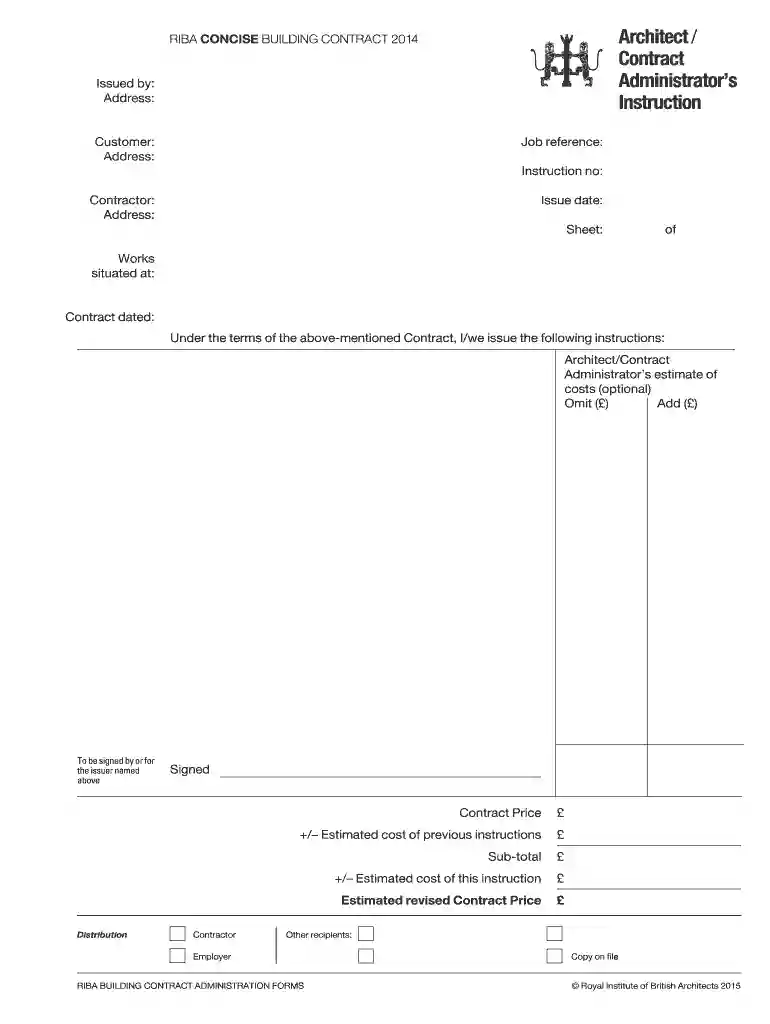
Definition and Purpose of the Architects Instruction Template
An architects instruction template is a standardized document used by architects and contract administrators to issue formal instructions regarding changes to a construction project. Such changes may involve adjustments in costs, addressing omissions, or adding new elements to the project scope. This template streamlines communication between architects and contractors, ensuring all modifications are documented for clarity and legality.
Key Components of the Architects Instruction Template
- Project Information: The document typically includes essential details about the project, such as the project name and reference number, enabling easy identification and tracking.
- Instruction Details: Clear sections for specifying the nature of the instruction, whether it’s related to a change in design, materials, or project timelines. Detailed descriptions help prevent misunderstandings.
- Cost Implications: Space for estimates regarding additional costs or credits associated with the instructions promotes transparency about budget changes.
- Signatures: Designated areas for signatures from the architect and the contractor help formalize the instructions, making them legally binding.
- Distribution Fields: Areas to indicate whom the instruction is distributed to, ensuring all relevant parties are informed of changes.
Steps to Effectively Use the Architects Instruction Template
Utilizing the architects instruction template requires a systematic approach to ensure all relevant details are captured. Here are the steps:
- Gather Project Information: Complete the general project information at the top of the template, including the project name and reference number, to establish context.
- Draft the Instruction: Provide a detailed account of the instruction being issued. This should include specific changes to be made, referencing drawing numbers or specifications where applicable.
- Estimate Cost Changes: Calculate any cost adjustments associated with the instruction. This may involve input from quantity surveyors or estimators for accuracy.
- Obtain Necessary Approvals: Ensure that signatures from both the architect and contractor are secured before proceeding with the changes. This formalizes the instruction and ensures mutual agreement.
- Distribute the Document: Send copies of the document to all stakeholders, including subcontractors and project managers, to keep everyone on the same page regarding the changes.
Common Uses of the Architects Instruction Template in Construction Projects
The architects instruction template serves various key functions throughout the lifecycle of a construction project:
- Design Modifications: When alterations to design aspects are needed, architects can promptly communicate these changes to contractors through the instruction template.
- Scope Adjustments: If project requirements expand or contract due to unforeseen circumstances, this template documents shifts in scope effectively.
- Regulatory Compliance Changes: Should changes in local building codes or regulations occur, the template can be used to convey updated instructions to ensure compliance.
- Material Specifications: When there’s a need to change materials specified in the initial contract, the instruction template provides a formal avenue for these updates while tracking cost implications.
Legal Aspects of the Architects Instruction Template
The architects instruction template carries legal implications that underscore its importance in the construction process:
- Binding Nature of Instructions: Instructions issued through the template are legally binding, provided they are signed by both the architect and contractor. This reinforces accountability and clarity about the contractual obligations.
- Documented Evidence: In disputes, this template serves as documented evidence of changes and agreements between parties, which can prove crucial in legal proceedings.
- Compliance with Contractual Obligations: Adhering to proper documentation practices mitigates risks related to non-compliance with contractual terms, ensuring that all parties follow agreed procedures.
Examples of Architects Instruction Templates in Practice
Several scenarios illustrate how architects instruction templates can be utilized practically:
- Addition of New Work: An architect may issue an instruction to include additional landscaping features that were not previously detailed in the contract. The template provides necessary documentation for cost adjustments and changes in project timelines.
- Update on Approved Materials: If a specified material becomes unavailable, the architect can issue an instruction to approve an alternative, ensuring the project timeline remains intact.
- Change in Project Schedule: An unforeseen delay might prompt an architect to provide instructions for an extension of time. The template serves to formally document this update, clarifying new deadlines for all involved parties.
- Clarifications on Ambiguous Instructions: When an initial set of instructions is unclear, the architect can use the template to clarify expectations and ensure that contractors understand the requirements precisely.
Integration with Project Management Software
Modern construction projects often utilize project management software to enhance efficiency. Architects instruction templates can be integrated into these systems for better tracking and management:
- Document Sharing: Integration allows for real-time sharing of the templates with all stakeholders, ensuring everyone has access to the latest instructions.
- Tracking Changes: Software can facilitate version control, helping to archive older instructions while keeping current documents up to date.
- Automated Notifications: Project management tools can send automatic notifications to stakeholders upon issuance of new instructions, ensuring timely awareness and action.
By using an architects instruction template effectively and understanding its components, project teams can navigate construction changes with clarity and legal assurance, fostering smoother project execution and collaboration.