







Definition and Meaning of the Revital Ox Resert Log Sheet
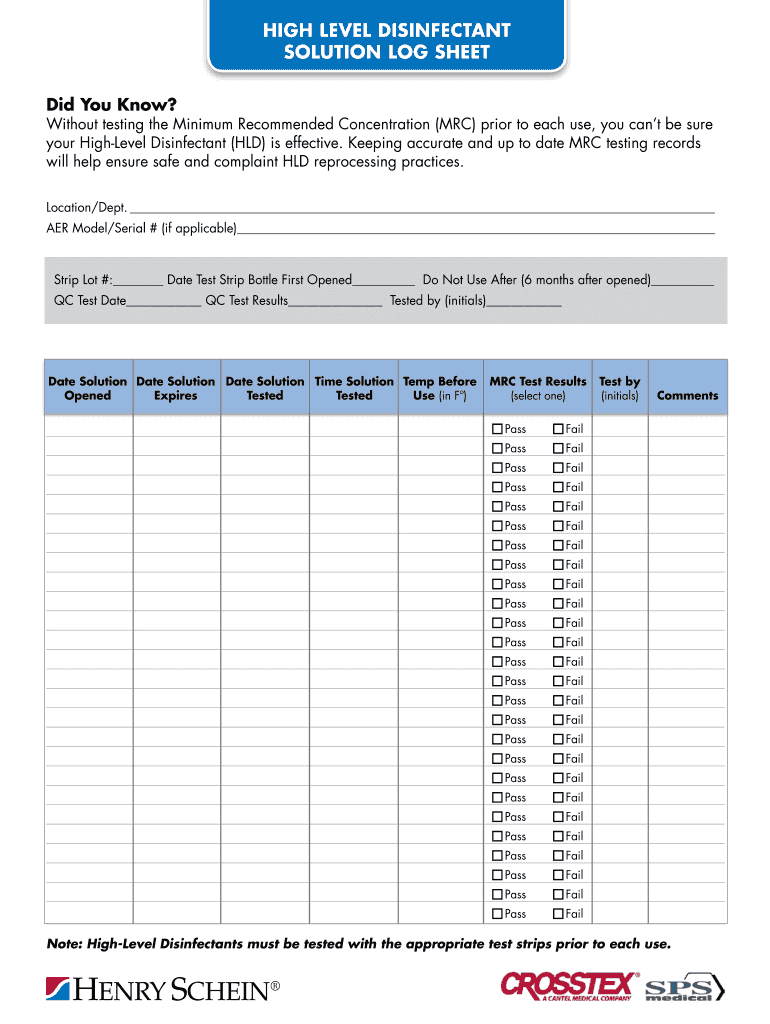
The revital ox resert log sheet is a comprehensive document used primarily for tracking the efficacy of high-level disinfectants, specifically targeting the revital ox resert solution. This log sheet serves as an essential tool for healthcare professionals and facilities to ensure compliance and maintain safety protocols in their disinfection processes. By documenting critical information, this form aids in the verification of effective disinfection practices, ensuring that the minimum recommended concentration (MRC) is upheld to combat pathogens effectively.
The log sheet includes designated sections for recording various details such as the location of application, the specific model of the AER (automated endoscope reprocessor) used, test dates, results, and commentator notes. Each of these elements plays a crucial role in maintaining a high standard of care and sanitation within healthcare environments.
How to Use the Revital Ox Resert Log Sheet
Using the revital ox resert log sheet involves a systematic approach to recording disinfection activities. Here are the key steps involved:
-
Preparation of the Log Sheet: Ensure that the log sheet is readily available, filled with necessary headings for documentation such as date, location, model number, and results.
-
Conducting the Disinfection Test: Follow the manufacturer's instructions for use (IFU) of the revital ox resert solution. Perform the disinfection process according to the specified parameters.
-
Recording Results: After testing, document the results on the log sheet. Indicate any discrepancies or observations noted during the disinfection process.
-
Compliance Checks: Regularly review the log sheet for completeness and accuracy. Ensure all sections are filled out correctly to comply with healthcare regulations.
-
Access and Review: Store the log sheet in an easily accessible format for future audits and reviews. Digital versions should be backed up securely for compliance.
By following these steps, users can ensure that they are adhering to best practices in high-level disinfection procedures.
Steps to Complete the Revital Ox Resert Log Sheet
Completing the revital ox resert log sheet involves several systematic steps to ensure accuracy and compliance. Here is a detailed process for filling out this essential document:
-
Select Document Format: Choose between a paper version or a digital format based on your practice needs. Digital forms provide advantages like easy access and editing.
-
Fill in Identifying Information: Start by entering the location where the disinfectant was applied, along with the model number of the AER being utilized.
-
Record Test Dates: Log the date of application alongside any relevant pre-treatment or post-treatment testing dates.
-
Document Test Results: Provide succinct details about the outcomes of the disinfection process, including whether it met the required protocols for effective germicidal activity.
-
Add Comments and Observations: Include any pertinent remarks regarding challenges encountered during the process or notes on any deviations from expected results.
-
Review and Sign off: Ensure the form is reviewed by a designated authority before filing. Signatures validate the log sheet, demonstrating accountability.
-
Retention of Records: Follow your facility’s policy on record retention to maintain this information for regulatory compliance and future reference.
By adhering to these steps, users can comprehensively complete the revital ox resert log sheet while maintaining essential standards of care.
Key Elements of the Revital Ox Resert Log Sheet
Understanding the key elements of the revital ox resert log sheet is vital in maintaining accurate records. Here are the primary components typically included in this log sheet:
- Date: This section captures the specifics of when the disinfectant was applied.
- Location: Document the exact area or room where disinfection took place to help trace accountability.
- AER Model: Include the specific model number of the automated endoscope reprocessor used, which is critical for tracking and maintenance.
- Testing Outcomes: Clearly state the results, noting whether all parameters were met for effective disinfection and the Minimum Recommended Concentration.
- Comments Section: Provide space for any observations, challenges, or deviations from the expected process that could impact future results.
These elements are instrumental in ensuring a traceable protocol for quality control and compliance with health regulations.
Who Typically Uses the Revital Ox Resert Log Sheet
The revital ox resert log sheet is primarily utilized by several key groups within healthcare settings, including:
- Healthcare Facilities: Hospitals, clinics, and outpatient facilities all employ the log sheet to monitor disinfectant efficacy in their sterilization processes.
- Infection Control Specialists: Professionals in this field leverage the log sheet to maintain compliance with established infection control guidelines.
- Endoscopy Units: Staff members in these units utilize the log sheet for documenting the use and effectiveness of high-level disinfectants on endoscopes.
- Quality Assurance Teams: These teams rely on the log sheet to assess adherence to disinfection protocols and facilitate audits by regulatory bodies.
- Environmental Services Personnel: The cleaning staff involved in disinfection procedures also use the log sheet to track performance against safety standards.
This broad range of users indicates the log sheet's essential role in upholding sanitization standards across diverse healthcare environments.


Legal Use of the Revital Ox Resert Log Sheet
Legal compliance is crucial in using the revital ox resert log sheet, ensuring health facilities adhere to local, state, and federal regulations. The following aspects are vital for lawful use:
- Documentation Requirements: Many health authorities mandate the documentation of disinfection processes to demonstrate compliance with safety standards.
- Retention Policies: Facilities should implement a record retention policy aligned with regulatory requirements, often suggesting a retention period of several years.
- Audit Preparedness: Regular audits by health authorities necessitate meticulous documentation practices; thus, maintaining accurate log sheets aids in preparation.
- Training Compliance: Staff must be trained in proper log sheet completion and the policies surrounding high-level disinfection, fostering a culture of compliance.
These legal considerations help facilities not only comply with health regulations but also support ongoing quality improvement initiatives.




