




01. Edit your florida release of lien form online
Type text, add images, blackout confidential details, add comments, highlights and more.

Type text, add images, blackout confidential details, add comments, highlights and more.

Draw your signature, type it, upload its image, or use your mobile device as a signature pad.

Send florida release of lien via email, link, or fax. You can also download it, export it or print it out.
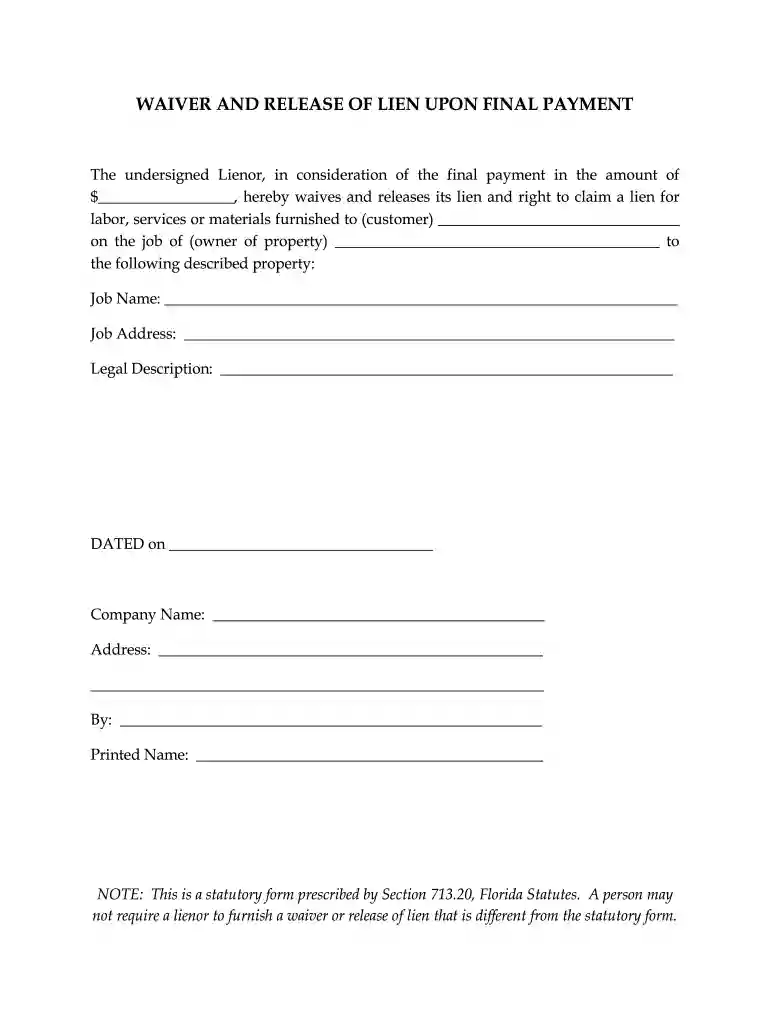
The Florida release of lien form serves as a critical document in a variety of construction and contracting scenarios. It enables a lienor—typically a contractor, subcontractor, or supplier—to formally waive their right to a lien against a property after receiving a stated final payment. This form is essential for ensuring that all parties involved have clarity over payments and obligations, ultimately protecting property owners from potential legal claims related to unpaid debts or services.
The form includes several vital elements designed to streamline the release process and guarantee compliance with Florida state laws. These components typically include:
Understanding these components is crucial, as incomplete information can lead to disputes or invalidation of the form.
Utilizing the release of lien form in Florida is essential in multiple scenarios, particularly in construction projects. Common situations include:
Each usage scenario underscores the importance of timely and properly completing a release of lien form to avoid complications.
Completing the Florida release of lien form requires several clear steps to ensure accuracy. These include:
Gathering Information:
Filling Out the Form:
Signature:
Notarization:
Filing:
Following these steps guarantees the form meets legal requirements and secures the lien waiver.
The legal framework surrounding the Florida release of lien form is dictated by state statutes, specifically Chapter 713 of the Florida Statutes. Key legal considerations include:
Ensuring compliance with these legal stipulations is imperative to maintain legal protections and uphold the integrity of property transactions.
In addition to the standard release of lien form, Florida recognizes specific variations that can be used depending on circumstances. These include:
Understanding these variations helps parties choose the appropriate form for their specific circumstances, ensuring compliance with legal frameworks.
Certain pitfalls can arise when completing and submitting the Florida release of lien form. Common mistakes include:
Being aware of these common mistakes can assist users in avoiding disputes and ensuring that the lien is effectively released.
The timely execution of the release of lien form is critical for preserving the rights and obligations of all parties involved. Not only does it prevent claims against the property, but it also instills confidence in transactions and fosters professional relationships between contractors and property owners. Stakeholders must recognize the implications of delays in executing such forms, as this can lead to increased liabilities or the possibility of liens being placed against the property. Thus, timely completion serves not only as a legal necessity but as a best practice in the construction and contracting industry.
The Florida release of lien form is a fundamental document in real estate and construction transactions. Understanding its components, usage scenarios, and legal implications is vital. By meticulously completing the form, stakeholders uphold their responsibilities and protect their rights within the framework provided by Florida law.
At DocHub, your data security is our priority. We follow HIPAA, SOC2, GDPR, and other standards, so you can work on your documents with confidence.



(3) Any person may at any time waive, release, or satisfy any part of his or her lien under this part, either as to the amount due for labor, services, orRead more
A choate lien is one that is specific and perfected. a. Specific means that the lien attaches to specific property or property rights of theRead more
FINAL RELEASE. FINAL WAIVER OF CLAIMS AND LIENS AND RELEASE OF RIGHTS. Sworn to before me this. Corporation or Business Name. Day of. 20. By: Title: Date.Read more


