




Here's how it works
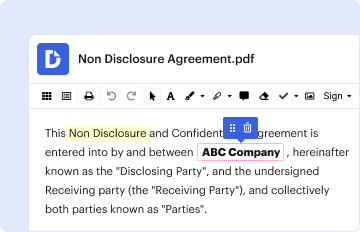
01. Edit your clia competency assessment template online
Type text, add images, blackout confidential details, add comments, highlights and more.
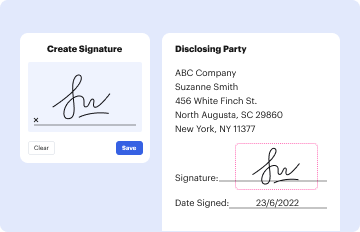
02. Sign it in a few clicks
Draw your signature, type it, upload its image, or use your mobile device as a signature pad.
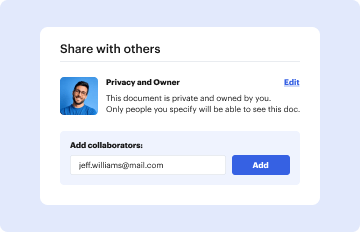
03. Share your form with others
Send cap competency assessment checklist via email, link, or fax. You can also download it, export it or print it out.
How to use or fill out clia competency assessment form template with our platform

- Click ‘Get Form’ to open the clia competency assessment form template in the editor.
- Begin by entering the employee's name in the designated field labeled 'Employee:'. This is crucial for identifying who is being assessed.
- Next, fill in the 'Unit:' section to specify the department or unit where the employee works. This helps contextualize their responsibilities.
- Review each responsibility question carefully. For each item, indicate 'Yes' or 'No' based on whether the General Supervisor (GS) meets that requirement.
- In the 'Comments' section, provide any additional insights or explanations regarding the GS's performance and responsibilities.
- If there are additional delegated responsibilities, list them in the provided space to ensure comprehensive documentation.
- Finally, enter your name as the assessor in the 'Competency assessed by:' field and date it appropriately before saving your work.
Start using our platform today to streamline your document editing and form completion for free!
Fill out clia competency assessment form template online
It's free
It's free
See more clia competency assessment form template versions
We've got more versions of the clia competency assessment form template form. Select the right clia competency assessment form template version from the list and start editing it straight away!
| Versions | Form popularity | Fillable & printable |
|---|---|---|
| 2015 | 4 Satisfied (57 Votes) |
Got questions?
We have answers to the most popular questions from our customers. If you can't find an answer to your question, please contact us.
Contact us
What do you write in a competency assessment?
What to Include in a Competency Assessment Template Technical job knowledge, productivity, work quality, technical skills, creativity, communication skills. Behavioral enthusiasm, cooperation, attitude, initiative, punctuality, attendance. Organizational work consistency, work relations, dependability.
How to create a competency assessment?
The key steps in creating competency-based assessments articulating the purpose of the assessment. identifying the competencies to be assessed. selecting key learning outcomes (learning standards) developing the performance criteria for the selected standard.
How do you write a competency assessment?
Steps to creating a competency-based assessment: Identify and state the competencies to be assessed. Reframe these as training (or learning) outcomes. Brainstorm the skills required to demonstrate competency. Build assessment. Identify how well the skills must be demonstrated to show competency.
What is an example of a competency assessment?
Competency-based assessments can include skills tests, interviews, assignments, and task-based assessments. Employees are scored for each skill or requirement in their roles; these scores then combine to form a complete analysis of each employees performance.
What are the six CLIA required components of competency assessments?
CLIA 88 outlines six areas that must be included as part of a laboratory competency assessment program; these are (i) direct observation of routine patient test performance; (ii) monitoring the recording and reporting of test results; (iii) review of intermediate test results, QC records, proficiency testing results,
Security and compliance
At DocHub, your data security is our priority. We follow HIPAA, SOC2, GDPR, and other standards, so you can work on your documents with confidence.
Learn more


People also ask
What is an example of a good competency statement?
Example: Employee has shown up for work on-time, shown honesty towards their level of work, and has been up-standing in their integrity of work. Praise: Youve had a stellar track record of timing-in that has kept this company working smoothly. Or, Your work has been great and you have great pride behind it.
What are the points of competency assessment?
Best Practices for Running Competency Assessments Build your own competency model. Align competency assessments with job requirements. Blend multiple data sources with your competency assessment. Use competency assessment results to create individual upskilling plans. Run competency assessments on an annual basis.