Understanding the Landlord Consent Agreement
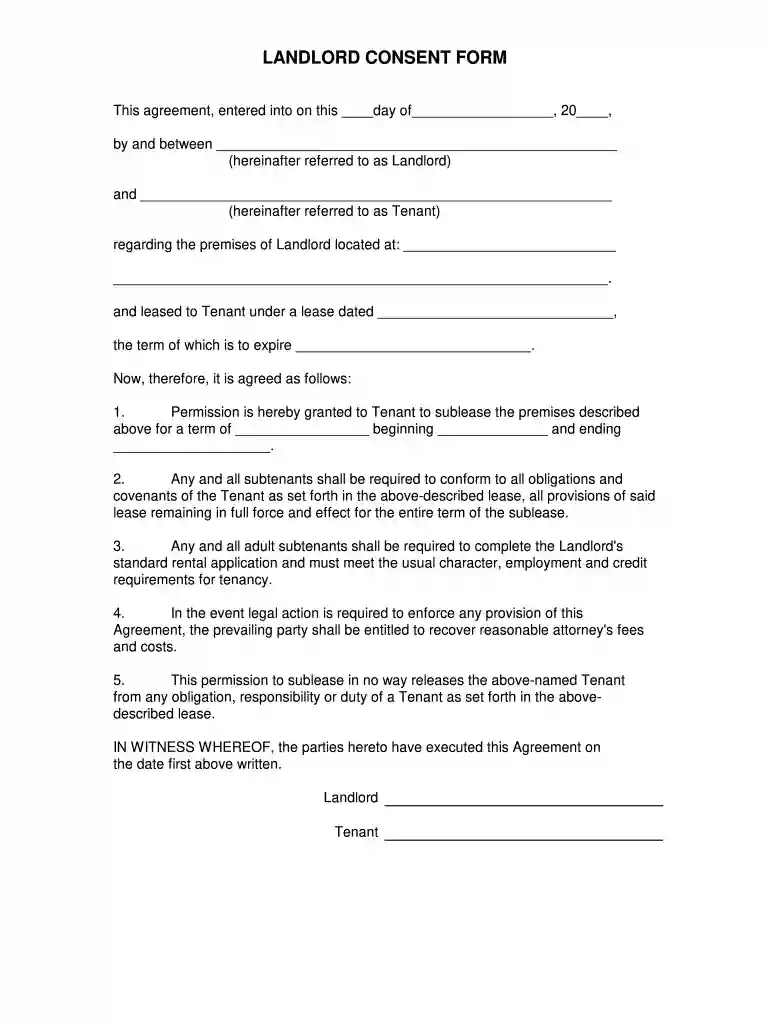
A landlord consent agreement establishes the terms between a landlord and a tenant regarding actions such as subleasing or renovations. This agreement formally documents the landlord’s approval, ensuring all parties understand their rights and responsibilities.
Key Components of a Landlord Consent Agreement
The landlord consent agreement typically includes several essential elements:
- Parties Involved: Identification of the landlord and tenant, including full names and contact information. This ensures clear communication and accountability.
- Property Details: Specific address and description of the rental premises are necessary for identifying the location covered under the agreement.
- Subject Matter: A clear explanation of what the landlord is consenting to, such as subleasing the property or making alterations. This section details the scope of permission granted.
- Terms and Conditions: Outlines obligations and rights for both the landlord and tenant, including adherence to the original lease and compliance with local laws.
- Duration of Consent: Specifies how long the consent is valid, which can include temporary permissions based on circumstances.
Steps to Complete a Landlord Consent Agreement
Completing a landlord consent agreement involves several steps to ensure that it is legally sound and reflects mutual understanding:
- Draft the Agreement: Begin by drafting the agreement, including all relevant information about the property and the parties involved.
- Discuss Terms: Engage in discussions between the landlord and tenant to align expectations and stipulations in the agreement.
- Review for Compliance: Ensure that the consent agreement adheres to local laws and the original lease terms.
- Sign the Agreement: Both parties must sign the document, demonstrating mutual acceptance of its terms.
- Distribute Copies: Provide copies to all parties involved for their records, ensuring everyone has access to the agreed terms.
Importance of a Landlord Consent Agreement
Having a formal landlord consent agreement is crucial for several reasons:
- Legal Protection: It protects both parties in case of disputes, providing a clear reference point that can be used in legal discussions.
- Clarity of Terms: The agreement outlines specific expectations regarding subleasing or modifications, reducing the potential for misunderstandings.
- Record Keeping: It serves as a documented history of agreements made, which can be important if alterations to the lease occur or if legal issues arise.
Common Situations Requiring a Landlord Consent Agreement
Landlord consent agreements are often used in various scenarios, including:
- Subleasing: When a tenant wishes to rent out their unit to another party, a consent agreement ensures that the landlord is aware and has approved the arrangement.
- Modifications or Renovations: Tenants wishing to make changes to the property, such as painting or remodeling, may require consent to ensure compliance with lease regulations.
- Visitor Permissions: Long-term guests might necessitate an agreement to clarify any implications on occupancy or rental terms.
Legal Considerations for Landlord Consent Agreements
Legal aspects of landlord consent agreements must be carefully considered:
- Compliance with Lease Terms: The consent agreement must not conflict with any terms laid out in the original lease, as this could create enforceability issues.
- Disclosure Requirements: Landlords might be required to provide certain disclosures per local rental laws, especially concerning any alterations or subletting.
- State Regulations: Different states have varying regulations surrounding rental agreements; thus, it is essential to consult local laws for compliance.
Best Practices for Drafting a Landlord Consent Agreement
To ensure that the agreement is effective, consider the following best practices:
- Use Clear Language: Avoid legal jargon to make the agreement easily understandable to all parties involved.
- Specify Details: Be precise in outlining the terms of consent to minimize ambiguity that may lead to future disputes.
- Consult Legal Advice: When in doubt, it may be beneficial to consult a legal professional to review the agreement for compliance and enforceability.