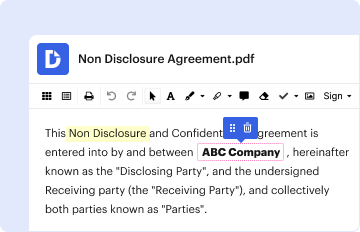
Type text, add images, blackout confidential details, add comments, highlights and more.
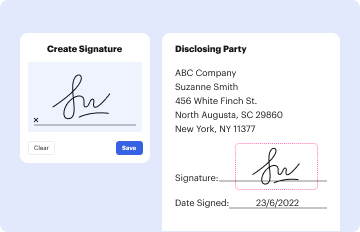
02. Sign it in a few clicks
Draw your signature, type it, upload its image, or use your mobile device as a signature pad.
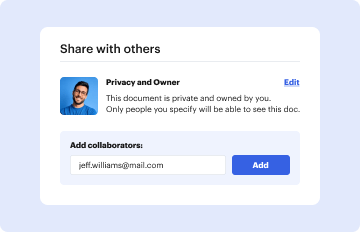
03. Share your form with others
Send school form via email, link, or fax. You can also download it, export it or print it out.
How to use or fill out Peer to Peer Classroom Observation Form - New Hanover with our platform
Ease of Setup
DocHub User Ratings on G2
Ease of Use
DocHub User Ratings on G2
Click ‘Get Form’ to open it in the editor.
Begin by filling in the observer's name and the teacher observed, along with the date, time, and subject of observation.
In Section 1, focus on Curriculum. Clearly state the learning objective and indicate if it is evident to students and aligned with grade-level standards.
Proceed to Section 2, focusing on Instruction. Identify instructional practices used during the observation and specify the grouping format.
In Section 3, assess student actions and engagement levels. Document instructional materials utilized during the lesson.
Complete Section 4 by evaluating classroom environment factors such as material availability and student interactions.
Finally, provide your reflections as an observer and ensure that both you and the teacher observed submit completed forms as instructed.
Start using our platform today for free to streamline your form completion process!
Fill out Peer to Peer Classroom Observation Form - New Hanover ... online It's free
Peer to peer classroom observation form new hanover pdfPeer to peer classroom observation form new hanover countyPeer to peer classroom observation form new hanover freePeer observation form for teachers PDFTeacher observation forms for administrators pdfPeer observation form FOR Teachers docTeacher Observation Form pdfPeer observation form for Teachers free
Security and compliance
At DocHub, your data security is our priority. We follow HIPAA, SOC2, GDPR, and other standards, so you can work on your documents with confidence.
The members of the committee responsible for the report were chosen for their special competences and with regard for appropriate balance. This study wasRead more
Jun 29, 2020 In Decision. Point 2, the candidate will provide evidence of his/her readiness for student teaching. Decision Point 2 will be immediately afterRead more
Jun 13, 2025 These observations are used to help form small groups for further talent development. In addition to the whole class nurturing lessons andRead more
Cookie consent notice
This site uses cookies to enhance site navigation and personalize your experience.
By using this site you agree to our use of cookies as described in our Privacy Notice.
You can modify your selections by visiting our Cookie and Advertising Notice.