







Definition & Meaning
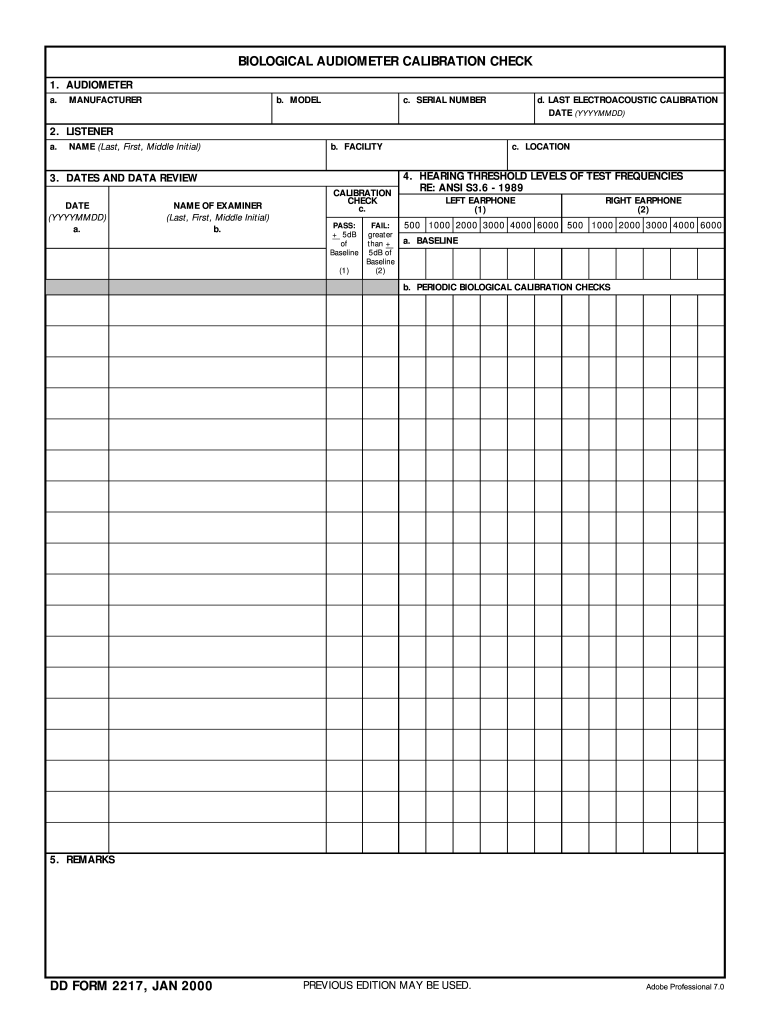
Audiometer calibration forms are essential documents used to record the results of audiometer calibration checks. Specifically, these forms detail the criteria, methods, and results regarding how well an audiometer performs against established standards. Calibration is vital for maintaining the accuracy and reliability of audiometric equipment, as it ensures that hearing tests yield valid results.
Key elements documented in these forms include:
- Audiometer Identification: Model and serial number, which are crucial for tracking the calibration history of each device.
- Calibration Equipment Used: Details about the equipment utilized to perform the calibration, ensuring the integrity of the process.
- Test Conditions: Environmental factors such as temperature and humidity, which can affect test accuracy.
- Results: Calibration results for various frequency levels and intensity outputs, indicating whether the audiometer passed or failed the calibration checks.
Maintaining comprehensive and accurate audiometer calibration forms is not only a best practice but also a requirement in many healthcare settings to meet safety and regulatory standards.
Steps to Complete the Audiometer Calibration Forms
Completing audiometer calibration forms requires a systematic approach to ensure all necessary information is accurately documented. Here are the key steps involved:
- Prepare Your Audiometer: Ensure the audiometer is in proper working condition and that any maintenance required has been performed.
- Gather Calibration Equipment: Collect all necessary calibration equipment and tools, verifying they meet the required standards for audiometer calibration.
- Conduct the Calibration Check: Follow established calibration procedures to test the audiometer at various frequencies and intensity levels. Record the results on the calibration form.
- Document Environmental Conditions: Note any relevant environmental factors that could influence results, including room temperature and equipment placement.
- Analyze Results: Evaluate whether the audiometer meets established calibration standards. If adjustments are needed, note them in the form.
- Sign and Date the Document: Finalize the calibration form by signing it, along with any other personnel involved in the testing process. This ensures accountability and traceability of the calibration process.
Following these steps helps ensure that all aspects of the calibration process are systematically recorded, contributing to better patient care and compliance with regulations.
Who Typically Uses the Audiometer Calibration Forms
Audiometer calibration forms are primarily utilized by professionals involved in audiometry, including but not limited to:
- Audiologists: Audiologists use these forms to ensure that their testing equipment is functioning accurately, which is crucial for diagnosing hearing issues.
- Hearing Aid Dispensers: Individuals who dispense hearing aids often need calibrated audiometers to provide accurate assessments to clients.
- Occupational Health Professionals: These professionals might conduct hearing tests as part of workplace safety programs, requiring calibrated equipment to ensure compliance with health standards.
- Research Institutions: In academic and clinical research settings, accurate audiometric testing is vital, necessitating well-maintained audiometer calibration records.
- Hospitals and Clinics: Healthcare facilities that provide hearing assessments rely on routine calibration to maintain their diagnostic capabilities.
The use of audiometer calibration forms by these professionals ensures consistency and reliability in hearing tests, which is essential for both patient safety and legal compliance.


Important Terms Related to Audiometer Calibration Forms
Understanding the terminology associated with audiometer calibration forms is essential for proper implementation and compliance. Here are some key terms and their meanings:
- Calibration: The process of verifying and adjusting the accuracy of a device against a standard to ensure reliable measurement.
- Biological Calibration: A technique involving the use of human subjects to confirm the accuracy of audiometric equipment in real-world conditions.
- Calibration Standards: Established benchmarks that define the acceptable performance of audiometric equipment based on national or international guidelines.
- Threshold Levels: The minimum sound intensity levels that a person can detect at various frequencies, which are critical in assessing hearing health.
- Pass/Fail Criteria: Defined standards used to determine whether an audiometer meets the necessary thresholds during calibration checks.
Familiarity with these terms ensures effective communication within the field and aids in understanding the calibration process.
Key Elements of the Audiometer Calibration Forms
The key elements of audiometer calibration forms serve to facilitate a clear understanding of the calibration process and results. Important components include:
- Patient Information Section: A designated area to include details about the patient (if applicable), which assists in tracking calibration with specific tests.
- Calibration Results: A comprehensive overview of outcomes for each frequency and intensity level tested, indicating whether the audiometer met expected standards.
- Signature Verification Area: Sections for the signatures of the technician performing the calibration and the supervisor or verifying auditor, ensuring accountability.
- Comments and Observations: An open space for the technician to note any irregularities or significant findings that may impact the calibration results.
- Date of Calibration: A critical field indicating when the calibration was performed, allowing for tracking and scheduling of future calibration checks.
Inclusion of these elements makes the form a valuable tool for ensuring conformity to standards and maintaining the integrity of audiometric testing.
Examples of Using the Audiometer Calibration Forms
To illustrate the importance of audiometer calibration forms, consider the following examples:
- Routine Calibration: A clinic performs routine monthly biological calibration checks using the forms to document tests. This ensures that any drift in calibration is quickly identified and rectified, maintaining accurate testing standards.
- New Audiometer Setup: Upon acquiring a new audiometer, clinical staff complete the calibration forms as part of the initial setup process. This formalizes the verification of the device’s performance against established benchmarks.
- Regulatory Auditing: During an external audit, a healthcare facility is required to present calibration forms for all audiometric devices. Proper documentation facilitates compliance and demonstrates adherence to industry standards.
- Quality Improvement Initiatives: A facility implementing a quality assurance program uses calibration forms to track performance over time, identifying trends that may indicate a need for further training or equipment upgrades.
These scenarios highlight how audiometer calibration forms serve various purposes across different contexts, emphasizing functional utility in clinical, regulatory, and quality assurance settings.




