







Understanding the Competent Person Letter: Definition and Purpose
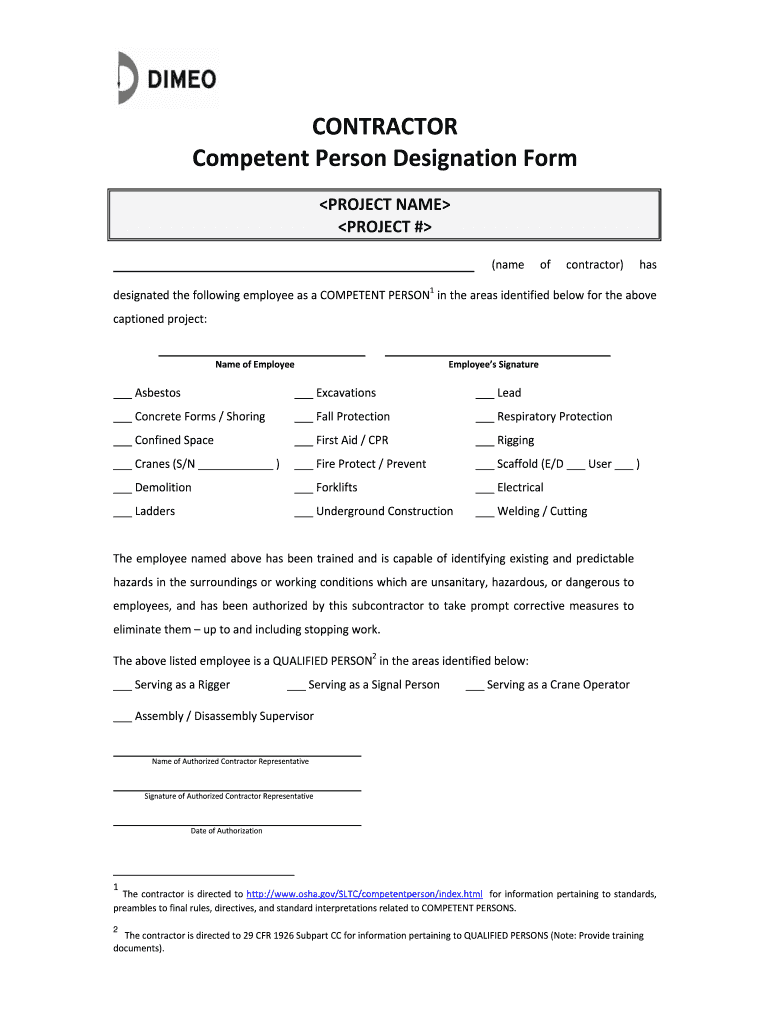
The competent person letter serves as an official designation for an employee recognized as having the necessary skills, knowledge, and experience to perform specific safety-related tasks within a project, particularly in the construction industry. This letter is critical for compliance with Occupational Safety and Health Administration (OSHA) standards, which mandate that a 'competent person' is responsible for safety on job sites where hazards may be present.
In essence, a competent person is someone who is trained to identify existing and predictable hazards in the surroundings or working conditions, and has the authority to take corrective actions to eliminate these hazards. The letter outlines their competencies, making it easier for employers to ensure safety measures are met and adhered to in the workplace.
Key Benefits of the Competent Person Letter
- Enhances Safety Compliance: Establishing a competent person within the workforce helps in adhering to safety regulations, ultimately fostering a safer working environment.
- Reduces Liability: Businesses can mitigate risks associated with workplace accidents by demonstrating due diligence in designating knowledgeable individuals responsible for safety.
- Facilitates Training Documentation: The letter serves as formal documentation that can be vital during OSHA inspections or audits.
- Clarifies Responsibilities: Clearly delineating responsibilities helps in managing team workflows and establishing accountability for safety practices.
Steps to Complete the Competent Person Letter
Completing a competent person letter requires careful consideration and attention to detail. Here’s a step-by-step guide to ensure the letter is correctly filled out:
-
Identify the Employee: Collect information about the individual who will be designated as the competent person, including their full name, job title, and contact information.
-
Define Areas of Competency: Specify the skills and qualifications of the employee. This may include training certifications and experience in areas such as fall protection, scaffolding, trench safety, and other relevant topics.
-
Obtain Required Signatures: Once drafted, the letter must be signed by both the designated competent person and a representative from the organization. This often includes a supervisor or a manager who can validate the designation.
-
Submit and Store the Letter: After signing, submit it to the relevant department or keep it accessible for records management. Ensure it is stored securely, as it may be needed during inspections or audits.
-
Review Periodically: Set up a review process to ensure the letter remains current and that the designated individual still possesses the necessary qualifications for their role. This can typically be aligned with annual safety training or performance evaluations.
Important Information to Include
- Date of Issuance: Indicate when the letter was finalized.
- Project or Site Location: Specify where the competent person will be carrying out their responsibilities.
- Signature Lines: Clearly mark the areas for required signatures from both parties.
Examples of Using the Competent Person Letter
Utilizing a competent person letter should be adapted to your specific organizational needs, including various scenarios where this designation is critical:
Construction Sites
In construction environments, this letter is essential. For instance, in a project involving the installation of scaffolding, the competent person may be responsible for assessing the stability and safety of the scaffolding and ensuring that workers are trained on its use.
Hazardous Material Handling
If your organization deals with hazardous materials, a competent person could oversee tasks involving asbestos handling or silica exposure. This individual must have thorough training and certification specific to the type of hazardous material being handled.
Legal Use of Competent Person Letter
The competent person letter not only establishes a formal recognition of expertise but also holds legal weight in ensuring compliance with regulatory bodies. OSHA stipulates that a competent person must be present to manage safety-related tasks, making this document a critical part of workplace health and safety management.
Compliance Requirements
- OSHA Regulations: Under OSHA standards, having a competent person on-site is not only beneficial but often required for various projects, ensuring teams operate safely while adhering to legal protections.
- Documentation: In the event of an accident or inspection, this letter serves as necessary proof that the organization has actively designated someone accountable for safety, which can reduce potential penalties for non-compliance.
Important Terms Related to Competent Person Letter
Familiarity with specific terminology related to the competent person letter can enhance understanding and effectiveness in its application:
Common Terms
- Competent Person: An individual necessary for recognizing and managing hazards in their assigned tasks.
- Qualified Person: A term often used interchangeably, though it may imply a more formal level of training or specific expertise in certain areas.
- Hazardous Conditions: Recognizes situations that could cause harm, requiring an immediate response from a competent person to mitigate risk.
Understanding these terms can further clarify the role and responsibilities outlined in the competent person letter, as well as assist organizations in maintaining compliance and fostering a culture of safety.
Examples of Competent Person Certificate Template
When creating a competent person letter, templates can be beneficial for maintaining consistency and ensuring all necessary elements are incorporated. Below are examples of how to structure such a document:
Basic Competent Person Letter Structure
- Title: Competent Person Designation Letter
- Employee Details: Name, title, contact information
- Competencies Listed: Include certifications and training relevant to safety
- Signatures Section: Lines for both the employee and the signing authority
Additions for Specific Contexts
- Project Specifics: Tailor the template to include specific project names or locations.
- Field-Specific Language: Use jargon and technical language relevant to the field, whether it’s construction, manufacturing, or another industry.
These templates assist not only in ensuring thoroughness but also in fostering a sense of professionalism and adherence to safety regulations among employees.




