







Definition & Meaning
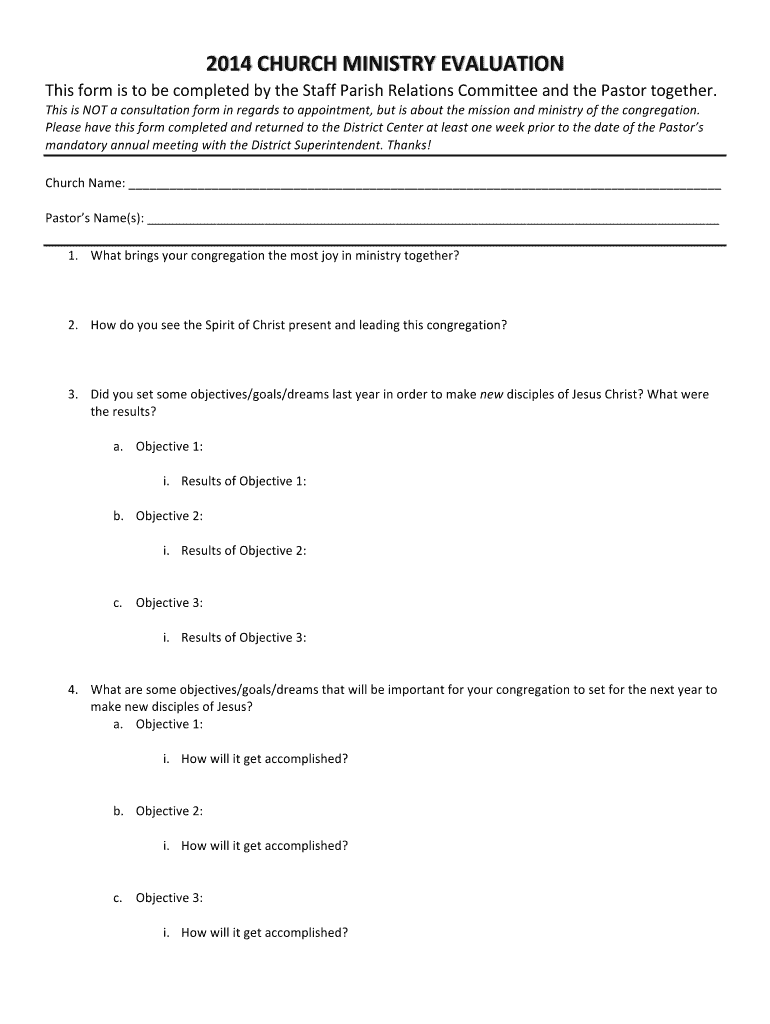
A pastor evaluation form PDF is a structured document designed to assess the performance and contributions of a pastor within a church context. This form typically includes criteria focusing on various aspects of ministry, including spiritual leadership, administrative skills, congregational engagement, and overall effectiveness in fulfilling the church's mission. It serves as a tool for church leadership, such as the Staff Parish Relations Committee, to provide constructive feedback to the pastor. The evaluation is often based on metrics that reflect the church's goals and expectations, fostering a culture of accountability and continuous improvement within the ministry.
The purpose of the pastor evaluation form extends beyond mere assessment; it is integral to the growth and development of church leadership. By systematically reviewing these aspects, the form facilitates actionable insights, helping pastors to identify strengths and areas for improvement. This process not only benefits individual pastors but also enhances overall church health by ensuring leaders are well-equipped to guide their congregations.
How to Use the Pastor Evaluation Form PDF
Using the pastor evaluation form PDF effectively requires careful consideration and collaboration among church leaders. Here are the steps to ensure a thorough evaluation process:
-
Prepare the Evaluation Criteria
Establish specific criteria reflecting the church's mission and objectives. Common areas include:- Spiritual leadership effectiveness
- Community outreach efforts
- Worship service quality
- Relationship with congregants
-
Gather Input from Multiple Sources
Involve different church stakeholders in the evaluation process, such as church board members, lay leaders, and congregation members. Collect insights through surveys or discussions to provide a comprehensive view. -
Complete the Evaluation Form
The form should be filled out collaboratively, incorporating feedback from various stakeholders. Use specific examples to illustrate points, ensuring the evaluation is grounded in observable behaviors and outcomes. -
Review and Discuss Findings
Schedule a meeting to discuss the completed evaluation. This step is essential for addressing any concerns and should emphasize a constructive and supportive dialogue. -
Create an Action Plan
Based on the evaluation results, collaborate with the pastor to develop an action plan that outlines goals, areas for growth, and strategies for support over the coming year.
This approach ensures that the pastor evaluation form PDF is utilized as a meaningful tool for growth rather than merely serving as a compliance document.
Key Elements of the Pastor Evaluation Form PDF
Understanding the key elements of the pastor evaluation form PDF helps users to maximize its utility. Essential components typically include:
-
Congregational Joy Assessment
Evaluates the overall happiness and satisfaction of the congregation, an important metric for understanding the pastor's relational impact. -
Spiritual Leadership Evaluation
Measures the pastor's ability to guide and inspire the congregation in spiritual growth, focusing on teaching, mentoring, and stewardship. -
Performance Metrics
Provides quantitative data on attendance trends, community involvement, and new member integration as indicators of the pastor's effectiveness. -
Feedback Section
Allows evaluators to provide constructive feedback, including strengths, possible improvements, and specific examples to support their assessments. -
Goal Setting and Future Planning
Includes sections dedicated to establishing goals for the upcoming year, focusing on both church growth and personal development for the pastor.
By ensuring these elements are present, the evaluation process can lead to actionable outcomes and deeper engagement with church leadership.
Examples of Using the Pastor Evaluation Form PDF
To illustrate practical applications of the pastor evaluation form PDF, consider the following examples:
-
Annual Review
Many churches conduct an annual evaluation of their pastor using the form. During this process, feedback from the congregation regarding their experiences during the year might be collected via surveys. For instance, congregants might evaluate the pastor’s sermons, noting areas where they felt inspired or desired more depth. -
Mid-Year Check-In
A church may utilize the form during a mid-year review to assess the progress of specific initiatives, such as outreach programs or youth ministry engagement. This allows the church to make necessary adjustments and provide support to the pastor effectively. -
Improvement Plan Implementation
If an evaluation from the previous year indicates a need for improved community engagement, the church might set specific measurable goals for the pastor related to outreach activities, utilizing the form to track progress and success.
These examples highlight how the pastor evaluation form PDF serves as a versatile tool that can adapt to different contexts within the church environment.
Who Typically Uses the Pastor Evaluation Form PDF
The pastor evaluation form PDF is commonly utilized by various stakeholders within church leadership teams. These typically include:
-
Staff Parish Relations Committee
This committee often leads the evaluation process, ensuring that it aligns with church policies and the overall mission. -
Church Board Members
Board members may provide oversight and participate in discussions surrounding the evaluation outcomes, contributing their perspectives on the pastor's performance. -
Congregation Members
Input from the congregation plays a critical role in evaluating a pastor's relationship with the church community, making their feedback invaluable. -
Denominational Leaders
In some instances, denominational leaders may review evaluation processes to ensure they comply with broader denominational standards and expectations for clergy accountability.
Understanding who participates in this process emphasizes the collaborative nature of the evaluation, reinforcing the idea that leadership effectiveness is a shared responsibility.


Why Use the Pastor Evaluation Form PDF
Implementing the pastor evaluation form PDF is beneficial for various reasons:
-
Enhanced Accountability
Regular evaluations create a culture of accountability within the church, allowing for open conversations about performance and expectations between pastors and their leadership teams. -
Targeted Professional Development
Feedback gathered can lead to personalized development plans, helping pastors grow in specific areas of their ministry, thus enhancing the overall church effectiveness. -
Strengthened Church Community
Engaging different church members in the evaluation process fosters a sense of community ownership and involvement, encouraging more active participation in church initiatives. -
Promoting Healthy Dialogue
Regular evaluations can normalize healthy conversations about performance, creating an environment where constructive feedback is welcomed and valued.
Utilizing the pastor evaluation form PDF aligns with best practices for church governance and contributes to the vitality of church leadership.




