






Definition and Meaning of the Alberta Rental Agreement Form 2021 PDF
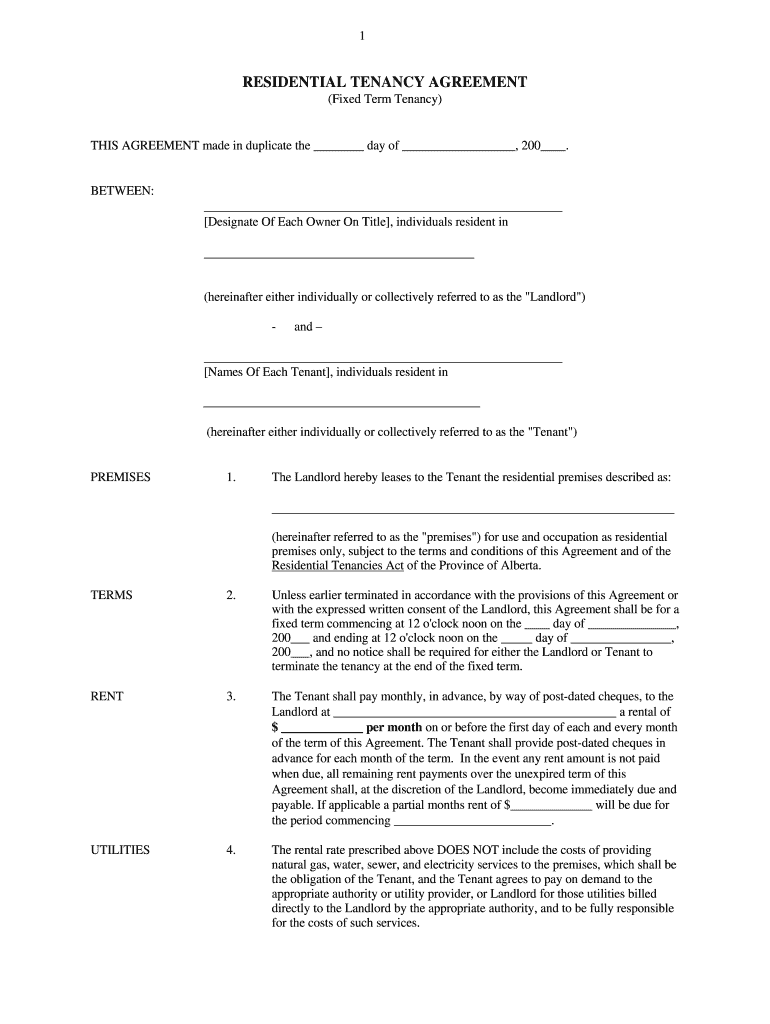
The Alberta rental agreement form is a legally binding document designed to outline the terms and conditions between a landlord and tenant in Alberta. This specific version from 2021 captures essential details relevant to residential tenancies, ensuring both parties are aware of their rights and responsibilities. Key components include rental price, the duration of the tenancy, security deposits, and rules governing the use of the rental property.
Key Components of the Agreement
- Rental Price: Specifies the monthly rent amount due and the date it is payable.
- Duration of the Lease: Clearly states the start and end date of the agreement.
- Security Deposit: Outlines the amount required, along with conditions for its return.
- Utilities and Maintenance: Allocates responsibility for utility payments and outlines maintenance obligations.
- Termination Conditions: Provides terms under which either party may terminate the agreement, including notice periods.
Understanding these components is crucial for both landlords and tenants, fostering a transparent and harmonious leasing relationship.
How to Obtain the Alberta Rental Agreement Form 2021 PDF
The Alberta rental agreement form can be obtained from several sources, ensuring easy access for both landlords and tenants:
- Official Government Websites: The Government of Alberta may provide downloadable versions of the form on their official portal.
- Legal Service Websites: Websites specializing in legal forms often host this document, ensuring compliance with current laws.
- Real Estate Associations: Local real estate boards may offer the form as part of their resources for landlords and tenants.
- Online Document Platforms: Services like DocHub allow users to access, complete, and manage rental agreements digitally.
Obtaining this form online ensures that users access the most recent version, adhering to local regulations.
Steps to Complete the Alberta Rental Agreement Form 2021 PDF
Completing the rental agreement form requires careful attention to detail to ensure accuracy and compliance with Alberta regulations:
- Download the Form: Start by downloading the PDF version from a reliable source.
- Fill Out Tenant Information: Enter the tenant's full name and contact details.
- Landlord Information: Similarly, provide the landlord’s name and contact information.
- Detail the Rental Property: Include the address and any specific details regarding the rental unit.
- Specify Rental Terms: Clearly indicate the rental price, due dates, lease term, and any included utilities or fees.
- Signatures: Both the landlord and the tenant must sign and date the agreement to validate it.
Careful completion of each section safeguards the interests of both parties, ensuring a clear understanding of the rental terms.
Key Elements of the Alberta Rental Agreement Form 2021 PDF
Several essential elements must be present in a comprehensive rental agreement:
- Identification of Parties: Names and addresses of both the landlord and tenant.
- Description of Premises: Detailed description of the rental unit, including address and any specific amenities.
- Lease Duration: Clearly stated lease period, whether fixed-term or month-to-month.
- Rent Payment Details: Amount of rent, method of payment, and due date.
- Security Deposit Information: Details on the security deposit, including how it will be held and conditions for return.
- Responsibilities: Clear delineation of responsibilities regarding utilities, maintenance, and other obligations.
- Termination Clauses: Conditions under which either party may terminate the agreement, including notice periods and requirements.
Incorporating these key elements establishes clear expectations and reduces potential disputes.
Important Terms Related to the Alberta Rental Agreement Form 2021 PDF
Understanding the terminology associated with rental agreements is vital for effective communication between landlords and tenants:
- Tenant: The individual or party leasing the property from the landlord.
- Landlord: The owner or entity renting out the property.
- Security Deposit: A monetary deposit that may be used to cover unpaid rent or damages.
- Notice Period: The timeframe within which one party must inform the other of intent to terminate the lease.
- Lease Term: The length of time the rental agreement is in effect.
Familiarity with these terms enhances comprehension of the document and the overall rental process.
Legal Use of the Alberta Rental Agreement Form 2021 PDF
The Alberta rental agreement form serves as a legally binding contract that protects both parties in the leasing arrangement.
Compliance with Alberta’s Residential Tenancy Act
To ensure legal validity, the agreement must comply with the Alberta Residential Tenancy Act. Key legal considerations include:
- Written Agreements: While verbal agreements may be valid, a written rental agreement is strongly recommended for clarity.
- Required Clauses: Certain clauses, like maintenance responsibilities and conditions for returning the security deposit, are mandated by law.
- Dispute Resolution: The agreement should outline the process for resolving disputes, ideally referencing the provincial tenancy authority.
By adhering to legal standards, both landlords and tenants can better safeguard their interests and responsibilities.
Examples of Using the Alberta Rental Agreement Form 2021 PDF
Practical scenarios can illustrate how the Alberta rental agreement form functions in real-world situations:
- New Rental Property Agreement: A landlord uses the form to establish the terms of a new rental, ensuring the tenant understands the rental price and their responsibilities.
- Renewal of Lease: When a tenant wishes to renew their lease, the form can be adjusted to reflect any changes in terms, such as rent increases or updated utility responsibilities.
- Termination of Tenancy: If a tenant decides to move out, the agreement’s terms will guide them on proper notice requirements to avoid penalties.
These examples highlight the versatility of the rental agreement across various rental scenarios, making it an essential tool for both landlords and tenants.