
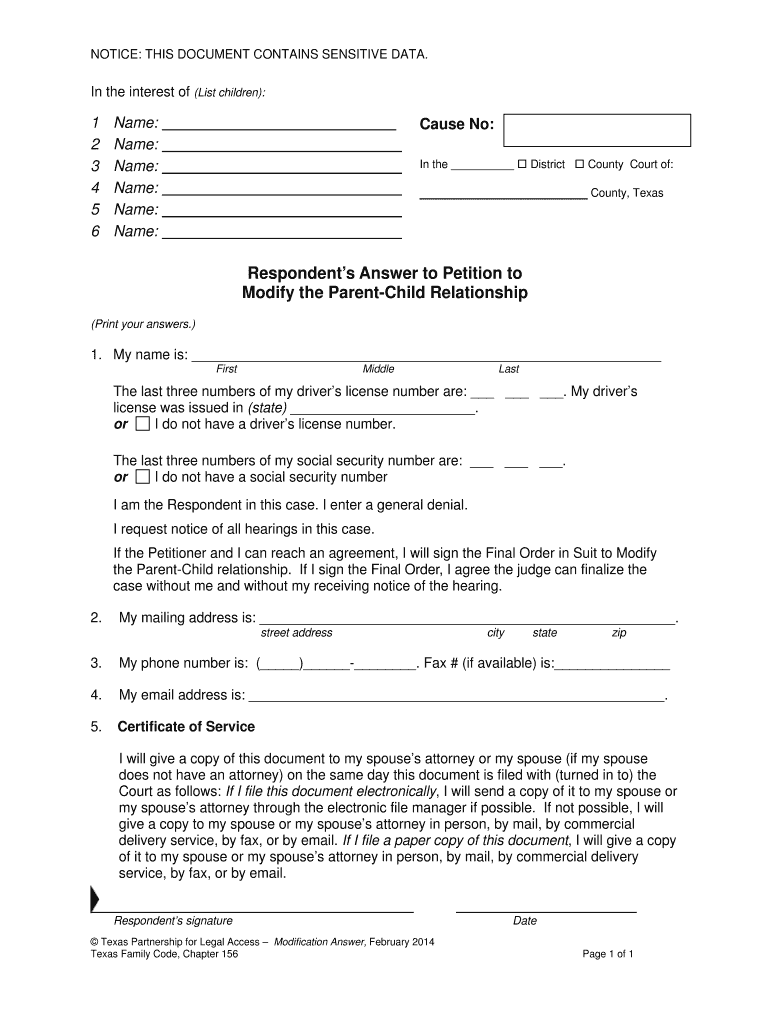







Components of a Sample Response Letter to Child Support Summons
This section details the components and structure of a sample response letter to a child support summons. Understanding these elements can help ensure that the letter is appropriately formatted and complete.
Personal Information Section
- Respondent’s Details: The top of the letter should include the respondent's full name, address, and contact information.
- Case Information: Following the respondent details, include the case number and the names of both parties involved in the child support case.
Statement of Denial or Agreement
- Response to Allegations: Clearly articulate whether the respondent denies or agrees with the claims made in the summons. This section should provide a succinct overview of the respondent's position.
- Supporting Reasons: If denying the allegations, include supporting details or evidence that backs up this denial. This could involve referencing financial documents or previous agreements.
Request for Hearing Notification
- Notice of Hearings: Include a statement requesting to be informed of any hearings related to the child support case. This ensures the respondent remains informed and can participate in proceedings effectively.
Agreement to Mediate or Settle
- Exploration of Resolution: If applicable, express a willingness to mediate or settle the issue amicably. This demonstrates a collaborative approach and can help avoid lengthy litigation.
- Terms of Agreement: Outline any preliminary terms of settlement or mediation that the respondent is willing to discuss, reinforcing a constructive intention.
Certificate of Service
- Formal Notification: Conclude the letter with a certificate of service that details how the respondent will notify the other party (i.e., spouse or attorney) of this response.
- Method of Service: Specify whether notice will be delivered by mail, email, or another method, along with the date of service. This formalizes the process and fulfills legal requirements.
Considerations When Responding to a Child Support Summons
When constructing a response letter to a child support summons, various considerations should be taken into account to ensure accuracy and compliance.
Legal Grounds for Child Support
- Understanding Support Laws: Familiarize yourself with the state-specific laws governing child support, as these can influence how the letter is framed and what arguments may be included.
- Financial Responsibilities: Address the legal obligations that pertain to child support, and how these obligations may have been previously articulated or agreed upon.
Importance of Timely Response
- Deadline Awareness: Respond to the summons promptly, as delays can result in default judgments against the respondent. Check state laws for specific timelines regarding response submissions.
- Consequences of Ignoring a Summons: Highlight the potential consequences of failing to respond, including enforceable wage garnishments or loss of visitation rights.
Documentation to Support Claims
- Gathering Evidence: Compile financial documents, tax returns, or other relevant materials that can substantiate the response to the summons.
- Professional Assistance: Consider consulting a legal professional specializing in family law for guidance on the preparation of the letter and overall strategy.
Sample Response Scenarios
The scenario examples below illustrate how respondents may structure their sample response letter to different child support summons situations.
Scenario 1: Denying Child Support Obligation
- Claim: The respondent has capped income due to a job loss affecting their ability to pay child support.
- Response Structure:
- Introduction stating they deny the claim due to financial hardship.
- Statement detailing job loss, including dates and efforts made to secure employment.
- Request for a modification of support amount based on current circumstances.
Scenario 2: Agreeing but Requesting a Mediation
- Claim: The respondent acknowledges the need for child support but is willing to discuss terms.
- Response Structure:
- Acknowledgment of obligation while expressing a desire to negotiate terms that consider changes in financial circumstances.
- Proposal for mediation sessions and potential terms for restructuring payments.
Scenario 3: Challenging Payment Amount
- Claim: The respondent believes the requested amount is excessive based on their income or other obligations.
- Response Structure:
- Formal denial of the amount requested with rationale, supported by financial documentation.
- Request for court review of the financial situation and adjustment of payment obligations accordingly.
Best Practices for Crafting a Response Letter
To ensure that a response letter meets legal standards and effectively communicates the respondent's position, adhere to the following best practices.
Clarity and Precision
- Avoid Ambiguities: Use clear and direct language to avoid misunderstandings.
- Be Specific: Clearly outline specific requests, denials, or agreements without using vague terms.
Professional Tone
- Maintain Respect: Even when disputing claims, maintain a respectful and professional tone throughout the letter.
- Limit Emotions: Focus on facts and legal positions rather than emotional appeals.
Proofreading and Review
- Ensure Accuracy: Review the letter for any grammatical or factual errors that could undermine its credibility.
- Consider Legal Review: If possible, have a legal professional review the letter before submission to ensure compliance with applicable laws and regulations.




