




01. Edit your allstate customer documents allstate online
Type text, add images, blackout confidential details, add comments, highlights and more.

Type text, add images, blackout confidential details, add comments, highlights and more.

Draw your signature, type it, upload its image, or use your mobile device as a signature pad.

Send allstatecustomerdocuments allstate com via email, link, or fax. You can also download it, export it or print it out.
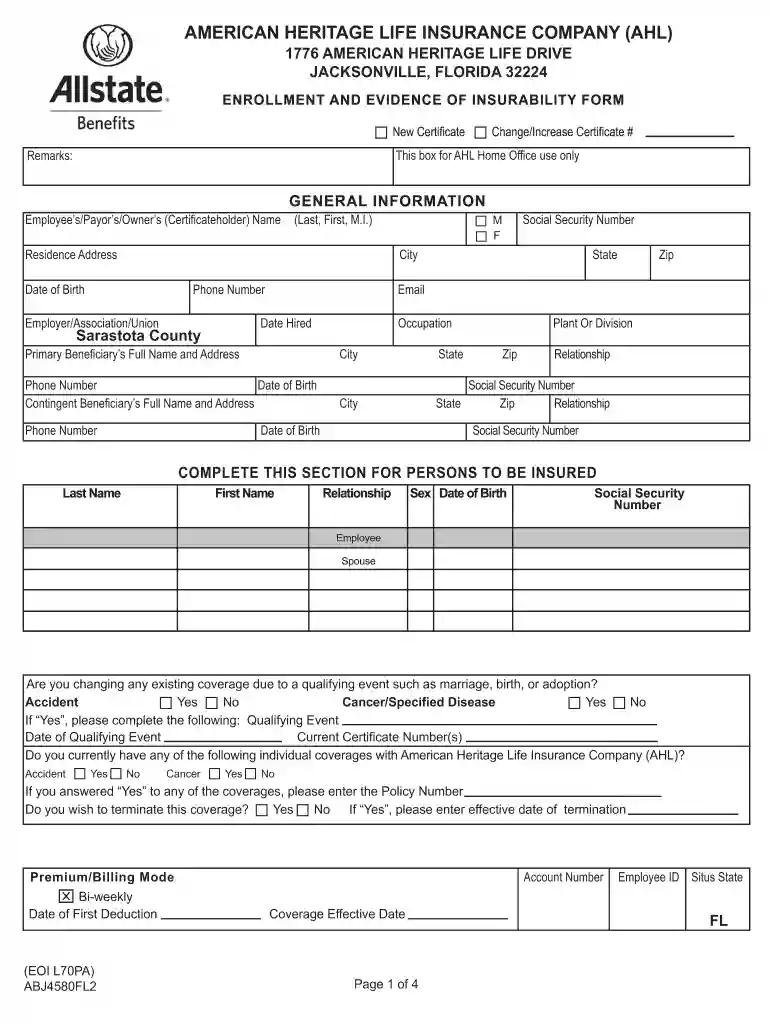
The Allstate Evidence of Insurability (EOI) is a crucial document used primarily in the insurance process. It serves as an application that collects necessary health information from individuals seeking to obtain or modify their life insurance coverage with Allstate. The EOI is essential for the insurance company to assess the risk level associated with insuring an individual. By evaluating the information provided, Allstate can determine whether to approve the insurance application, adjust coverage options, or deny coverage altogether based on the applicant's health history.
Understanding the meaning of the Allstate EOI helps applicants prepare adequately when seeking insurance coverage or making changes to their existing policies.
Using the Allstate EOI effectively involves following a structured process to ensure all necessary information is accurately presented. Applicants should begin by obtaining the form, which can often be accessed through Allstate’s customer portal or received directly from the insurance agent.
Following these steps ensures that the Allstate EOI is filled out correctly, which can significantly influence the approval outcome for insurance coverage.
Familiarity with key terminology associated with the Allstate EOI is vital for understanding the insurance process and ensuring compliance during application.
Being aware of these terms provides clarity on the nuances of the EOI and enhances the applicants' preparedness for discussions with insurance agents.
The Allstate EOI contains several key elements that must be addressed to facilitate successful processing. These elements are crucial for accurate risk assessment by the insurer.
Attention to these key components ensures that the EOI is complete and ready for review by Allstate, streamlining the assessment process.
Completing the Allstate EOI involves specific steps that aim to gather necessary information systematically while ensuring compliance with Allstate's requirements.
By following these steps, applicants can ensure their EOI is completed thoroughly, increasing the likelihood of receiving coverage approval.
At DocHub, your data security is our priority. We follow HIPAA, SOC2, GDPR, and other standards, so you can work on your documents with confidence.
^Evidence of insurability (EOI) is required for ages 71-80 and quotes in excess of U/W offer (). The Childrens Term Rider is not available at ages 66-80.Read more
EOI consists of health questions that may include your current health status, medical history, and family medical history. New Employee may elect $20,000 upRead more


