




Definition and Purpose of the Vision Screening Letter to Parents
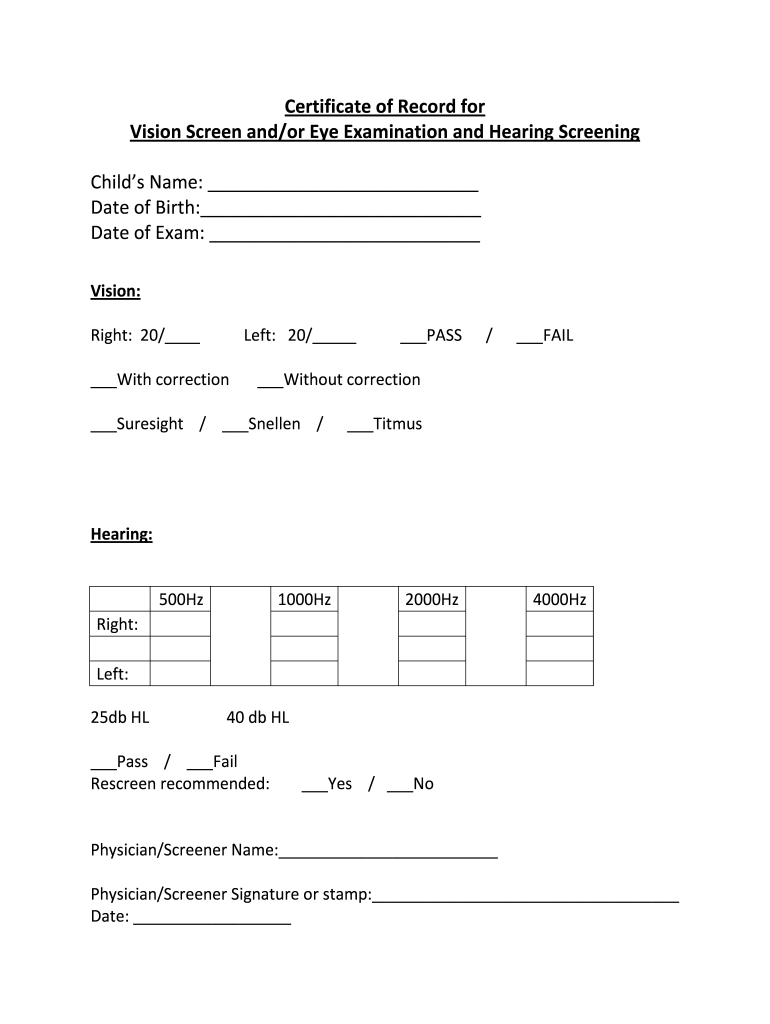
The vision screening letter to parents serves as a formal communication tool used by schools and healthcare providers to inform parents about the results of their child’s vision screening. This letter typically includes critical information such as the child’s name, date of birth, the date of the screening, and specific results related to vision performance, both with and without correction. The intent of this letter is to ensure that parents are made aware of their child’s eye health and any recommendations for further evaluations or corrective measures if needed.
Key Components of the Letter
- Child’s Information: Includes the full name and date of birth to clearly identify the individual being assessed.
- Screening Results: Specifies outcomes such as "pass" or "fail," along with any measurements or observations made during the screening.
- Recommendations: If a child does not pass the vision screening, the letter may advise parents to schedule an appointment with an eye care professional.
- Screener’s Signature: The document usually concludes with the screener’s name and signature, adding authenticity and a point of contact for follow-up questions.
Steps to Complete the Vision Screening Letter to Parents
Completing the vision screening letter to parents involves systematic steps ensuring accuracy and clarity.
- Prepare the Child's Information: Gather the essential details, including the child's name, date of birth, and class or grade level.
- Document Screening Results: Clearly mark whether the child has passed or failed the screening, including specifics such as visual acuity measurements.
- Provide Recommendations: If necessary, suggest next steps, including referrals to an eye care professional.
- Include Additional Information: Offer any resources or local contacts for parents seeking further evaluations or follow-up care.
- Finalize and Distribute: Ensure the document is signed by the screener and distributed to parents, either in physical format or electronically, as per school policies.
How to Use the Vision Screening Letter to Parents
The vision screening letter to parents functions as a vital educational and informational document. Here are practical ways to utilize it effectively:
- Informing Parents: The primary purpose of the letter is to communicate results. Parents should receive this information promptly to ensure timely actions can be taken if needed.
- Documentation for Health Records: This letter can be kept as part of the child’s health records, proving essential for personal medical histories or school requirements.
- Guidance on Next Steps: The letter should guide parents on what steps to take if their child requires further evaluation or treatment, empowering them to make informed health decisions.
Important Terms Related to Vision Screening
Understanding specific terminology related to vision screenings can enhance communication between parents, educators, and healthcare providers.
- Visual Acuity: A measure of the clarity or sharpness of vision, often expressed as a fraction.
- Referral: A recommendation to see an eye care professional for further examination or treatment after a failed screening.
- Screening Protocol: The standard procedures and tests used for conducting vision screenings in schools or clinics.
- Corrective Measures: Methods such as glasses or contact lenses recommended to improve vision once issues are identified.
Legal Use of the Vision Screening Letter to Parents
The vision screening letter to parents holds legal significance in various contexts. It should adhere to local laws regarding health information privacy and parental notification, ensuring:
- Compliance with FERPA: Schools must comply with the Family Educational Rights and Privacy Act (FERPA), ensuring that personal health information is kept confidential.
- State Regulations: Different states may have specific regulations regarding health screenings in schools. The letter must align with these laws to remain valid and effective.
- Duty to Inform: Schools have a legal obligation to inform parents if a child fails a vision screening, allowing parents to act on the information promptly.
Examples of Using the Vision Screening Letter to Parents
Consideration of various scenarios enhances understanding of the vision screening letter to parents:
- Scenario One: A child receives a vision screening during a routine health check at school and fails to pass the test. The school issues a vision screening letter to parents, informing them of the screening results while recommending an appointment with an optometrist.
- Scenario Two: A parent requests an eye screening for their child due to complaints about difficulty seeing from a distance. After the screening, the results are documented in the letter, including appropriate recommendations based on the findings.
- Scenario Three: A school district implements an annual vision screening program. They develop a standard letter format to communicate results efficiently while ensuring adherence to privacy regulations.
Variants and Alternatives to the Vision Screening Letter to Parents
While the primary vision screening letter serves to inform parents directly, there may be variants or alternative documents that relate to similar purposes:
- Vision Referral Letter: Specifically utilized when a child is referred for further examination by a healthcare provider.
- Vision Screening Form: This form details the results and can accompany the letter to give parents a clearer understanding of the testing performed.
- Hearing and Vision Screening Form: This comprehensive document might combine both vision and hearing results, providing a broader view of the child’s health assessments at school.
These documents enhance the communication process and ensure that parents are well-informed about all relevant health screenings regarding their children.