




01. Edit your duct light test report format online
Type text, add images, blackout confidential details, add comments, highlights and more.

Type text, add images, blackout confidential details, add comments, highlights and more.

Draw your signature, type it, upload its image, or use your mobile device as a signature pad.

Send duct light test checklist via email, link, or fax. You can also download it, export it or print it out.
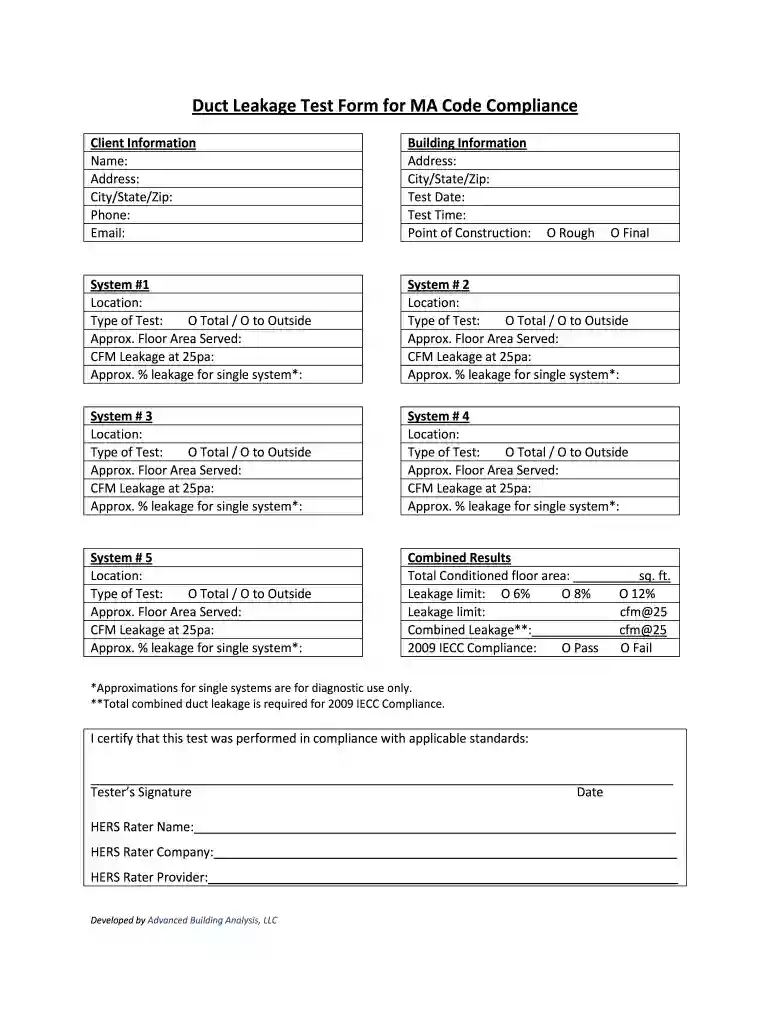
The duct light test report format is a standardized document used to assess the air leakage of duct systems within buildings, particularly important for compliance with building codes and energy efficiency standards. It serves as the official record of the duct leakage testing results, which evaluates the effectiveness of the ductwork in preventing air loss. The format typically includes sections for detailing the project, testing conditions, results, and the tester's certification.
Key elements within the format often consist of:
This report is crucial for ensuring compliance with health and safety regulations and optimizing energy efficiency in new and existing buildings.
To effectively utilize the duct light test report format, it’s essential to follow a structured approach. The process typically involves several key steps that ensure all necessary data is captured accurately, promoting reliable results for compliance and performance evaluation.
Collect Necessary Information: Begin by gathering all requisite information about the building—this includes project details, duct layout, and any relevant construction specifications.
Conduct the Leakage Test: Utilize appropriate testing equipment, adhering to standardized methods (such as the blower door test), to measure duct leakage.
Fill Out the Report: When documenting the test, enter all observations and results into the designated sections of the report. Make sure to include:
Certification: Have a certified tester review the findings and sign the report, providing validation of the process and results.
Distribute the Report: Ensure that all relevant stakeholders (building owners, contractors, inspectors) receive copies of the completed report for their records and to demonstrate compliance with local codes or standards.
Using this structured approach streamlines the process and enhances the credibility of the test results.
Completing the duct light test report format requires attention to detail and a methodical approach. Follow these steps to ensure accuracy and compliance:
Preparation: Before conducting the test, prepare the duct system. Seal all supply and return outlets to prevent air from escaping during the test.
Choose the Right Equipment: Use a calibrated blower door to measure duct pressure accurately. Ensure all measurement devices are functioning correctly.
Perform the Test: Execute the duct leakage test according to the established standards. Measure the airflow accurately and record the data. Typical measurements include:
Document Results: On the report format:
Review and Certify: After completing the report, conduct a comprehensive review to check for any discrepancies or missing information. Once verified, the certified tester should sign the report.
File and Share: Save copies of the report in digital formats (if possible) for easy sharing. Provide printed copies to all relevant parties as needed.
Completing the duct light test report accurately helps ensure compliance with regulations and promotes better energy efficiency in buildings.
A well-structured duct light test report format contains several key elements crucial for transparency, reliability, and compliance with local regulations. Each section plays a significant role in documenting the methodology and findings of the test:
Header Section: Contains basic information, including the report title, project name, date of testing, and the responsible party’s contact information.
Client and Building Details: This section should have comprehensive information about the building owner, location, and details about the building’s design and purpose.
Duct System Description: Detailed attributes of duct systems being tested, including system type (e.g., flexible, rigid), main characteristics, and any modifications made to the ductwork.
Testing Procedure: A detailed explanation of the methods used during the test, referencing industry standards and protocols followed.
Results Section: Present clear and concise leakage measurements, indicating compliance or failure against predefined thresholds.
Conclusion and Recommendations: Summarize findings, note compliance status, and recommend actions for improvement if necessary. This section might also advise on essential repairs or maintenance tasks.
Certifications and Signatures: Space for signatures of both the tester and any additional relevant authorities, providing legal standing to the report.
Properly documenting these elements fosters clarity and supports compliance efforts.
Understanding key terminology associated with the duct light test report format is crucial for effective communication and compliance. Familiarity with these terms can enhance clarity and accuracy in the report:
Duct Leakage: Refers to unintended airflow escaping from the ductwork. It can lead to increased energy costs and negatively affect the building's heating and cooling efficiency.
CFM (Cubic Feet per Minute): A unit of measurement that quantifies the volume of air passing through the duct system. This measure is critical for evaluating performance.
IECC (International Energy Conservation Code): A set of guidelines aimed at enhancing energy efficiency in buildings, affecting the standards to which duct systems are held.
Blower Door Test: A diagnostic test used to measure the airtightness of a building by creating a pressure difference between the inside and outside.
Leakage Rate: The amount of air that escapes the duct system, typically measured under a specified pressure condition. It indicates performance and compliance with energy efficiency standards.
Certification: An official recognition by a qualified individual that the duct light test procedure was followed correctly, validating the report findings.
Having a grasp of these terms promotes clearer dialogue among professionals involved in HVAC, building inspections, and energy auditing.
Managing your paperwork with DocHub this way is very straightforward once you have downloaded its extension for Google Chrome. Navigate to the Chrome Web Store and install DocHub - Sign PDF from Gmail to obtain it. Give our tool access to your Google account, and then open an email containing method statement for duct light test pdf as an attachment and point to the file with your cursor - the DocHub extension button will automatically show up there. Click on it to open your form in our editor. Make any essential modifications, complete the blanks, and click Sign to create your legally-binding electronic signature.
It is a no-brainer on a computer or via a mobile phone to fill out a duct light test procedure with DocHub. All you need to do is open any installed browser on your smartphone and proceed to the DocHub website. Once authenticated, add your document and open it in editing mode. Use our toolbar to make your edits and save modifications. Optionally, keep your document in your files or send it to a recipient on the spot.
At DocHub, your data security is our priority. We follow HIPAA, SOC2, GDPR, and other standards, so you can work on your documents with confidence.
This report was prepared under contract to the Department of Defense Environmental. Security Technology Certification Program (ESTCP).Read more
Grease Duct Light Test Report Form. Test Date I hereby DocHub that the field assembled joints, seams and penetrations for the above stated grease ductRead more
1. Prepare test sheet. 2. Connect and adjust test apparatus to correct pressure. 3. Read off leakage rate. 4. Reseal if necessary (allow time to cure). 5.Read more


