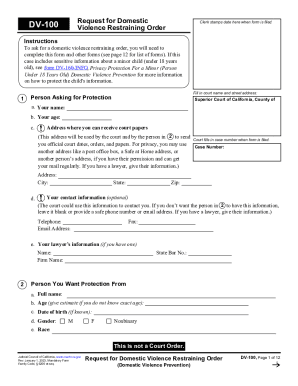
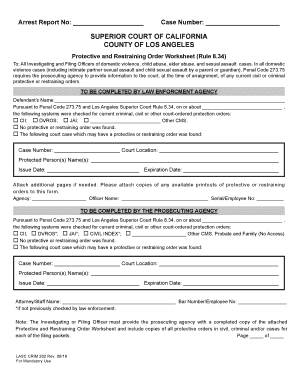
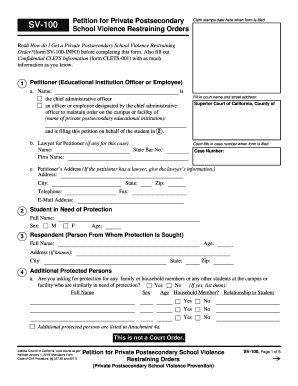
Enhance your document operations with Restraining in california Order Forms

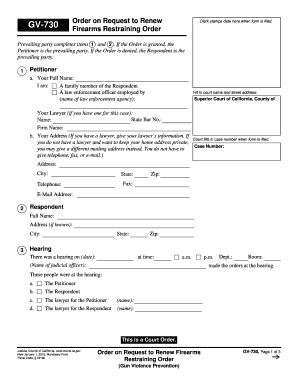
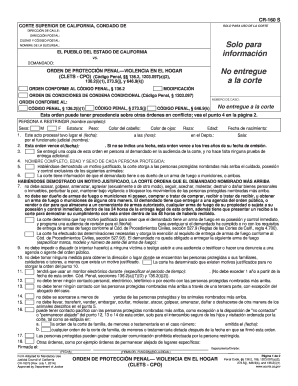
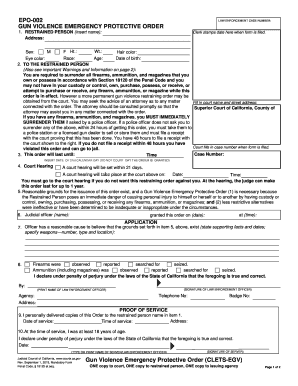
Your workflows always benefit when you are able to discover all the forms and files you require at your fingertips. DocHub supplies a a huge library of templates to relieve your daily pains. Get hold of Restraining in california Order Forms category and quickly browse for your form.

Begin working with Restraining in california Order Forms in several clicks:

  1. Gain access to Restraining in california Order Forms and locate the form you require.
  2. Click on Get Form to open it in the editor.
  3. Start adjusting your file: add fillable fields, highlight paragraphs, or blackout sensitive information and facts.
  4. The app saves your modifications automatically, and after you are all set, you are able to download or share your form with other contributors.

Enjoy effortless form administration with DocHub. Check out our Restraining in california Order Forms collection and find your form today!


Video Guide on Restraining in california Order Forms management

video background

Commonly Asked Questions about Restraining in california Order Forms

A California restraining order will appear on your record as a civil restraining order. However, if you violate the order, you can be charged with a crime. Violating the order can lead to misdemeanor or felony charges, depending on the circumstances.
A No Contact Order is a directive issued to a student (i.e., the Respondent) that requires them to avoid all contact with the requesting party (i.e., the Complainant). No Contact Orders are not restraining orders.
You can ask for a civil harassment restraining order if you are being harassed, stalked, abused, or threatened by someone you are not as close to as is required under domestic violence cases, like a roommate, a neighbor, or more distant family members like cousins, aunts or uncles, or nieces or nephews.
Under most circumstances, a California judge will decide whether or not they will issue a temporary restraining order within one business day of receiving the case for consideration.
In most cases, violating a protective order is a misdemeanor offense. If youre convicted, you could face up to one year in county jail and up to $1000 in fines. At the judges discretion, based on the case facts, they may reduce the sentence to summary probation, but the original protective order remains in effect.
If a judge is unwilling to grant the TRO, that essentially means that the petitioner has not made a reasonable primafacie case of harassment or abuse, and does not bode well for the petitioners case.
If you want a restraining order against someone but have not been injured, threatened, or stalked by them, you will likely have to pay a filing fee. California courts can impose a fee between $435 and $450 (circa 2024) to file for a restraining order without alleging violence, stalking, or threats of violence.
Overall, no, California does not make an important or official distinction between protective orders and restraining orders. The two terms are often used interchangeably in legal contexts.
You can ask for a civil harassment restraining order if you are being harassed, stalked, abused, or threatened by someone you are not as close to as is required under domestic violence cases, like a roommate, a neighbor, or more distant family members like cousins, aunts or uncles, or nieces or nephews. Restraining Orders - abuseselfhelp - California Courts ca.gov ca.gov