

Create your Wisconsin Landlord Tenant Legal Form from scratch

Start Building Now
Title decoration

Here's how it works

01. Start with a blank Wisconsin Landlord Tenant Legal Form
Open the blank document in the editor, set the document view, and add extra pages if applicable.
02. Add and configure fillable fields
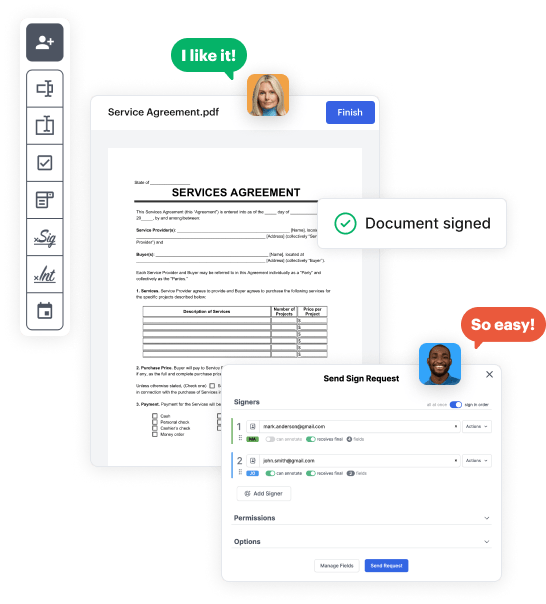
Use the top toolbar to insert fields like text and signature boxes, radio buttons, checkboxes, and more. Assign users to fields.
03. Distribute your form
Share your Wisconsin Landlord Tenant Legal Form in seconds via email or a link. You can also download it, export it, or print it out.

A simple tutorial on how to build a polished Wisconsin Landlord Tenant Legal Form

Form edit decoration

Step 1: Sign in to DocHub to begin creating your Wisconsin Landlord Tenant Legal Form.

First, log in to your DocHub account. If you don't have one, you can simply sign up for free.

Step 2: Go to the dashboard.

Once signed in, go to your dashboard. This is your main hub for all document-focused tasks.

Step 3: Launch new document creation.

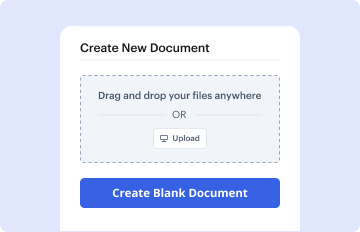
In your dashboard, choose New Document in the upper left corner. Pick Create Blank Document to create the Wisconsin Landlord Tenant Legal Form from the ground up.

Step 4: Insert form elements.

Place numerous fields like text boxes, images, signature fields, and other interactive areas to your form and designate these fields to specific individuals as required.

Step 5: Personalize your template.

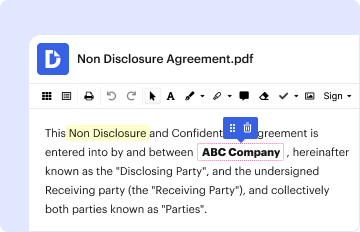
Personalize your form by adding directions or any other essential information utilizing the text option.

Step 6: Go over and adjust the form.

Meticulously check your created Wisconsin Landlord Tenant Legal Form for any inaccuracies or required adjustments. Take advantage of DocHub's editing features to polish your template.

Step 7: Share or download the template.

After completing, save your work. You may opt to save it within DocHub, export it to various storage platforms, or forward it via a link or email.


be ready to get more

Build your Wisconsin Landlord Tenant Legal Form in minutes

Start creating now

Got questions?

We have answers to the most popular questions from our customers. If you can't find an answer to your question, please contact us.
Contact us
How to Evict Step 1 Send Eviction Notice to Tenant. 1st Violation (Leases Under a Year) Step 2 Wait to Hear from the Tenant. Step 3 File in Court. Filing Fee ($) Step 4 Serve the Tenant. Step 5 Attend a Hearing. Potential for Trial. Step 6 Obtain a Writ of Restitution. Step 7 Repossess the Property.
The Wisconsin Department of Agriculture, Trade and Consumer Protection (DATCP) requires all lodging facilities in Wisconsin to hold a current license. If you are furnishing short-term lodging, you should apply for a sellers permit here: .
At least 28 days notice must be given except in the following cases: If rent is payable on a basis less than monthly, notice at least equal to the rent-paying period is sufficient; all agricultural tenancies from year-to-year require at least 90 days notice.
It is important to remember that in Wisconsin a tenant can only be forced to leave an apartment after they have a court date, and only if the judge rules in the landlords favor. Then the judges order must be given to the sheriff who would then remove the tenant from the apartment.
The landlord may not confiscate your personal belongings, turn off your utilities, lock you out of your apartment, or use force to remove you. If the small claims court judge rules in the landlords favor, the judge may issue a court order requiring you to leave the property.
be ready to get more

Build your Wisconsin Landlord Tenant Legal Form in minutes

Start creating now

Related Q&A to Wisconsin Landlord Tenant Legal Form

When a tenant with no written lease pays rent on a monthly basis, the tenant and the landlord must meet two requirements in terminating tenancy. First, the notice must be in writing. Second, you must give notice at least 28 days before the end of the rent-paying period.
Back to Eviction. Self-help evictions are illegal under ATCP 134.09(7). Self-help evictions mean the landlord is trying to force a tenant out by doing things like changing the locks themselves, throwing the tenants stuff out, shutting off power, etc. without a court order.
The landlord may upon advance notice and at reasonable times inspect the premises, make repairs and show the premises to prospective tenants or purchasers; and if the tenant is absent from the premises and the landlord reasonably believes that entry is necessary to preserve or protect the premises, the landlord may

Additional resources on building your forms


