
Washington Family Law
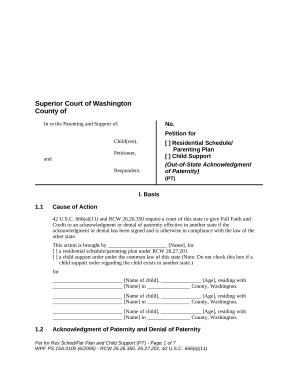
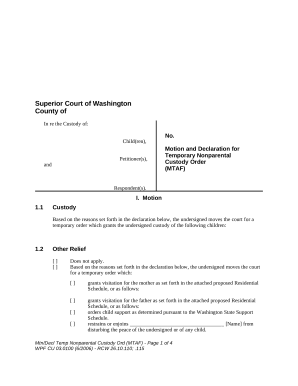
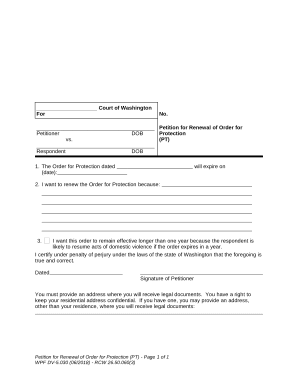
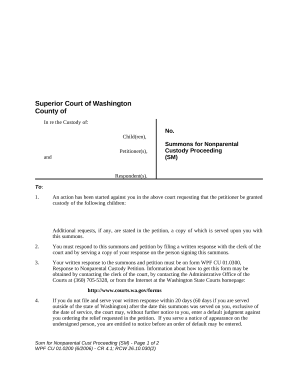
Get and manage Washington Family Law online
Improve your document managing with the Washington Family Law online library with ready-made templates that meet your requirements. Get the document template, alter it, complete it, and share it with your contributors without breaking a sweat. Start working more efficiently with the forms.
The best way to use our Washington Family Law:
- Open our Washington Family Law and find the form you need.
- Preview your document to ensure it’s what you want, and click Get Form to begin working on it.
- Edit, include new text, or highlight important information with DocHub tools.
- Fill out your form and save the adjustments.
- Download or share your document with other recipients.
Examine all of the possibilities for your online file administration with our Washington Family Law. Get a free free DocHub profile right now!
Video Guide on Washington Family Law management

Commonly Asked Questions about Washington Family Law
How often do fathers get 50/50 custody in Washington state?
ing to a report from the Washington State Center for Court Research, the most commonly reported balance of parenting time was 50/50 between mother and father, with nearly 21 percent of cases. However, in nearly two-thirds of all the cases, children spent more residential time with their mothers.
What are fathers rights in Washington State?
If you are the childs legal father, you have the same rights as your childs mother, including the right to: Notice - advance notice of all court hearings. Contest allegations - a chance to admit or deny any allegations of abuse or neglect that are made against you.
What are the child parent laws in Washington State?
Washington prioritizes the needs of the child, and there are many scenarios in which evenly shared custody works best for the child. Washington does not have a specific law that gives a 50/50 custody presumption. However, the state does promote joint custody in many cases.
What is a wife entitled to in a divorce in Washington State?
A court in Washington State will usually a) award each party his or her own separate property and b) divide the net value of the parties community property 50/50. This means the husband keeps what he brought to the marriage, the wife keeps what she brought, and the rest gets split between them equally.
What is the paternity law in Washington state?
The law presumes you are both parents to a child born during your marriage or domestic partnership, or within 300 days after your marriage or domestic partnership ends (or your spouse dies). The spouse or partner is a presumed parent (RCW 26.26A. 115(1)(a)).
Can a mother move a child away from the father in Washington state?
The judge is obligated to follow Washington law, which says that the courts must allow the relocation unless the parent who filed the objection can prove that the benefit of the relocation to both the child and the custodial parent is outweighed by the negative effects.