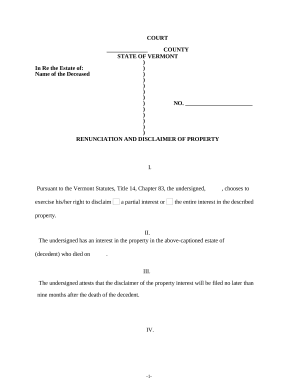
Transform your file managing with Vermont Estate Planning Documents

Your workflows always benefit when you can easily obtain all the forms and files you require on hand. DocHub gives a a huge collection of templates to relieve your daily pains. Get hold of Vermont Estate Planning Documents category and easily discover your document.

Start working with Vermont Estate Planning Documents in a few clicks:

  1. Open Vermont Estate Planning Documents and get the form you require.
  2. Click Get Form to open it in our editor.
  3. Begin editing your document: add fillable fields, highlight sentences, or blackout sensitive information and facts.
  4. The application saves your modifications automatically, and once you are all set, you are able to download or share your file with other contributors.

Enjoy fast and easy form administration with DocHub. Check out our Vermont Estate Planning Documents online library and locate your form today!


Video Guide on Vermont Estate Planning Documents management

video background

Commonly Asked Questions about Vermont Estate Planning Documents

The Estate Planning Must-Haves. Wills and Trusts. Durable Power of Attorney. Beneficiary Designations. Letter of Intent. Healthcare Power of Attorney. Guardianship Designations. Estate Planning FAQs.
Establish a living trust: This is a common way for people with high-value estates to avoid probate. With a living trust, the person writing the trust decides which assets to put into the trust and who will act as trustee.
Formal Probate If the person who died owned real estate or if the estate is worth more than $45,000.
Living trusts In Vermont, you can make a living trust to avoid probate for virtually any asset you own -- real estate, bank accounts, vehicles, and so on.
Vermont Inheritance Law and Spouses If you die intestate in Vermont, which is not a community property state, your spouse will inherit everything if you have no children, or if your only descendants are with your spouse. Descendants include children, grandchildren, and great-grandchildren.
What Is an Estate Plan? An estate plan is a collection of documents and includes a will, guardianship designations, healthcare power of attorney, beneficiary designations, durable power of attorney, and a personal letter of intent, outlining your wishes, should you die or become incapacitated. 6 Estate Planning Must-Haves - Investopedia investopedia.com estateplanchecklist investopedia.com estateplanchecklist
One common method is to create a revocable trust. A revocable trust allows you to maintain control of your property during your life, and decide how the property is distributed after death, without needing to go through probate court.
You need to open an estate only if there are assets in the sole name of the deceased. If the only asset is a vehicle, for example, and there is a surviving spouse, you may not need to open an estate. For more information, call the probate court in your county or contact a lawyer.
Key Takeaways Common estate planning documents are wills, trusts, powers of attorney, and living wills.