
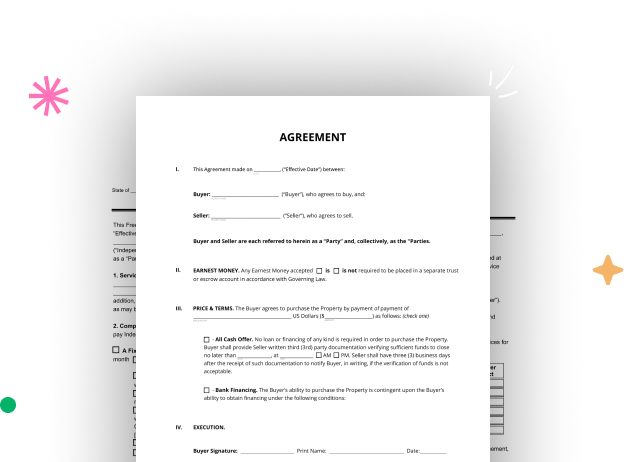



Create your US Legal Judgment from scratch

Start Building Now
Title decoration

Here's how it works

01. Start with a blank US Legal Judgment
Open the blank document in the editor, set the document view, and add extra pages if applicable.
02. Add and configure fillable fields
Use the top toolbar to insert fields like text and signature boxes, radio buttons, checkboxes, and more. Assign users to fields.
03. Distribute your form
Share your US Legal Judgment in seconds via email or a link. You can also download it, export it, or print it out.

Build US Legal Judgment from the ground up with these detailed instructions

Form edit decoration

Step 1: Start off by launching DocHub.

Start by registering a free DocHub account using any available sign-up method. If you already have one, simply log in.

Step 2: Register for a 30-day free trial.

Try out the complete set of DocHub's pro tools by registering for a free 30-day trial of the Pro plan and proceed to craft your US Legal Judgment.

Step 3: Start with a new empty document.

In your dashboard, choose the New Document button > scroll down and hit Create Blank Document. You will be taken to the editor.

Step 4: Arrange the view of the document.

Utilize the Page Controls icon indicated by the arrow to toggle between two page views and layouts for more convenience.

Step 5: Start adding fields to design the dynamic US Legal Judgment.

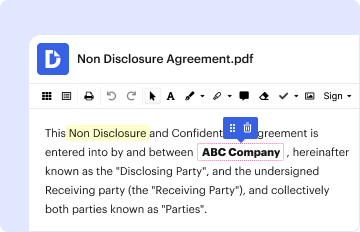
Explore the top toolbar to add document fields. Insert and format text boxes, the signature block (if applicable), insert images, etc.

Step 6: Prepare and configure the incorporated fields.

Configure the fillable areas you incorporated per your desired layout. Personalize the size, font, and alignment to make sure the form is user-friendly and polished.

Step 7: Finalize and share your document.

Save the finalized copy in DocHub or in platforms like Google Drive or Dropbox, or craft a new US Legal Judgment. Distribute your form via email or use a public link to reach more people.


be ready to get more

Build your US Legal Judgment in minutes

Start creating now

Got questions?

We have answers to the most popular questions from our customers. If you can't find an answer to your question, please contact us.
Contact us
Answer. Jurisdiction is the official power to make legal decisions and judgments, exercised by courts and judges who issue judgments that are enforceable and represent the government and societys interests.
Enforcement of a Foreign Judgment in the U.S. Under U.S. law, an individual seeking to enforce a foreign judgment, decree or order in this country must file suit before a competent court. The court will determine whether to recognize and enforce the foreign judgment. Enforcement of Judgments - Travel U.S. Department of State (.gov) travel legal internl-judicial-asst U.S. Department of State (.gov) travel legal internl-judicial-asst
Judicial power confers on federal courts the power to decide a case and to render a judgment that conclusively resolves a case. Judicial Power - US Constitution Annotated - Justia Law Justia Law us article-3 08-judical-power Justia Law us article-3 08-judical-power
Judicial power is the authority to be the final decider in all questions of Constitutional law, all questions of federal law and to hear claims at the core of habeas corpus issues. Article I Courts are: U.S. Court of Appeals for Veterans Claims.
A judgment cannot be enforced in California until it is domesticated (or registered) in California as a California judgment in ance with the Sister State MoneyJudgments Act (the SSMJA) or by bringing an action to establish the judgment per Code of Civil Procedure 1913. Domestication of Judgments - Pasadena, CA Chora Young Manasserian domestication-of-judgments Chora Young Manasserian domestication-of-judgments
be ready to get more

Build your US Legal Judgment in minutes

Start creating now

Related Q&A to US Legal Judgment

jurisprudence is built on a system of precedent, meaning that the decision in one lawsuit not only resolves that case but guides future lawsuits. It also ensures that the accumulated wisdom of past decisions influences the results in those that follow.
Article III, Section I states that The judicial Power of the United States, shall be vested in one supreme Court, and in such inferior Courts as the Congress may from time to time ordain and establish. Although the Constitution establishes the Supreme Court, it permits Congress to decide how to organize it.
Judgment is a void judgment if court that rendered judgment lacked jurisdiction of the subject matter, or of the parties, or acted in a manner inconsistent with due process, Fed. Rules Civ. PDF Supreme Court of the United States Supreme Court of the United States DocketPDF Supreme Court of the United States DocketPDF

Additional resources on building your forms


